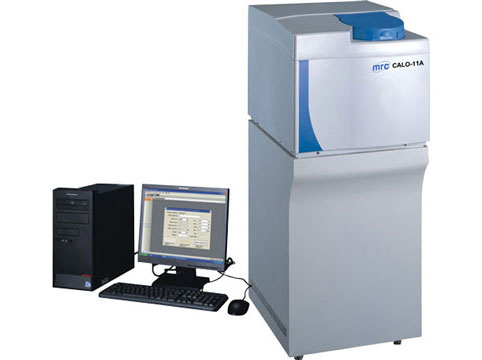
Calorimeters providing precise measurements of calorific values to support industries, research, and education. Whether determining the energy content of fuels, analyzing food caloric values, or supporting material science, calorimeters offer invaluable insights. Munro Scientific is at the forefront of calorific value determination, offering a versatile of innovative calorimeters designed for small and large laboratories, various industries, and educational purposes.
What are Calorimeters and Their Uses
A calorimeter is a device used to measure the heat transfer associated with physical changes, chemical reactions, or combustion of materials. The calorific value (energy content) of a material is an important parameter that influences energy efficiency, combustion processes, and nutritional studies.
Munro Scientific's Innovative Calorimeter Portfolio
Munro Scientific provides a range of cutting-edge calorimeters, tailored to meet the diverse needs of laboratories, industries, and educational institutions. Their portfolio includes four calorimeters that differ in levels of automation, application flexibility, and capacity but share the same commitment to accuracy and precision.
Key Features of Munro Scientific Calorimeters:
- High Accuracy and Precision: Ensures reliable calorific value determination with consistent, repeatable results.
- Flexible Automation Levels: From manual systems for educational use to fully automated solutions for high-throughput laboratories.
- Adaptable for Any Laboratory Size: Suitable for both small laboratories and large-scale industrial facilities.
- Industry-Specific Applications: Configurable for energy, food, materials, and environmental testing applications.
- Quality Accessories and Packages: Equipped with proven accessories and comprehensive application packages for specific testing requirements.
It is especially popular in: the waste management industry, the foodstuffs and animal feed industry as well as in the construction materials sector.
Fields of Application
- Energy and Fuel Analysis:
- Determination of the calorific value of coal, petroleum, biofuels, and other energy sources.
- Helps optimize combustion processes for power generation and engine performance.
- Food and Nutrition Science:
- Measures the caloric content of food and beverages for dietary and nutritional analysis.
- Ensures food labeling accuracy and compliance with regulatory standards.
- Material Testing:
- Evaluates combustion efficiency of plastics, chemicals, and construction materials.
- Analyzes explosives and propellants for energy output in research and defense industries.
- Environmental Studies:
- Assesses the energy potential of waste materials for incineration.
- Supports sustainable energy research by analyzing biofuels and renewable materials.
- Educational Purposes:
- Used in laboratories for thermodynamics studies, helping students understand heat transfer and energy conservation principles.
Cement:
- Coke
- Tires
- Animal flour
- Mixed waste material
- ●Coal and Coke / Power Plants:
- Anthracite coal
- Hard coal
- Brown coal
- Bituminous coal
- Coke
- ●Petroleum:
- Jet fuel
- Kerosene
- Liquid fuels
- Gasoline
- Oil
- Bio-fuels
- ●Waste Management / Recycling:
- Tetra-pack
- PVC powder
- Printed circuit board
- Lacquer
- Waste solvent
- ●Agriculture (Fodder):
- Forage crops
- Fodder for cats, dogs, cows, sheep, pigs, chicken
- Animal urine and droppings
- ●Food:
- Noodles
- Dried fruit
- Fish
- Milk
- Chocolate
- Cheese
- ●Construction and Building Materials:
- Fleece
- insulation material
- Styrofoam
- Mortar
- Rock wool
- ●Universities and Research Institutes:
- Teaching thermodynamics
- Enthalpy studies
- Airplane covering
- Ecological studies
- ●Biomass:
- Wood
- Wood pellets
- Saw dust
- Grass
- Corn
- Bio-fuels
Which Calorimeter is Most Suitable for My Application and Requirements?
To determine the best calorimeter for your needs, consider the following questions:
-How many experiments do you plan on conducting in a day?
-Are there any standards that have to be followed, such as ISO, ASTM, DIN, GB, GOST, etc.?
-Do samples contain halogens and sulphur and if so, what is the concentration (approximately)?
-Is it required to analyze the halogens and sulphur content after the calorimeter experiment has concluded?
-Do you prefer any of the following methods: adiabatic, isoperibol, static jacket isoperibol, dry, or dynamic?
Answering these questions will help you identify the most appropriate calorimeter, ensuring efficient and accurate calorific value determination tailored to your specific application.
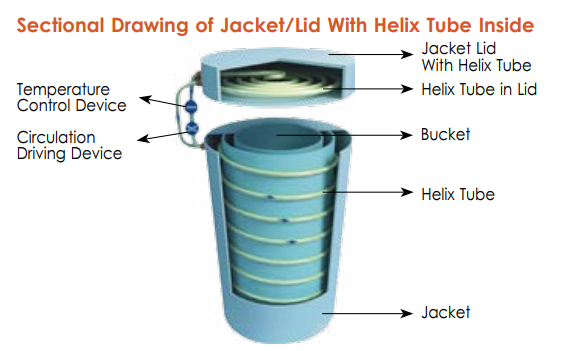
Sectional Drawing of Jacket/Lid With Helix Tube Inside
Munro Scientific's calorimeters feature a unique and efficient jacket/lid system with a helix tube for precise temperature control and circulation:
- ●Jacket Lid with Helix Tube: Ensures even heat distribution and thermal stability.
- ●Helix Tube in Lid: Facilitates temperature regulation for consistent results.
- ●Bucket: Designed to securely hold the test setup.
- ●Helix Tube: Integrated within the jacket for efficient circulation.
- ●Jacket: Provides insulation and stability during testing.
- ●Temperature Control Device: Regulates the overall temperature for precise measurement.
- ●Circulation Driving Device: Ensures continuous water movement for optimal heat transfer.
Why Calorific Value Determination is Important
Calorific value is a critical measurement in many sectors:
- Energy Efficiency: Determines the fuel quality and helps optimize combustion processes for maximum energy output.
- Cost Management: Allows industries to select the most energy-efficient fuels, reducing costs and emissions.
- Regulatory Compliance: Ensures fuels, foods, and materials meet industry and safety standards.
- Sustainability: Supports the development of biofuels and waste-to-energy solutions for a greener future.
Choosing the Right Calorimeter for Your Needs
Munro Scientific offers a range of calorimeters to match specific laboratory needs:
- ●Small Laboratories & Education: Compact, manually operated calorimeters for budget-conscious labs and educational environments.
- ●Industrial and Research Laboratories: Fully automated calorimeters capable of handling high sample throughput with precision.
- ●Customized Solutions: Flexible application packages and accessories to address unique testing requirements across industries.
When selecting a calorimeter, consider:
- ●Purpose: Energy, food, or materials testing.
- ●Throughput Needs: Small sample batches vs. high-volume analysis.
- ●Automation Levels: Manual, semi-automatic, or fully automatic systems.
- ●Calibration and Support: Availability of maintenance, accessories, and calibration services.