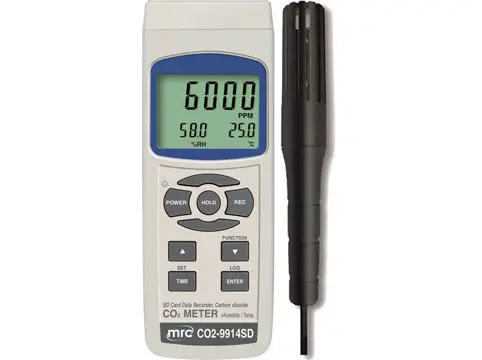
Carbon Dioxide (CO2) Meters by MUNRO
A CO2 meter is a device designed to measure the concentration of carbon dioxide in the air.
Importance of measuring CO2
Impact on Health
High CO2 levels can be harmful to human health. Prolonged exposure to elevated CO2 can lead to symptoms like dizziness, headaches, shortness of breath, and even more severe effects, such as impaired cognitive function or unconsciousness in extreme cases. Monitoring CO2 levels ensures that they stay within a safe range.
Environmental Impact
Aside from health concerns, CO2 is also a major contributor to the greenhouse effect. By monitoring and controlling CO2 emissions, we can contribute to efforts to combat climate change.
How Do Carbon Dioxide (CO2) Meters Work?
Carbon Dioxide (CO2) Meters operate by using sensors to detect the concentration of carbon dioxide in the air. These sensors measure the absorption of infrared light or the electrochemical properties of the gas to determine CO2 levels. The readings are then displayed on a screen, giving you instant feedback about the air quality.
Kinds of CO2 Sensors
- Non-Dispersive Infrared (NDIR) Sensors: These are the most commonly used type in CO2 meters. They measure the amount of infrared light absorbed by CO2 molecules to determine the concentration.
- Chemical Sensors: These sensors use chemical reactions to detect CO2. They tend to be less accurate and have a shorter lifespan compared to NDIR sensors.
Key Specifications of a CO2 Meter
Accuracy
Accuracy is paramount when choosing a CO2 meter. The device should provide reliable readings that can be trusted to assess air quality.
User Interface
A good CO2 meter should have an easy-to-read display that provides clear information. Features like backlit screens, numerical readings, and alarm functions are great additions.
Calibration
For accurate readings, regular calibration is essential. CO2 meters need to be calibrated to ensure they remain precise over time, especially in commercial settings where high reliability is required.
What to consider before choosing a CO2 meter
Considerations for Home Use
When shopping for a CO2 meter for home use, consider factors like size, ease of use, and price. It’s also wise to select a model with a display that clearly shows the CO2 concentration and has an alarm feature for when levels become unsafe.
CO2 Meters for Commercial Use
For commercial environments, you’ll need a more robust device with high accuracy, longer durability, and the ability to handle multiple sensors. Industrial CO2 meters also offer remote monitoring and data logging capabilities for better control over air quality.
Common Applications of CO2 Meters
CO2 meters are used in various industries and environments to monitor air quality and ensure safety.
Indoor Air Quality
Homeowners and office managers use CO2 meters to ensure that their indoor spaces have proper ventilation. This helps maintain healthy air quality and prevents the buildup of harmful gases.
Greenhouses and Agricultural Use
CO2 is crucial in plant growth. CO2 meters in greenhouses help optimize conditions by maintaining appropriate levels of CO2 to support healthy plant development.
Industrial Applications
In industrial settings, CO2 meters are essential for monitoring emissions and ensuring the safety of workers in confined spaces, such as factories or storage facilities.
Benefits of Using a CO2 Meter
Using a CO2 meter comes with several benefits:
- Improved health and safety by keeping CO2 levels within safe ranges.
- Better energy efficiency by optimizing HVAC and ventilation systems.
- Environmental impact reduction through awareness and monitoring.