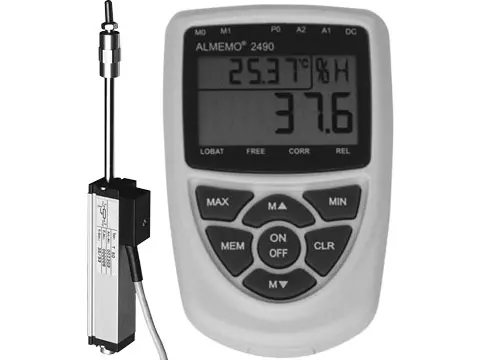
A displacement sensor is a device that detects changes in position and converts them into an electrical signal. These sensors can measure movement in a straight line (linear displacement) or rotation (angular displacement).
Understanding Potentiometric Displacement Sensors
Definition
A potentiometric displacement sensor uses a resistive element and a moving contact (wiper) to determine displacement. The resistance changes as the wiper moves, converting mechanical motion into an electrical signal.
How It Works
The sensor consists of a resistive track and a wiper connected to a moving object. As the object moves, the wiper slides along the track, altering the voltage output in proportion to the displacement.
Components of a Potentiometric Displacement Sensor
- Resistive Element – A material like carbon or metal film that changes resistance.
- Wiper – A contact that moves along the resistive element.
- Output Signal Mechanism – Converts displacement into a measurable voltage change.
Applications of Potentiometric Displacement Sensors
- Industrial Automation – Used in CNC machines and assembly lines.
- Robotics – Provides position feedback for precise movements.
- Automotive Industry – Used in throttle position sensing.
- Medical Equipment – Found in imaging devices and surgical instruments.
Key Factors to Consider When Choosing a Displacement Sensor
- Accuracy Requirements – Depends on application needs.
- Measurement Range – Must fit the intended displacement.
- Environmental Conditions – Temperature, dust, and moisture levels.