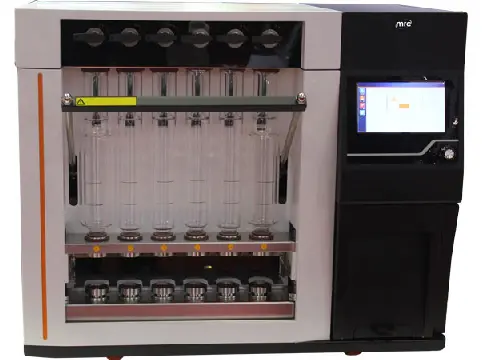
A fiber analyzer is a laboratory instrument designed to measure the fiber composition of substances. It provides insights into crude fiber, neutral detergent fiber (NDF), and acid detergent fiber (ADF), which are critical for understanding nutritional value, textile durability, and paper strength. A fiber analyzer is a specialized instrument used to determine the fiber content in various materials, including food, textiles, and paper.
Fiber analysis is essential in industries such as food and beverage, textiles, pharmaceuticals, and paper manufacturing. It helps manufacturers ensure compliance with industry regulations, maintain product consistency, and optimize processing techniques.
Applications in Food, Textile, and Paper Industries
- Food Industry: Nutritional labeling and dietary research
- Textile Industry: Fiber composition verification and durability assessment
- Paper Industry: Quality control in paper manufacturing
Components of a Fiber Analyzer
- Digestion Chamber: Where chemical processing occurs
- Filtration System: Separates fiber from other components
- Heating System: Speeds up chemical reactions
- Data Processing Unit: Records and analyzes results
Process of Fiber Analysis
- Sample Preparation
- Chemical Digestion
- Filtration and Drying
- Weighing and Data Interpretation
How does the Auto Fiber Analyzer work?
The Auto Fiber Analyzer automates the chemical digestion and filtration process required for fiber analysis. Here’s a step-by-step breakdown of its operation:
- Sample Preparation:
- A measured amount of ground sample (usually plant material or feed) is placed into filter bags or crucibles designed for the analyzer.
- The sample is dried and weighed before analysis.
- Chemical Digestion:
- The analyzer sequentially adds chemical reagents (such as sulfuric acid, detergent solutions, or sodium hydroxide) to digest non-fiber components.
- This step removes proteins, starches, and other soluble substances, leaving only fiber components.
- Filtration & Washing:
- The system automatically filters and washes the residue using hot water or other solvents.
- This ensures only insoluble fiber fractions remain.
- Drying & Weighing:
- The filtered fiber residue is dried in an oven to remove moisture.
- It is then weighed to determine the fiber content.
- Burning & Final Measurement (Optional for ADF & ADL):
- For acid detergent lignin (ADL) determination, the sample is further oxidized in a furnace.
- The remaining ash content is subtracted to calculate the actual lignin content.
Key Features of Auto Fiber Analyzers:
✅ Fully automated—reduces manual labor and improves repeatability.
✅ Faster analysis—significantly reduces analysis time compared to manual methods.
✅ High precision—ensures accurate fiber content measurements.
✅ Multiple fiber types—analyzes CF, NDF, ADF, and ADL in one system.
✅ Safe operation—minimizes exposure to hazardous chemicals.