Gas generators have become indispensable in modern laboratories, providing a reliable and convenient source of various gases required for a wide range of applications. Unlike traditional gas cylinders, gas generators offer continuous supply, enhanced safety, and greater cost-effectiveness. This article explores the types of laboratories that require gas generators, their uses, the types of gases they produce, their advantages, and the essential safety considerations.
Laboratories That Need Gas Generators
Analytical Laboratories: Gas generators are vital in analytical labs, particularly those using gas chromatography (GC) and mass spectrometry (MS). They provide high-purity gases necessary for carrier and detector functions.
Biotechnology and Pharmaceutical Laboratories: These labs require gases for cell culture incubators, bioreactors, and various analytical techniques such as liquid chromatography-mass spectrometry (LC-MS).
Chemical Laboratories: Gas generators supply gases for chemical synthesis, reactions, and various analytical procedures.
Environmental Testing Laboratories: They use gases for air quality analysis, emissions testing, and other environmental monitoring tasks.
Food and Beverage Laboratories: Gas generators are used in testing and quality control processes, ensuring the purity and safety of products.
Uses of Gas Generators
Carrier Gas for Chromatography: In gas chromatography, hydrogen or nitrogen generators are commonly used to provide a consistent and pure carrier gas supply.
Detector Gas: In various detectors, gases like nitrogen, hydrogen, and air are essential for the proper functioning of the detection systems.
Incubation Atmosphere: Carbon dioxide generators are used in incubators to maintain the required CO2 levels for cell culture growth.
Synthesis and Reactions: Generators provide gases needed for chemical synthesis and reactions in research and industrial applications.
Types of Gases Produced
Hydrogen (H2): Used as a carrier gas in GC, in fuel cells, and for hydrogenation reactions.
Nitrogen (N2): Employed as a carrier gas in chromatography, in LC-MS, and as a blanketing gas in chemical reactions.
Oxygen (O2): Used in medical applications, bioreactors, and for combustion analysis.
Carbon Dioxide (CO2): Essential for cell culture incubators and beverage carbonation.
Zero Air: Used for calibrating analytical instruments and as a combustion gas in detectors.
Advantages of Gas Generators
Continuous Supply: Gas generators provide an uninterrupted supply of gas, eliminating the need for frequent cylinder replacements.
High Purity: They produce high-purity gases, essential for sensitive analytical applications.
Cost-Effectiveness: Over time, generators are more economical compared to purchasing and managing gas cylinders.
Safety: Reducing the handling and storage of high-pressure gas cylinders minimizes the risk of accidents.
Convenience: Gas generators are compact and can be placed close to the point of use, saving space and simplifying logistics.
Safety Considerations
Proper Installation: Ensure that gas generators are installed according to the manufacturer’s instructions, including adequate ventilation and appropriate electrical connections.
Regular Maintenance: Routine maintenance and servicing are crucial to ensure the reliable operation of gas generators and to detect any potential issues early.
Leak Detection: Install leak detection systems to monitor for any gas leaks, particularly for hydrogen, which is highly flammable.
Training: Laboratory personnel should be trained in the proper use and maintenance of gas generators, as well as in emergency procedures.
Compliance: Adhere to local regulations and standards related to the use of gas generators and the handling of gases.
Nitrogen is used in a variety of laboratory applications, including:
Preservation: Nitrogen is used to preserve biological specimens, such as cells, tissues, and microorganisms. The gas helps to slow down the decomposition process, ensuring that samples remain fresh for analysis.
Reactions: Nitrogen is used as an inert gas in chemical reactions to prevent oxidation and other unwanted reactions. In many cases, nitrogen is used to displace oxygen from a reaction vessel to create an oxygen-free environment.
Chromatography: Nitrogen is used as the carrier gas in gas chromatography, a technique used to separate and analyze compounds in complex mixtures.
Cooling: Nitrogen is used to cool samples in cryogenics and superconductivity research.
Analytical Instruments: Nitrogen is used as a sweeping gas to prevent contamination in various analytical instruments, such as mass spectrometers and infrared spectrometers.
How a Laboratory Gas Nitrogen Generator Works:
A laboratory gas nitrogen generator uses a process known as pressure swing adsorption (PSA) to generate nitrogen gas from atmospheric air. The process involves filtering air through a bed of adsorbent material, such as zeolite or activated carbon, to remove impurities, such as oxygen and moisture. The purified air is then compressed and sent to a second adsorbent bed, where it is separated into nitrogen and other gases. The nitrogen is then collected and stored for use in the laboratory.
The PSA process works by utilizing the different adsorption properties of nitrogen and other gases. The adsorbent material preferentially adsorbs oxygen and other impurities, allowing the nitrogen to pass through to the outlet. The process is continuous, with the adsorbent bed cycling between a pressurized and depressurized state to remove and release the adsorbed impurities.
A laboratory gas nitrogen generator is a vital tool for many laboratory applications, providing a reliable source of nitrogen gas. The use of nitrogen in laboratory settings has numerous benefits, including preservation, reactions, chromatography, cooling, and analytical instruments. The PSA process used in nitrogen generators is a simple, efficient, and cost-effective method for generating nitrogen gas from atmospheric air.
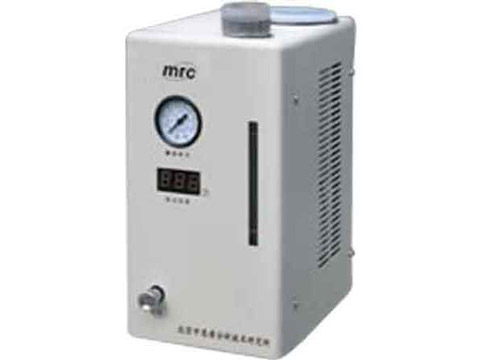
High Purity Air(Zero Air) Generator
A zero air laboratory generator is a device used to produce a high-purity, low-level hydrocarbon-free air stream for use in various laboratory applications. The term "zero air" refers to air that has been purged of all contaminants, including hydrocarbons, moisture, and other impurities, to produce a pure and reliable source of air for laboratory use.
Zero air is used in a variety of laboratory applications, including:
Calibration: Zero air is used as a reference gas in the calibration of various analytical instruments, such as gas chromatographs, mass spectrometers, and infrared spectrometers.
Reactions: Zero air is used as an inert gas in chemical reactions to prevent oxidation and other unwanted reactions. In many cases, zero air is used to displace oxygen from a reaction vessel to create an oxygen-free environment.
Environmental Monitoring: Zero air is used in environmental monitoring to measure the presence of volatile organic compounds (VOCs) in the atmosphere.
Combustion Analysis: Zero air is used as the carrier gas in combustion analysis, a technique used to measure the combustion efficiency of fuels.
Trace Analysis: Zero air is used as a background gas in trace analysis, a technique used to measure low levels of impurities in a sample.
How a Zero Air Laboratory Generator Works:
A zero air laboratory generator typically uses a combination of filtration, compression, and catalytic oxidation processes to produce a high-purity air stream. The process starts with the purification of incoming air through a series of filters, including high-efficiency particulate air (HEPA) filters and activated carbon filters, to remove impurities, such as dust, moisture, and hydrocarbons. The purified air is then compressed and sent through a catalytic oxidation process, where any residual hydrocarbons are burned off to produce a zero air stream.
The zero air generator is equipped with various safety features to ensure the quality and reliability of the produced air stream. For example, it may include a catalytic oxidation monitor to measure the efficiency of the catalytic oxidation process and an oxygen sensor to monitor the oxygen level of the produced air.