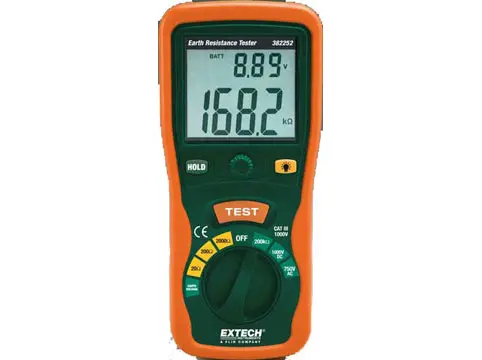
A ground resistance tester is a device used to measure the resistance between an electrical grounding system and the earth. Ensuring a low resistance path to the ground is essential for preventing electrical hazards and ensuring the proper operation of electrical equipment. This tester helps professionals verify that a grounding system is effective and compliant with safety standards.
Grounding provides a safe path for excess electricity to dissipate into the earth, preventing electric shocks, fires, and damage to electrical appliances.
How Does a Ground Resistance Tester Work?
Principle of Operation
A ground resistance tester applies a small electrical current to the grounding system and measures the voltage drop, calculating resistance using Ohm’s Law.
Measurement Methods
- Three-Point Method – Common in industrial applications.
- Four-Point Method – Used for more accurate measurements.
- Clamp-On Method – Convenient for existing systems without disconnecting.
Specifications for a Ground Resistance Tester
Accuracy
A good tester should have high precision, typically in milliohms or ohms.
Ease of Use
Simple interfaces and clear displays help improve usability.
Portability
Compact, lightweight designs are ideal for fieldwork.
Safety Features
Look for over-voltage protection, durable casings, and compliance with safety standards.
Applications of Ground Resistance Testers
- Industrial Electrical Systems – Ensuring safe grounding in factories.
- Residential Electrical Safety – Checking household grounding for compliance.
- Telecommunications – Protecting signal towers from electrical faults.
- Renewable Energy Systems – Verifying grounding in solar and wind installations.