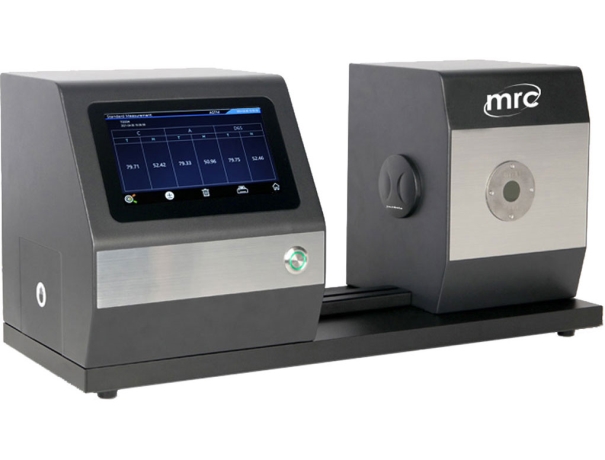
A Haze Meter—also known as a Turbidity and Transparency Tester—is a precision optical instrument designed to measure the clarity and light-scattering properties of transparent and semi-transparent materials such as plastic, films, glass, coatings, and display panels.
In industrial quality control, transparency and haze values are critical indicators of material purity, optical performance, and aesthetic quality. Haze meters quantify how much light passes through a specimen directly versus how much is scattered, providing objective data for manufacturing consistency and product certification.
What Is Haze?
Haze refers to the degree of cloudiness or light scattering that occurs when light passes through a transparent material.
Even a highly transparent sample may scatter a small portion of light due to internal defects, surface irregularities, or impurities.
High haze means more scattering and less clarity, while low haze indicates optical purity and transparency.
Transparency vs. Haze
Transparency (Transmittance) measures the total percentage of light transmitted through the material.
Haze quantifies the diffused portion of transmitted light, showing how much light is scattered at wide angles rather than passing straight through.
Working Principle of a Haze Meter
A Haze Meter operates based on light transmission and diffusion measurement principles.
A collimated beam of light passes through the sample; detectors positioned at specific angles measure both the direct and scattered light intensities.
Main Components
Light Source – A stable LED or halogen lamp providing consistent illumination.
Integrating Sphere – Collects scattered light uniformly from all directions.
Photodetectors – Measure both total and diffuse transmittance.
Sample Holder – Ensures reproducible sample placement and alignment.
Digital Display & Processor – Converts optical signals into numerical haze and transmittance readings.
The measured values are then calculated according to international standards such as ASTM D1003, ISO 13468, and ISO 14782, ensuring repeatability and comparability between laboratories.
Key Measurement Parameters
Parameter Description Typical Range
Total Transmittance (%) Total light passing through the sample 0–100%
Diffuse Transmittance (%) Light scattered at >2.5° angles 0–100%
Haze (%) (Diffuse / Total Transmittance) × 100 0–100%
Applications Across Industries
1. Plastic and Polymer Industry
Haze meters are essential for assessing clarity in plastic films, bottles, and sheets. Excessive haze can indicate polymer impurities or poor extrusion control.
2. Glass Manufacturing
In architectural and automotive glass, haze affects visibility, safety, and aesthetics. Haze meters detect minute defects caused by coating irregularities or lamination.
3. Packaging Industry
Transparent packaging films must maintain clarity for product visibility and brand appeal. Haze measurements ensure uniform appearance across production batches.
4. Electronics and Display Panels
In displays, lenses, and touchscreens, low haze is vital for high image contrast and optical precision. Manufacturers use haze meters to validate film coatings and optical adhesives.
5. Automotive and Aerospace
Haze analysis ensures optical performance in windshields, instrument panels, and canopies, where both transparency and light diffusion affect safety and driver visibility.
Advantages of Using a Haze Meter
Accurate and Reproducible: Provides quantitative optical data in seconds.
Non-destructive: Samples remain intact for further analysis.
Compliance with Global Standards: ASTM, ISO, JIS, and DIN.
Digital Storage & Connectivity: Many models support data export via USB or RS-232.
Versatility: Suitable for flat sheets, films, curved samples, and irregular surfaces.