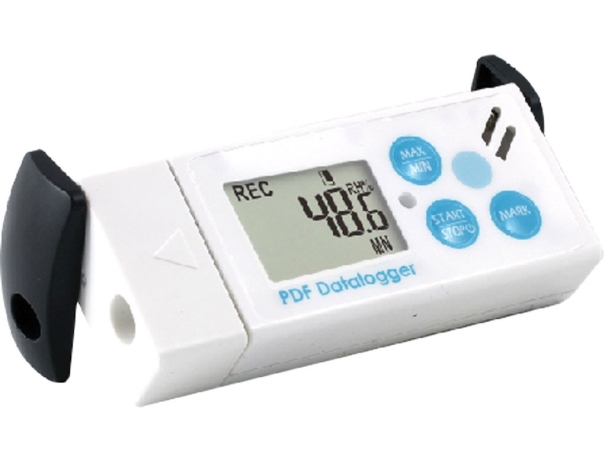
In the realm of laboratory experimentation, a humidity datalogger serves as a specialized device designed to monitor and record humidity levels in real-time. This ensures that the delicate balance required for accurate experiments is maintained consistently.
Humidity is more than just moisture in the air; it's a critical factor that can influence the outcome of experiments. Fluctuations in humidity levels can impact the reliability and reproducibility of results, making it imperative for laboratories to invest in sophisticated datalogging solutions.
Understanding Humidity in Laboratories
Impact of Humidity on Experiments
Humidity can affect chemical reactions, biological processes, and the stability of materials. Understanding how humidity interacts with various elements in the laboratory is crucial for maintaining the integrity of experiments.
Ideal Humidity Levels
Different experiments may require different humidity levels. This section explores the ideal conditions for common laboratory scenarios, emphasizing the need for precise control and monitoring.
Features of Humidity Dataloggers
Real-time Monitoring
One of the standout features of humidity dataloggers is their ability to provide real-time data. This ensures that any deviations from the ideal humidity range are immediately identified and addressed.
Accuracy and Precision
Laboratory professionals demand accuracy, and humidity dataloggers deliver. We delve into the precision these devices offer and how they contribute to the reliability of experimental results.
Data Storage and Retrieval
The ability to store and retrieve historical data is essential for trend analysis and quality control. Humidity dataloggers streamline this process, making it easy for researchers to access past information.
Benefits of Using Humidity Dataloggers
Improved Experiment Reproducibility
Consistency is key in laboratory research. Humidity dataloggers contribute to experiment reproducibility by ensuring that environmental conditions remain constant.
Equipment Preservation
Sensitive laboratory equipment can be adversely affected by humidity. We explore how dataloggers play a role in preserving and prolonging the life of valuable instruments.
Compliance with Standards
Adherence to industry standards is non-negotiable. Humidity dataloggers assist laboratories in meeting compliance requirements, maintaining the integrity of research.
Choosing the Right Humidity Datalogger
Consideration of Laboratory Size
Not all laboratories are created equal. We discuss how the size of a laboratory influences the choice of a suitable datalogger.
Compatibility with Other Instruments
Seamless integration with existing laboratory instruments is vital for efficiency. This section guides readers on selecting dataloggers that complement their current setup.
User-Friendly Interface
In the fast-paced environment of a laboratory, ease of use is paramount. We explore the importance of a user-friendly interface in maximizing the benefits of humidity dataloggers.
Types of Humidity Dataloggers
Humidity dataloggers come in various forms, each tailored to meet specific needs. Below are the main types:
Standalone Humidity Dataloggers
These are compact, portable devices that record data locally for later retrieval. Ideal for basic applications.
Wireless Humidity Dataloggers
These devices transmit data wirelessly, making them suitable for real-time monitoring across larger areas.
USB-Enabled Humidity Dataloggers
Equipped with USB ports, these devices allow users to quickly transfer data to computers.
Bluetooth Humidity Dataloggers
These dataloggers connect to smartphones or tablets, enabling remote access and real-time analysis.
Cloud-Connected Humidity Dataloggers
These advanced devices sync data to cloud platforms, offering integration with IoT systems for sophisticated applications.
Standalone Humidity Dataloggers
Standalone devices are simple yet effective. They store data internally and require manual access to retrieve it.
Features and Benefits
- Portable and lightweight
- Cost-effective
- User-friendly design
Best Use Cases
- Small-scale industrial monitoring
- Personal or home use
- Laboratory settings
Wireless Humidity Dataloggers
Wireless dataloggers offer flexibility by transmitting data over Wi-Fi or radio frequencies.
How They Work
They rely on wireless networks to send data to connected systems in real time.
Advantages
- Reduced manual effort
- Immediate alerts for threshold breaches
- Ideal for large-scale operations
USB-Enabled Humidity Dataloggers
These devices are designed for easy data transfer.
Ease of Use
Simply plug into a USB port to download stored information.
Portability
Compact designs make them convenient for on-the-go professionals.
Bluetooth Humidity Dataloggers
Bluetooth-enabled devices connect seamlessly to mobile apps.
Accessibility
Users can view and analyze data on smartphones or tablets.
Applications
Popular in industries like logistics, where remote monitoring is vital.
Cloud-Connected Humidity Dataloggers
Cloud-connected devices represent the future of humidity monitoring.
Real-Time Monitoring
Data is uploaded instantly to cloud platforms, ensuring constant oversight.
Integration with IoT
These devices work well in automated systems, enabling advanced functionalities like predictive analytics.
What types of HUMIDITY DATA LOGGER communication
Humidity data loggers can communicate through various methods depending on the design and application. Here are the common types of communication:
1. USB Communication
- Features: Data is transferred directly to a computer via a USB port.
- Applications: Ideal for on-site data download and analysis.
- Advantages:
- Reliable and fast data transfer.
- No need for wireless connectivity.
- Examples: Handheld or compact data loggers with built-in USB ports.
2. Wireless Communication
- Wi-Fi
- Features: Connects to a Wi-Fi network for real-time data transfer.
- Applications: Remote monitoring where Wi-Fi coverage is available.
- Advantages:
- Continuous monitoring.
- Can send alerts to smartphones or computers.
- Bluetooth
- Features: Transfers data to nearby devices like smartphones or tablets.
- Applications: Short-range, easy data access for mobile users.
- Advantages:
- Simple pairing with mobile apps.
- No additional infrastructure needed.
- Zigbee or LoRa
- Features: Low-power communication for long-range applications.
- Applications: Industrial setups or large-scale monitoring.
- Advantages:
- Reliable in low-bandwidth environments.
- Long battery life.
3. Ethernet Communication
- Features: Connects directly to a LAN network via Ethernet.
- Applications: Industrial or office environments with network infrastructure.
- Advantages:
- Stable and fast connection.
- Can be accessed remotely if integrated with a network.
4. Cellular Communication (GSM/GPRS/4G/5G)
- Features: Uses cellular networks to send data to cloud servers.
- Applications: Remote or outdoor locations without Wi-Fi.
- Advantages:
- Works in remote areas with cellular coverage.
- Supports cloud-based data access.
5. Radio Frequency (RF)
- Features: Sends data using RF signals to a base station.
- Applications: Industrial applications or areas where Wi-Fi and cellular are impractical.
- Advantages:
- Reliable in interference-prone areas.
- No dependency on public networks.
6. NFC (Near Field Communication)
- Features: Data is accessed by bringing an NFC-capable device (like a smartphone) close to the logger.
- Applications: Quick, contactless data access for short-range uses.
- Advantages:
- Energy-efficient.
- No need for cables or pairing.
7. Cloud Integration
- Features: Logs data directly to a cloud-based platform via Wi-Fi, Ethernet, or cellular communication.
- Applications: Applications requiring global accessibility and real-time monitoring.
- Advantages:
- Centralized data management.
- Enables advanced analytics and reporting.
8. Serial Communication (RS-232/RS-485)
- Features: Traditional communication via serial ports.
- Applications: Industrial and legacy systems.
- Advantages:
- Compatible with older systems.
- Reliable for industrial environments.
Choosing the appropriate communication method depends on:
- Environment: Indoor vs. outdoor, proximity to networks.
- Data access needs: Real-time vs. periodic downloads.
- Power availability: Battery-operated vs. mains-powered devices.
- Budget: Cost considerations for hardware and connectivity.