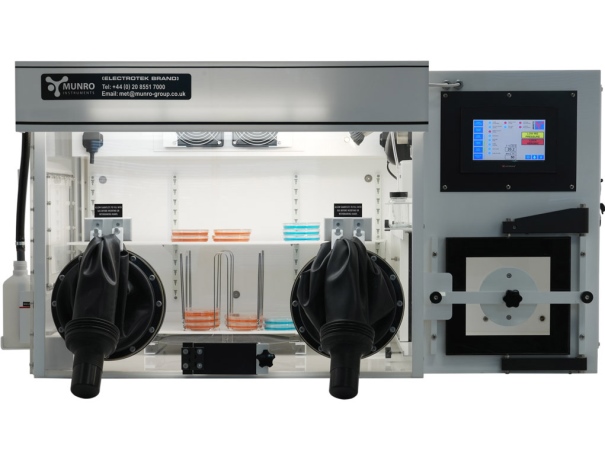
A hypoxia chamber is a specialized laboratory workstation designed to culture cells and tissues under strictly controlled low-oxygen conditions. Unlike conventional incubators, which usually operate at atmospheric oxygen levels (around 21%), hypoxia chambers allow scientists to replicate oxygen-deprived environments ranging from near-zero to physiological oxygen levels (1–5%). This technology provides an essential tool for accurately modeling in vivo conditions where oxygen levels are much lower than ambient air.
Why Hypoxia Matters in Research
Oxygen plays a critical role in cell metabolism, growth, and function. Most tissues in the human body never experience 21% oxygen, so conducting research at ambient conditions often introduces inaccuracies.
- Normoxia refers to typical incubator levels (~21%).
- Hypoxia describes conditions of reduced oxygen (1–5%).
- Anoxia is the near absence of oxygen (0%).
By controlling oxygen exposure, researchers gain a realistic understanding of how cells behave in their natural environments.
Key Applications of Hypoxia Chambers
Cancer Biology and Tumor Microenvironments
Tumors often thrive in hypoxic conditions. Hypoxia chambers help replicate these microenvironments to study cancer progression, metastasis, and resistance to therapy.
Stem Cell Research and Regenerative Medicine
Low-oxygen conditions are known to maintain stem cell potency, supporting better proliferation and differentiation outcomes.
Pharmacology and Drug Discovery
Drug candidates are tested under hypoxic conditions to evaluate how oxygen availability impacts their effectiveness.
Tissue Engineering and Organ Modeling
Simulating low oxygen levels allows researchers to build models closer to living tissues.
Neuroscience and Hypoxic Brain Studies
Neurons are highly sensitive to oxygen. Hypoxia chambers enable studies on stroke, brain injury, and neurodegenerative disease models.
Technical Features of Hypoxia Chambers
Oxygen Control and Precision
Hypoxia chambers can adjust oxygen in increments as fine as 0.1–0.5%, ensuring high precision.
Gas Regulation
- O₂: Typically adjustable from 0–20%.
- CO₂: Controlled up to 20% for pH balance.
- N₂: Used as a balancing gas to displace oxygen.
Temperature and Humidity Management
Maintaining stable temperature (usually 37°C) and humidity ensures ideal cell growth conditions.
Interlock and Sample Transfer Systems
Airlock mechanisms allow researchers to add or remove samples without disrupting the hypoxic environment.
Capacity and Scalability
From compact benchtop units to large chambers holding hundreds of Petri dishes, capacity varies based on research demand.
How Hypoxia Chambers Work
The chamber is supplied with controlled gas mixtures from external tanks or built-in gas mixers. Sensors continuously monitor oxygen, carbon dioxide, and humidity, feeding data to automated systems that make micro-adjustments in real-time. This feedback loop maintains a stable low-oxygen environment.
Types of Hypoxia Chambers
Modular Hypoxia Workstations
Fully enclosed systems with built-in incubators, designed for long-term, high-throughput studies.
Compact Benchtop Units
Ideal for smaller labs with limited space or lower sample volume.
Large-Capacity Hypoxia Incubators
Capable of housing hundreds of samples simultaneously, used in pharmaceutical and academic research centers.
Custom-Built Chambers
Tailored to unique research requirements, such as multi-gas simulations or specialized tissue engineering.
Advantages of Using Hypoxia Chambers
- Closer simulation to physiological conditions.
- More accurate and reproducible results.
- Improved predictive value in preclinical studies.
- Flexibility to model a wide range of oxygen environments.
Choosing the Right Hypoxia Chamber
When selecting a system, consider:
- Laboratory Size & Research Goals: Match the chamber to your workload.
- Sample Volume: Estimate how many plates or flasks you will culture.
- Budget Considerations: Balance capacity with affordability.
- Integration: Ensure compatibility with existing incubators and lab workflows.