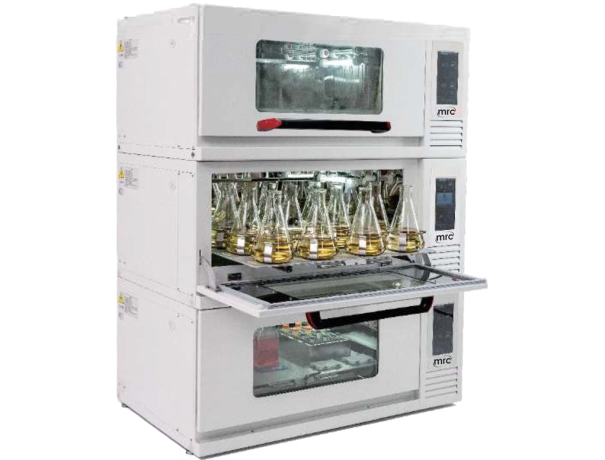
a Shaker Incubator is a specialized piece of laboratory equipment designed to provide a controlled environment for the cultivation of cells, tissues, and microorganisms. The primary purpose is to facilitate the growth and development of biological entities under precisely regulated conditions.
Key Features of Shaker Incubators
Shaker Incubators distinguish themselves through a range of features. From precise temperature control to variable shaking speeds, these devices offer unparalleled uniformity in sample mixing. Such capabilities are paramount in various scientific applications.
Applications in Scientific Research
The versatility of Shaker Incubators makes them indispensable in scientific research. They find extensive use in cell culture studies, microbial research, and the development of pharmaceuticals. The ability to provide a controlled environment for these processes is a game-changer for researchers.
Biological Research
In the realm of biological research, Shaker Incubators are the beating heart of experimentation. From cell culture studies to microbial research, these machines offer researchers the ability to create a microenvironment tailored to the needs of the specific study.
Pharmaceutical Development
Pharmaceutical laboratories rely heavily on Shaker Incubators for drug development. The controlled conditions ensure that the cell cultures used in drug testing are representative of real-world scenarios, contributing to the accuracy of results.
Food and Beverage Industry
In the food and beverage industry, Shaker Incubators find application in the fermentation process. Yeast cultures, essential for brewing and baking, thrive in the precisely controlled conditions provided by these incubators.
How Shaker Incubators Work
Mechanism and Components
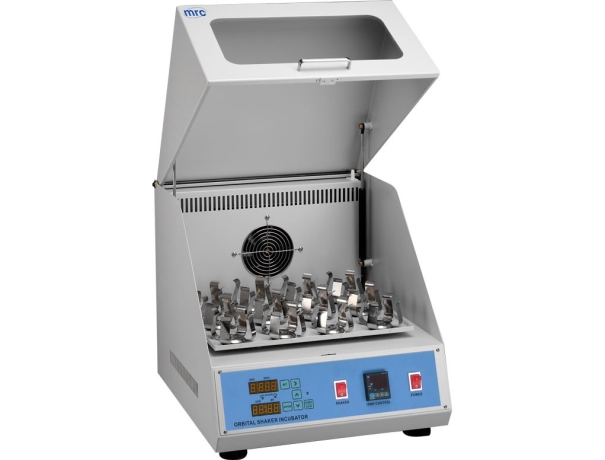
Shaker Incubators operate on a simple yet effective principle. The apparatus includes a chamber for housing samples, a mechanism for controlled agitation or shaking, and precise temperature and humidity controls. This orchestrated dance of controlled variables ensures that biological entities experience the ideal conditions for proliferation.
Controlled Environment for Optimal Results
Maintaining a stable environment is crucial for the success of experiments. Shaker Incubators create a dynamic yet controlled setting, providing a nurturing home for cells and microorganisms. The constant agitation enhances nutrient distribution, simulating natural growth conditions.
Working principle of INCUBATOR SHAKERS
- Temperature Control:
- Heating System: Most incubator shakers have a heating element or a system that regulates the temperature inside the chamber. This ensures a stable and controlled environment for the growth of biological cultures.
- Temperature Sensor: A temperature sensor continuously monitors the internal temperature of the incubator. This information is fed back to the control system to make real-time adjustments.
- Agitation Mechanism:
- Shaking Platform: Incubator shakers are equipped with a platform or tray where culture vessels (e.g., flasks or plates) are placed. This platform is attached to a shaking mechanism.
- Motor and Drive System: A motorized drive system is responsible for generating the shaking motion. This can be achieved through various mechanisms, such as orbital shaking, reciprocal shaking, or linear shaking, depending on the design of the incubator shaker.
- Control System:
- Microprocessor or Controller: The temperature and agitation functions are controlled by a microprocessor or a dedicated controller. Users can set specific parameters, such as temperature and shaking speed, to create optimal conditions for their cultures.
- Feedback Loop: The system continuously receives feedback from sensors, such as temperature sensors and speed sensors, and adjusts the heating and shaking mechanisms accordingly.
- Environmental Monitoring:
- Gas Control (Optional): In some advanced models, incubator shakers may include gas control features to regulate the concentration of gases, such as CO2 or O2, within the chamber.
- Humidity Control (Optional): Certain incubator shakers may have humidity control systems to create specific humidity conditions for cultures that require it.
- Safety Features:
- Alarms and Monitoring: Incubator shakers often include safety features like alarms to alert users in case of temperature deviations or other malfunctions.
- Overheat Protection: To prevent overheating, there are often safety mechanisms in place to shut down or adjust the heating element if temperatures exceed set limits.
Triple-eccentric driving mechanism in Munros Shakers
For over 30 years, Munro’s cast iron triple-eccentric drive mechanism has set the gold standard in shaker technology, becoming a cornerstone of scientific trust and performance. Building on this legacy, we are proud to introduce our triple-eccentric drive machanism. Designed to deliver unmatched performance, flexibility, and reliability, the triple-eccentric drive machanism offers scientists peace of mind through every experiment.
Engineered with heavy-duty components, the triple-eccentric drive ensures seamless operation, even under the most demanding conditions.
Features:
- Vibration-Free Precision: Each component is manufactured to exacting standards, ensuring smooth, stable performance.
- Tailored to Every Shaker: Drive mechanisms are precisely sized for each model, delivering optimal performance under high speeds and heavy loads.
- Superior Materials & Craftsmanship: Built with high-quality materials and expert design, Munro shakers with triple-eccentric drives have provided decades of reliable service—and are ready to support you for years to come.
- Designed for 24/7 Operation: Built for industrial-grade durability, the triple-eccentric drive mechanism can withstand continuous use with ease.
- Intelligent Counterbalance Technology: Vibration-free performance, even when loads are imbalanced.
- Optimized for High-Speed Applications: Achieve efficient oxygen transfer with shaking speeds up to 400 rpm.
- Available Orbit Sizes: Choose between 25mm(up to 400rpm) or 50mm(up to 300rpm) orbits for application-specific flexibility.