Laboratory water baths are used to incubate samples in water at a constant temperature over a long period of time.They are useful for flammable liquids and biological items that should be avoided from bringing in contact with direct heat.
What are water baths:
Water baths are used to sample water at a constant temperature. Water baths are designed to maintain media temperature in water, glasses, test tubes or Erlenmeyers. If the media needs to be mixed, a water bath with a stirrer is needed.
Laboratory water baths
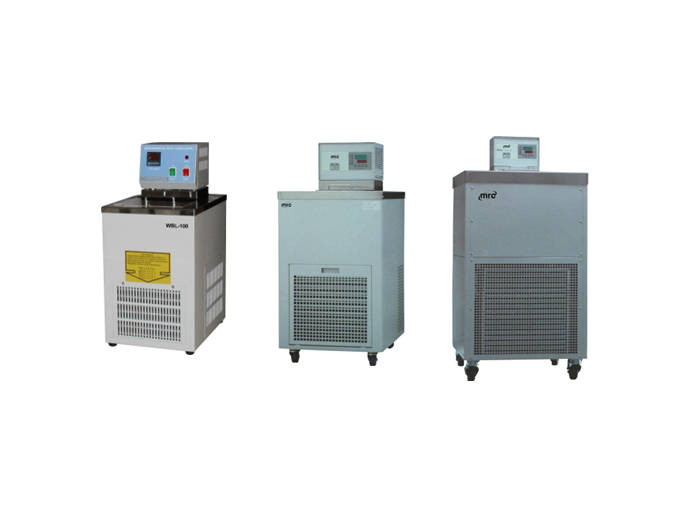
1. Refrigerated Circulators
● WBL-100/200 SERIES: Refrigerated Circulators
● WBL-1040/1640: Refrigerated Circulators, -40°C
● WBL-685/2085 SERIES: Refrigerated Circulators, -85°C
2.Laboratory Water Baths
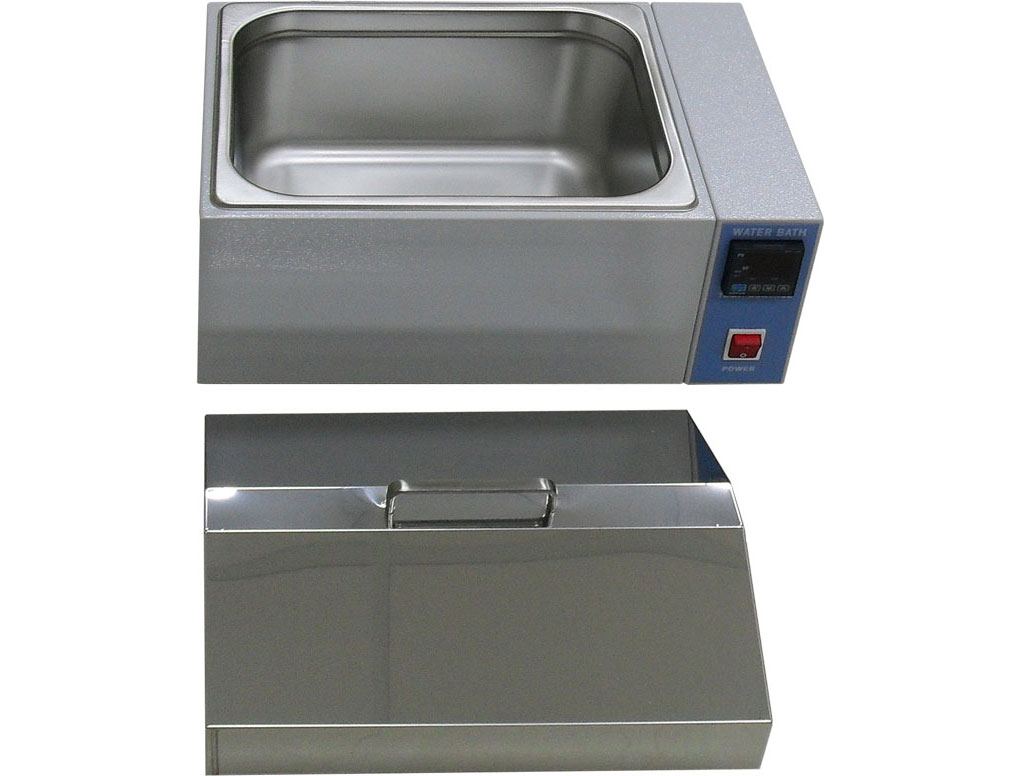
Stainless Steel Water Baths
● WBO-100/200: S.S Digital Laboratory Water Baths + Cover, 100°C
● WBST-60X20: Stainless Steel Water Bath, 50L + Safety Thermostat
Digital Laboratory Baths
● WBH-100/200 SERIES: Laboratory Digital Baths
● WBH-100TR: 10 Liter Digital Circulating Laboratory Bath + Cover
● WBH10-2: Laboratory Water Bath with Magnetic Stirrer
● WBH20-6: 20 Liter Water Bath Laboratory with Magnetic Stirrer

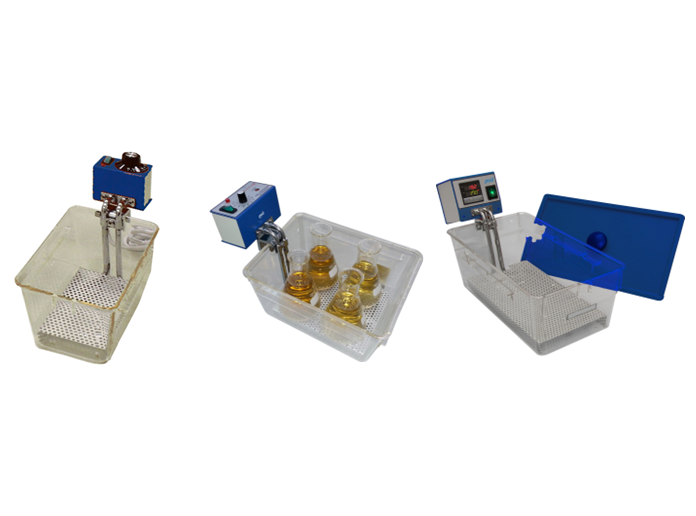
3. Polycarbonate Water Baths
- ●WB SERIES: Polycarbonate Water Baths
- ●WBS SERIES: Analog Polycarbonate Water Baths + Safety Thermostat
WBS-D SERIES: Digital Polycarbonate Water Baths
4. Laboratory Bead Baths
Laboratory bead baths provide precise and uniform temperature control, making them ideal for a variety of applications, including incubating, thawing, and heating samples. Unlike traditional water baths, bead baths operate with dry, solid beads, eliminating issues like evaporation, spillage, and contamination. They support various container shapes without requiring racks, are easy to clean and maintain, and reduce the risk of waterborne contamination.
Bead baths are energy-efficient, heat up quickly, and retain temperature effectively. They are safer to use, with no risk of burns from boiling water, and their durable design ensures longevity. Additionally, reusable beads and minimal waste make them a cost-effective and environmentally friendly solution for modern laboratories.
- ●M706-6L: Laboratory Bead Bath till 80°C, 5L
- ●M714-14L: Laboratory Bead Bath till 80°C, 12L
M720-20L: 20L Lab Bead Bath Till 80°C

5. Water Bath Shakers
- ●WBT-200/400D: Digital Water Bath Shakers + Platform + Cover
- ●WBT-401: 37.8 Liter Cooled Water Bath Shaker + Platform + Cover
WBT-450: Orbital Water Bath Shaker, 320*460mm, 200rpm, 100°C

6. Circulators & Heaters
- ●TEPS SERIES: Circulators Heaters
WBSI-150: Laboratory Water Bath, 150L with Circulation
7.Specialized Baths
- ●SWB SERIES: Small Water Baths, up to 80°C
- ●SWBR SERIES: Reciprocating Water Baths, 240V
- ●VBH SERIES: Kinematic Viscometer Baths
WBSTD-60X20: Digital Stainless Steel Water Bath, 50L + Safety Thermostat
Water bath-Information, Guidance And Tips
The task of heating, cooling and maintenance of temperature of liquid samples is done by water baths. They are useful for flammable liquids and biological items that should be avoided from bringing in contact with direct heat. Samples are put into the bath of fluid which is either warmed or cooled to the desired temperature by the container present along with the water bath.
The essential buying factors for a water bath include the following:
Power:
The pace of heating and cooling and, stabilization time for the bath is varied according to the water bath's power.
Temperature:
The range of temperature is determined by the unit's heating and cooling technologies, as well as the kind of fluid the bath has. The temperature range is normally environmental +5°C to 99.9 °C for water baths that are basic. Boiling water baths heat samples to a temperature of 100 °C.
Boiling water baths heat samples to a temperature of 100 °C. Most of the chillers cool samples to around –25 °C. There is also certain equipment that may cool samples to –50 °C.
The specifications for stability and temperature uniformity vary according to the water bath's intended use. Due to the fact that unstirred water baths depend on convection currents, they can never reach great temperature homogeneity. Temperature stability within 0.2 °C is suitable for a lot of usages, and tiny variations in temperature uniformity throughout the reservoir will not create concerns.
Water baths that are stirred may provide greater temperature consistency.
Characteristics for controlling
Analog controls are standard on basic water baths. Audio sirens have incorporated a ring when the temperature of the bath rises over certain limitations. Greater precision and enabling the use of temperatures that are predetermined is achieved by digital control.
Accessories
Numerous manufacturers provide immersion cooling or circulation systems for use in conjunction with a typical hot water bath. Racks are usually composed of stainless steel. Even floating racks of polyfoam are available.
Production:
The majority of units are composed entirely of stainless steel. The water bath's structure has an effect on its performance, cost and lifetime. Certain water baths of entry-level are made of plastic as the material is less costly, but it makes it inappropriate for work that requires boiling.
Tips on How to maintain your Laboratory water bath:
1) Eliminating the undesirable components:
The process of cleaning begins with unplugging water bath from source of the power. Now, to ensure it is safe, check the temperature of the water. The water baths that are large in size often have an outlet to empty the water into a container for drainage purposes. By fitting rubber tubing, you can reroute the water flow if the outlet isn't located at a proper place. In contrast to this, you can empty the water by inverting it over a sink as the smaller ones mostly do not have a drain outlet at all.
2) Cleaning for cleanliness and not looks:
Use a cloth along with soap for cleaning the water bath that was emptied. Try to clean the bath properly to remove all the dirt and impurities. Do not use anything without proper information. Do not make use of bleach for the purpose of sterilization of the water bath. This causes corrosion of the interior of the material, i.e. stainless steel. This is why make sure that you go through all the instructions for cleaning thoroughly.
3) Pouring the container with exactly the proper amount of water:
In order to replenish the water bath, you will have to use water that is neither overly salty not even too pure. Tap water is often too polluted, resulting in the scale's buildup or corrosion of the chlorine. As a substitute, you can make use of purified water which can be classified as single-distilled water or purified water with reverse osmosis, etc.
4) Clean regularly:
The only guaranteed approach to maintain a water bath hygienic and slime-free is cleaning it regularly. Commercial biocides can be applied in water baths to increase the period between cleanings.
Laboratory water bath uk