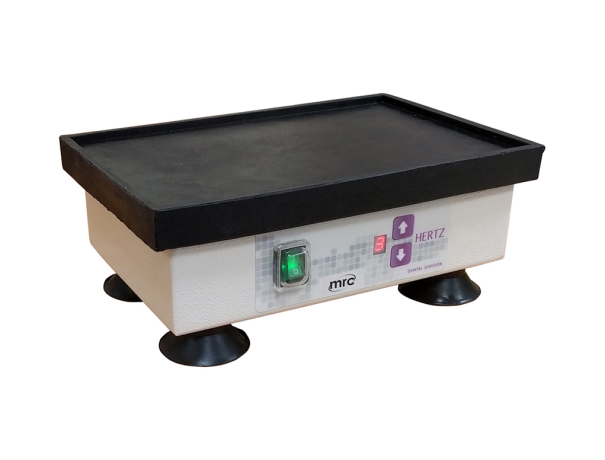
Laboratory Vibration Tables for Testing Electric Instruments: Ensuring Reliability Under Stress
In the world of electronics, durability under real-world conditions is critical.
Laboratory vibration tables are essential tools designed to simulate the mechanical vibrations that electric insBy exposing devices to controlled vibrations, manufacturers and research laboratories can verify product inte
What is a Laboratory Vibration Table?
A laboratory vibration table is a precision platform mounted on actuators or motors that generate controlled vElectric instruments are mounted on the platform and subjected to specific vibration profiles to simulate varioWhy Test Electric Instruments with Vibration Tables?
- Structural Integrity: Detects cracks, loose components, solder joint failures, and enclosure weaknesses.
- Performance Stability: Confirms that the instrument maintains functionality under dynamic forces.
- Improved Product Reliability: Prevents costly warranty claims and field failures by detecting defects early.
- Standards Compliance: Satisfies regulatory and industry-specific testing requirements.
Typical Applications of Vibration Testing
- Aerospace and Defense: Testing avionics, communication equipment, and navigation systems under simul- Automotive: Simulating road vibration effects on control units, sensors, and infotainment systems.
- Industrial Equipment: Ensuring robustness of monitoring devices, controllers, and safety systems in heavy-- Consumer Electronics: Testing smartphones, wearable devices, and portable electronics for everyday usagKey Features of Laboratory Vibration Tables
- Frequency Range: Typically from 5 Hz up to several thousand Hz.
- Amplitude Control: Ability to fine-tune the displacement or force applied to match real-world conditions.
- Programmable Profiles: Ability to simulate random, sinusoidal, or shock vibration patterns.
- Payload Capacity: Tables can be designed for light electronic assemblies or heavy instrument clusters.
- Multi-Axis Testing (optional): Advanced tables provide X, Y, and Z axis testing for full 3D simulation.
- Data Acquisition Systems: Real-time monitoring and recording of vibration levels.
How Vibration Testing is Performed
1. Mounting: The electric instrument is securely fixed to the vibration table to prevent artificial damping.
2. Profile Selection: An appropriate vibration profile is selected based on the product application.
3. Execution: The table is activated, applying vibrations according to the predefined program.
4. Monitoring: Instrument functionality is monitored during and after vibration exposure.
5. Analysis: Data is reviewed to determine if the instrument passes or fails