Life science measuring instruments are the backbone of modern laboratories, research facilities, and industrial testing environments. These tools are specifically designed to quantify biological, chemical, and physical parameters within living systems or biological samples. Whether you are measuring DNA concentration, analyzing protein structures, or monitoring environmental conditions, these instruments transform invisible processes into measurable data.
At their core, these devices bridge the gap between observation and scientific understanding. Without them, researchers would rely on subjective judgment rather than precise, repeatable measurements. Think about it like trying to bake without a scale or thermometer. You might get close, but you will never achieve consistent results. The same principle applies in life sciences, where even the smallest deviation can lead to completely different conclusions.
Life science measuring instruments operate across a wide spectrum of complexity. Some are simple handheld devices like pH meters, while others are highly sophisticated systems such as mass spectrometers or DNA sequencers. Regardless of complexity, their shared purpose remains the same: delivering accurate, reliable data that drives scientific discovery and innovation.
Why Precision Matters in Life Sciences
Precision in life sciences is not just important, it is critical. A minor measurement error can lead to incorrect diagnoses, failed experiments, or compromised product quality. In pharmaceutical development, for example, even a slight miscalculation in compound concentration can affect drug efficacy or safety.
High precision ensures reproducibility, which is the cornerstone of scientific credibility. If another laboratory cannot replicate your results, your findings lose value. This is why modern measuring instruments are designed with advanced calibration systems, digital controls, and automated error correction mechanisms.
Accuracy also plays a crucial role in regulatory compliance. Industries such as biotechnology and pharmaceuticals must adhere to strict standards. Instruments must not only perform well but also provide traceable and documented measurements. This is where certified calibration and validation procedures come into play, ensuring that every reading meets international standards.
Key Categories of Life Science Measuring Instruments
Analytical Instruments
Analytical instruments form the core of laboratory measurement systems. These tools are designed to identify, quantify, and analyze chemical and biological components within a sample. Examples include spectrophotometers, chromatographs, and mass spectrometers.
These instruments are often used when the goal is to understand composition at a molecular level. For instance, a spectrophotometer measures how much light a substance absorbs, which can indicate concentration levels. Chromatography systems separate complex mixtures into individual components, allowing scientists to analyze each one independently.
The importance of analytical instruments lies in their ability to provide detailed insights. Instead of simply observing that a reaction occurred, researchers can understand exactly what happened, how much of each substance is present, and how the system behaves under different conditions.
Environmental Monitoring Instruments
Environmental monitoring instruments are essential for maintaining controlled conditions in laboratories and studying ecosystems. These include temperature sensors, humidity meters, gas analyzers, and air quality monitors.
In a laboratory setting, maintaining stable environmental conditions is crucial. Even small fluctuations in temperature or humidity can affect experimental outcomes. For example, cell cultures require specific conditions to grow properly. If these conditions are not maintained, the results become unreliable.
Outside the laboratory, environmental instruments play a vital role in ecological research. Scientists use them to monitor pollution levels, climate changes, and soil conditions. These measurements help in understanding environmental trends and developing strategies to protect ecosystems.
Biological Measurement Instruments
Biological measurement instruments focus specifically on analyzing living organisms or biological materials. This category includes devices like microscopes, PCR machines, and cell counters.
These instruments allow researchers to study biological processes at different scales, from entire organisms down to individual cells and molecules. For example, a microscope enables visualization of cells, while a PCR machine amplifies DNA sequences for genetic analysis.
The ability to measure biological parameters accurately has revolutionized fields like medicine, genetics, and microbiology. It enables early disease detection, personalized treatments, and a deeper understanding of life at the molecular level.
Spectroscopy Instruments in Life Sciences
UV-Vis Spectrophotometers
UV-Vis spectrophotometers are among the most widely used instruments in life science laboratories. They measure the absorption of ultraviolet and visible light by a sample, providing information about its concentration and composition.
This technique is particularly useful for analyzing nucleic acids and proteins. For instance, DNA absorbs UV light at a specific wavelength, allowing researchers to determine its concentration quickly and accurately. This makes UV-Vis spectrophotometry a standard tool in molecular biology labs.
What makes this instrument so valuable is its simplicity and versatility. It requires minimal sample preparation and delivers results in seconds. Despite its simplicity, it provides highly reliable data, making it indispensable for routine analysis.
Fluorescence Spectrometers
Fluorescence spectrometers take measurement a step further by analyzing emitted light rather than absorbed light. When certain molecules are exposed to light, they emit fluorescence at different wavelengths. Measuring this emission provides highly sensitive detection of specific compounds.
This technique is particularly useful when working with low concentration samples. It can detect substances at levels that would be impossible to measure using other methods. This makes it ideal for applications such as drug discovery, molecular interactions, and cellular imaging.
The sensitivity and specificity of fluorescence measurements have made them a powerful tool in modern research. They allow scientists to study processes in real time, providing insights that were previously unattainable.
Chromatography Systems
HPLC Systems
High Performance Liquid Chromatography (HPLC) is a cornerstone of analytical chemistry in life sciences. It separates compounds based on their interactions with a stationary phase and a liquid mobile phase.
HPLC is widely used in pharmaceutical analysis, food testing, and biochemical research. It allows precise quantification of compounds even in complex mixtures. For example, it can separate different proteins or identify impurities in a drug formulation.
The strength of HPLC lies in its accuracy and reproducibility. It provides detailed information about each component in a sample, making it essential for quality control and research applications.
Gas Chromatography
Gas Chromatography (GC) operates on a similar principle but uses a gas as the mobile phase. It is particularly effective for analyzing volatile compounds.
This method is commonly used in environmental analysis, forensic science, and chemical research. It can detect trace levels of substances, making it invaluable for identifying pollutants or analyzing chemical compositions.
The ability to analyze complex mixtures with high precision makes chromatography systems a fundamental part of life science laboratories.
Microscopy and Imaging Instruments
Optical Microscopes
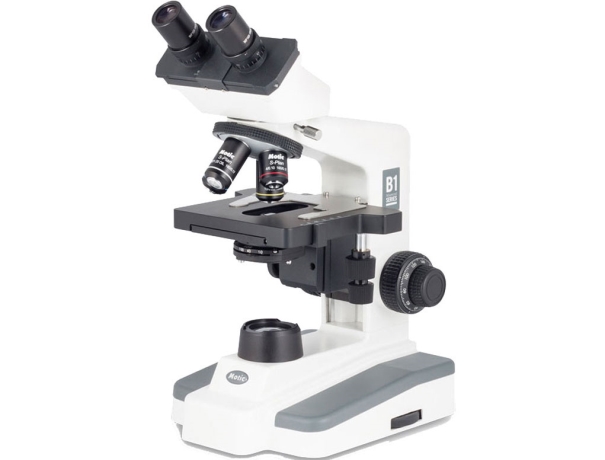
Optical microscopes are the most common tools for visualizing biological samples. They use visible light and lenses to magnify specimens, allowing researchers to observe cells and tissues.
Despite being one of the oldest technologies in life sciences, optical microscopy continues to evolve. Modern systems offer high resolution imaging, digital integration, and advanced contrast techniques.
These microscopes are essential for routine laboratory work, including cell culture monitoring and histological analysis. They provide a direct visual understanding of biological structures.
Electron Microscopes
Electron microscopes take imaging to another level by using electron beams instead of light. This allows for extremely high resolution, enabling visualization of structures at the nanometer scale.
These instruments are used when detailed structural analysis is required, such as studying viruses or cellular organelles. While they are more complex and expensive than optical microscopes, their capabilities are unmatched.
The ability to see structures that are otherwise invisible has opened new frontiers in biology and materials science.
Cell and Molecular Analysis Instruments
PCR Machines
Polymerase Chain Reaction (PCR) machines are essential for DNA amplification. They allow researchers to create millions of copies of a specific DNA sequence from a small sample.
This technology is widely used in diagnostics, genetic research, and forensic analysis. It enables rapid detection of pathogens and genetic mutations.
PCR machines have become a standard tool in laboratories due to their speed and reliability. They play a critical role in modern molecular biology.
Flow Cytometers
Flow cytometers analyze physical and chemical characteristics of cells as they flow in a fluid stream. They can measure multiple parameters simultaneously, providing detailed information about cell populations.
This technology is widely used in immunology, cancer research, and clinical diagnostics. It allows rapid analysis of thousands of cells per second, making it highly efficient.
The ability to analyze complex biological systems in real time makes flow cytometry an invaluable tool.
Environmental and Physical Measurement Devices
pH Meters and Conductivity Meters
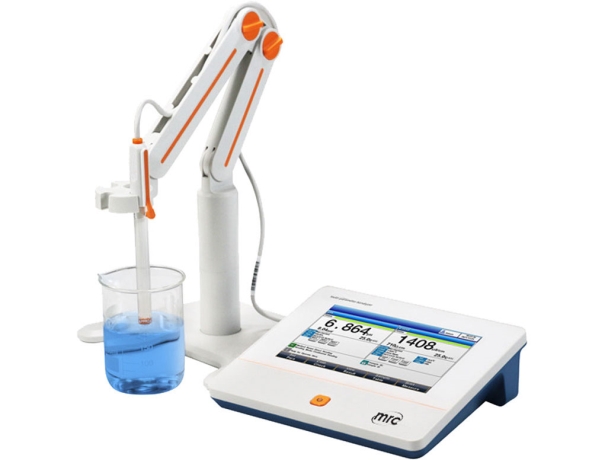
pH meters measure the acidity or alkalinity of a solution, while conductivity meters assess its ability to conduct electricity. These measurements are essential in biological and chemical experiments.
Maintaining the correct pH is critical for enzyme activity, cell growth, and chemical reactions. Even small deviations can significantly impact results.
Temperature and Humidity Sensors
Temperature and humidity sensors ensure stable environmental conditions. They are essential in laboratories, storage facilities, and field research.
These sensors help maintain optimal conditions, ensuring consistency and reliability in experiments.
Advances in Life Science Measuring Technology
Automation and AI Integration
Modern instruments are increasingly automated, reducing human error and improving efficiency. AI integration allows for data analysis, pattern recognition, and predictive insights.
Automation not only speeds up processes but also ensures consistency. It allows researchers to focus on interpretation rather than manual tasks.
Miniaturization and Portability
Advancements in technology have led to smaller, portable instruments. These devices enable on-site measurements, making field research more accessible.
Portable instruments are transforming how data is collected, allowing real-time analysis outside traditional laboratory settings.
Applications Across Industries
Pharmaceuticals and Biotechnology
Life science measuring instruments are critical in drug development, quality control, and research. They ensure safety, efficacy, and compliance with regulations.
Environmental Science and Agriculture
These instruments help monitor environmental conditions, analyze soil and water quality, and improve agricultural practices.
Choosing the Right Life Science Measuring Instruments
Key Selection Criteria
Choosing the right measuring instrument depends on accuracy, sensitivity, ease of use, and application requirements. Budget and maintenance costs also play a role.
Common Mistakes to Avoid
Avoid selecting instruments based solely on price. Consider long-term reliability, calibration requirements, and support availability.
Maintenance, Calibration, and Accuracy
Calibration Standards
Regular calibration ensures accuracy and compliance with standards. It is essential for maintaining data integrity.
Ensuring Long-Term Reliability
Proper maintenance extends instrument lifespan and ensures consistent performance.