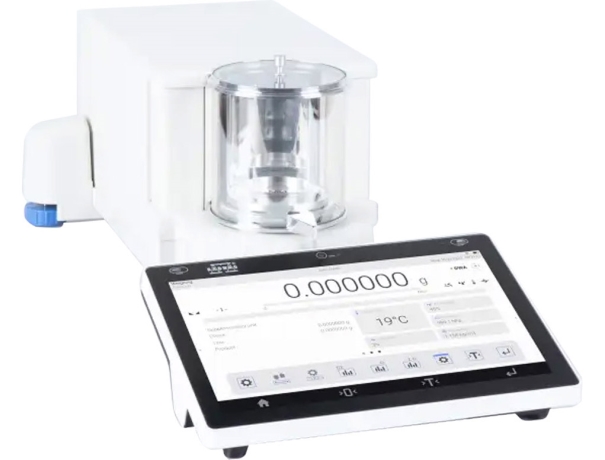
A microbalance is a device used to weigh minimal amounts of material, usually on the order of micrograms (millionths of a gram). Microbalances are extremely sensitive and can be used to measure very small changes in mass. In many cases, they are used in research settings to study reactions or processes that involve very small amounts of material. Microbalances typically have a readout that is displayed in micrograms (µg). Some microbalances can measure down to the nanogram range (billionths of a gram), and some even lower.
The Working Principles Of A Microbalance:
Microbalances measure the force exerted on a platform or beam when a small amount of material is placed on it. The force is directly proportional to the mass of the material being weighed. The Microbalance then calculates the mass of the material based on the measured force.
The amount of force exerted by the material being weighed is measured by a sensor, which sends a signal to a display that shows the weight in micrograms. Microbalances typically have a resolution of 0.1 micrograms or better. This means they can measure very small changes in mass with great accuracy.
The tool relies on two components to function. The first is the scale, which consists of a platform or beam supported by a lever arm. The second component is the counterbalance, which consists of a small weight attached to the lever arm's other end. When the material is placed on the platform, the lever arm tips, and the counterbalance moves accordingly.
Users must not touch the surface of the platform with their fingers, as this can contaminate the results. Instead, they place the material on the platform using a special tool called a weighing pan. The Microbalance then calculates the mass of the material based on the amount of force exerted on the platform.
Keeping the Microbalance away from vents, drafts, doors, and windows is important because these environmental changes can cause the balance to give inaccurate readings. It is also important to keep them clean, dust-free environments, as even a small amount of dirt or dust can affect the measurements.
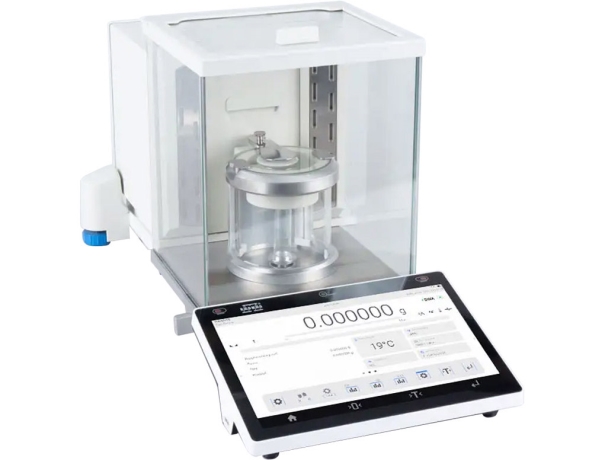
What Are Some Applications Of Microbalances?
Microbalances have a wide range of applications in both research and industry. They are commonly used to measure very small quantities of chemicals or other materials in laboratory settings. Microbalances can also be used to monitor reactions or processes that involve small amounts of material. In addition, microbalances are often used to calibrate other devices used to measure small quantities of material, such as pipettes or volumetric flasks.
In industry, microbalances measure the weight of small parts or products. They also monitor the purity of chemicals or other materials during manufacturing processes. In addition, microbalances are often used in quality control applications to ensure that products meet specifications.
What would suit us better? Microbalance or Analytical Balance?
The main difference between a microbalance and an analytical balance is that a microbalance is designed to measure very small quantities of material. In contrast, an analytical balance is designed to measure larger quantities of material. Microbalances are typically more sensitive than analytical balances and can measure changes in mass down to the nanogram range.
Both microbalances and analytical balances are used in a variety of applications in both research and industry. Microbalances are commonly used to measure small quantities of chemicals or other materials in laboratory settings. In contrast, analytical balances are often used to weigh larger quantities of material in industrial or manufacturing applications. The readability range is less on Microbalance (0.1 micrograms) than on analytical balance (0.1 milligrams).
Microbalance uses electronic force compensation, while analytical balance generally doesn't use this feature. Microbalances are more expensive than analytical balances. Finally, microbalances have a smaller pan size than analytical balances. The smaller pan size on a microbalance enables the measurement of very small quantities of material. In comparison, the larger pan size on an analytical balance is better suited for measuring larger quantities of material.
To summarize, Microbalance is useful in many ways and has several applications in research and industry. They are more sensitive than analytical balances and can measure very small changes in mass. In addition, microbalances often have a smaller pan size, enabling the measurement of very small quantities of material.
For proper maintenance of scales, an instruction file for cleaning the instruments attached:"Laboratory balance cleaning"