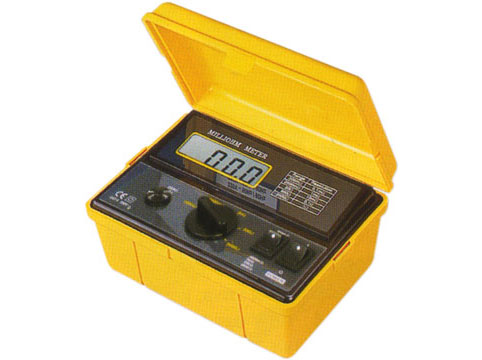
A miliohm meter is a precise measuring instrument used to determine very low resistance values in electrical circuits. Typically expressed in milliohms (mΩ), these low resistance measurements are crucial for applications such as electrical engineering, electronics manufacturing, and quality assurance testing
Specifications of Miliohm Meters
1. High Precision and Accuracy
Miliohm meters are designed for high-precision resistance measurements. They often feature advanced technology like four-wire (Kelvin) measurement, which eliminates errors caused by lead resistance, ensuring results are reliable and accurate.
2. Wide Measurement Range
These instruments can measure resistance ranging from a few micro-ohms to hundreds of milliohms, making them versatile for various applications.
3. Digital Displays
Modern miliohm meters come with digital displays that provide clear and immediate readings. Advanced models may also include touchscreens for ease of use.
4. Portability and Durability
Portable models are compact and rugged, allowing for use in field conditions. Many are designed with robust casings to withstand environmental challenges.
5. Advanced Connectivity Options
Premium models feature USB, RS232, or Bluetooth connectivity for data logging and analysis, integrating seamlessly with software for advanced reporting.
Purposes of Miliohm Meters
1. Electrical Component Testing
Miliohm meters are extensively used to test low-resistance components like transformers, inductors, and switches to ensure they meet quality standards.
2. Battery Resistance Measurement
Battery manufacturers rely on miliohm meters to measure internal resistance, which affects battery performance and lifespan.
3. Automotive Industry
In the automotive sector, these meters are used to test the electrical connections in vehicles, including wiring harnesses and grounding systems.
4. PCB Manufacturing
Printed circuit board (PCB) manufacturers use miliohm meters to verify the integrity of solder joints and conductive traces.
5. Aerospace and Defense
High-reliability applications in aerospace and defense require precise resistance measurements to ensure the integrity of critical systems.
How to Use a Miliohm Meter
Step 1: Prepare the Equipment
Ensure the miliohm meter is properly calibrated. Use high-quality test leads to minimize interference.
Step 2: Connect the Leads
For accurate results, connect the leads using the four-wire measurement method. This involves two wires for current and two for voltage measurement.
Step 3: Select the Measurement Range
Set the device to an appropriate measurement range based on the expected resistance value.
Step 4: Perform the Measurement
Place the leads on the component or circuit under test, ensuring good contact. The meter will display the resistance value.
Step 5: Record the Data
If your meter has data logging capabilities, save the results for further analysis.
Factors to Consider When Choosing a Miliohm Meter
1. Measurement Range
Ensure the meter can measure the resistance range required for your specific application.
2. Accuracy and Resolution
Look for a model with high accuracy (±0.1% or better) and a resolution of at least 0.1 milliohm.
3. Portability
For fieldwork, opt for a lightweight, battery-operated model.
4. Advanced Features
Consider meters with features like data storage, connectivity options, and automated testing capabilities.
5. Durability
Choose a model designed to withstand environmental conditions if working in harsh environments.
Uses of Miliohm Meters
1. Quality Control in Manufacturing
- Cables and Wires: To check the resistance of electrical cables and wires, ensuring they meet quality standards and specifications.
- Circuit Board Testing: To verify the resistance of printed circuit board (PCB) tracks and connections, ensuring reliability and minimizing energy loss.
2. Battery Testing
- Used to measure the internal resistance of batteries, which is a critical parameter for assessing battery health, capacity, and performance.
3. Electrical Equipment Maintenance
- Motors and Generators: To test the winding resistance of motors and generators, identifying potential issues like short circuits or broken windings.
- Transformers: To measure the winding resistance in transformers, ensuring proper functionality and diagnosing issues.
4. Welding and Soldering
- To check the quality of welds and solder joints by measuring their resistance, ensuring they provide good electrical continuity.
5. Connector Testing
- Used to test the resistance of electrical connectors and contacts, ensuring they provide minimal resistance for optimal performance.
6. Railway and Transportation
- To measure the resistance of rail tracks and bonding in railway systems for safety and maintenance purposes.
7. Aerospace and Automotive Industries
- To test critical components such as aircraft wiring, automotive connectors, and bonding points, where low resistance is crucial for safety and efficiency.
8. Electronics Research and Development
- In R&D laboratories, milli-ohm meters are used to test and develop electronic components like resistors, sensors, and conductors.
9. Energy Systems
- Solar Panels: To measure the resistance of photovoltaic cells and connectors.
- Wind Turbines: To test electrical connections and ensure efficient power transfer.
10. Industrial Maintenance
- Used for predictive and preventive maintenance by monitoring changes in resistance, which can indicate wear or damage in electrical systems.