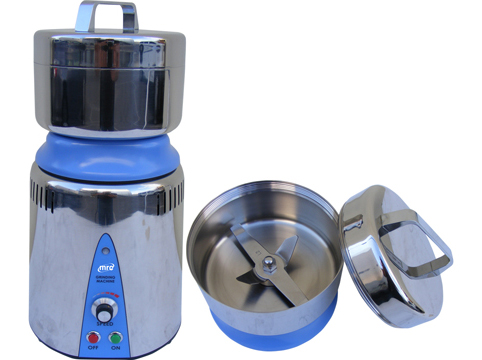
In the sterile, quiet corridors of the United Kingdom’s leading research facilities, a subtle revolution is taking place. It isn't found in the headlines of AI breakthroughs or space exploration, but in something far more foundational: the art of the grind.
To the untrained eye, a laboratory mill is a sturdy piece of machinery. To a scientist, it is the gatekeeper of data. Whether analyzing the mineral composition of a Scottish Highland rock or the chemical purity of a new pharmaceutical compound, the results are only as good as the sample preparation. In this specialized landscape, MUNRO has established itself as the critical link between global engineering and British scientific inquiry.
The Science of the Small
The objective of a laboratory mill is deceptively simple: take a bulk material and reduce it to a perfectly uniform, representative powder. However, the physics involved is anything but basic. Depending on the material—be it a brittle ceramic or a fibrous plant stem—different mechanical forces are required.
Impact and Friction: Using high-speed collisions to shatter hard materials.
Shearing: Cutting through elastic or fibrous samples that would otherwise resist crushing.
Cryogenic Grinding: Utilizing liquid nitrogen to embrittle soft or heat-sensitive materials (like plastics or gummy tissues) before they are processed.
Without this level of precision, downstream analysis—such as X-ray fluorescence or DNA sequencing—can become skewed. A single "rogue" oversized particle can ruin a week of high-budget research.
Why the UK? A Landscape of Innovation
The United Kingdom remains a global hub for sectors that demand extreme material accuracy. From the "Golden Triangle" of biotech in London, Cambridge, and Oxford to the advanced manufacturing corridors of the North, the demand for high-end laboratory instrumentation has never been higher.
As a leading importer and supplier, MUNRO navigates the complexities of the post-Brexit supply chain to ensure that British laboratories have access to the world's most advanced milling technology. Their role is more than just logistics; it is one of curation. By identifying the most reliable manufacturers from around the globe and bringing them to the UK market, they provide the "industrial backbone" for local innovation.
The Sustainability Shift
Modern laboratory mills are no longer just about power; they are about efficiency and decontamination. In an era where sustainability is paramount, the new generation of mills imported by MUNRO focuses on:
Reduced Energy Consumption: High-torque motors that achieve results in half the time.
Zero-Cross Contamination: Specialized grinding jars made of agate, zirconia, or tungsten carbide that ensure the machinery doesn't "leak" elements into the sample.
Noise Reduction: Engineering designs that allow these powerful machines to operate in shared laboratory spaces without disrupting the focus of the team.
"Precision is not just about the final number on a scale; it’s about the integrity of the process that got you there."
Looking Forward
As the UK pushes further into green energy research—specifically in the development of new battery technologies and carbon capture materials—the humble laboratory mill will remain at the forefront. You cannot build a better battery without first understanding the microscopic behavior of its components.
Through the strategic supply and technical support of companies like MUNRO, British scientists can continue to do what they do best: look at the world, break it down, and figure out how to put it back together better than before.