A polarimeter is a scientific instrument used to measure the rotation of polarized light caused by optically active substances. It is widely used in various fields such as chemistry, physics, biochemistry, and pharmaceuticals. The measurement of optical rotation can provide valuable information about the molecular structure, concentration, purity, and specific optical activity of a substance.
The basic principle of a polarimeter involves passing polarized light through a sample and measuring the angle by which the plane of polarization is rotated. The sample typically contains chiral molecules that have the ability to rotate the plane of polarization. Chiral molecules are asymmetric and exist in two enantiomeric forms that are mirror images of each other.
Components
A polarimeter consists of several essential components, including a light source, a polarizer, a sample tube, an analyzer, and a detector. The light source emits a beam of polarized light, which passes through the polarizer to ensure that the light is polarized in a specific direction. The polarized light then passes through the sample tube containing the optically active substance, where it undergoes a rotation in its plane of polarization. Finally, the rotated light passes through the analyzer, which can be rotated to a position that allows the detection of the maximum or minimum intensity of light, depending on the specific type of polarimeter used.
By measuring the angle of rotation and taking into account the specific parameters of the polarimeter, such as the length of the sample tube and the wavelength of light used, scientists can calculate the specific rotation of the substance. Specific rotation is a characteristic property of a substance and is defined as the angle of rotation per unit length and concentration of the sample. It is often expressed in degrees per decimeter per gram per milliliter (°/(dm·g/mL)).
Uses of Polarimeters
Polarimeters are commonly used in the pharmaceutical industry to determine the purity and concentration of chiral drugs, as well as in chemical synthesis and quality control processes. They are also utilized in research laboratories for studying molecular structure and interactions, as well as in the food industry for analyzing sugars, proteins, and other optically active compounds.
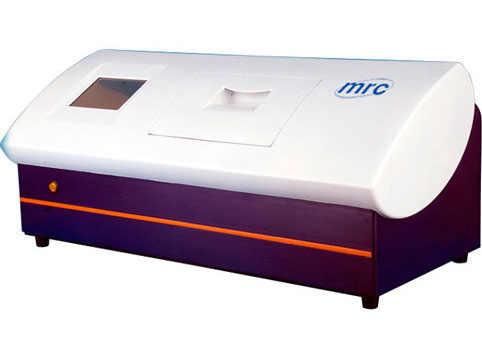
Applications of Munro Polarimeters
Pharmaceutical Industry:
Drug Purity and Concentration: Ensuring the correct formulation and purity of active pharmaceutical ingredients (APIs).
Quality Control: Maintaining consistency in the production of pharmaceuticals.
Food and Beverage Industry:
Sugar Content Analysis: Measuring the concentration of sugars in food products, juices, and syrups.
Flavor and Fragrance Analysis: Determining the concentration and purity of essential oils and flavors.
Chemical Industry:
Chemical Purity: Analyzing the purity of chemicals used in various industrial processes.
Concentration Measurement: Determining the concentration of chiral compounds in chemical solutions.
Research and Development:
Chirality Studies: Investigating the chiral properties of new compounds in chemical and pharmaceutical research.
Structural Analysis: Studying the structure and behavior of optically active molecules.
Clinical Laboratories:
Biological Samples: Measuring the optical rotation of biological samples to determine the concentration of certain biomolecules.
Diagnostic Testing: Analyzing bodily fluids for specific optically active substances as part of diagnostic procedures.
Features of Munro Polarimeters
High Accuracy and Precision:
Advanced optical systems and digital technology ensure precise and accurate measurements of optical rotation.
Wide Measurement Range:
Capable of measuring a broad range of optical rotations, suitable for various applications.
User-Friendly Interface:
Intuitive controls and clear display screens make them easy to operate, even for non-specialists.
Robust and Durable Construction:
Built to withstand demanding industrial environments, ensuring long-lasting reliability.
Automatic Temperature Compensation (ATC):
Automatically adjusts readings to account for temperature variations, providing consistent results.
Digital and Analog Options:
Available in both digital and traditional analog models to suit different user preferences and applications.
Calibration and Maintenance:
Easy calibration procedures and low maintenance requirements enhance their usability and longevity.
Data Connectivity:
Equipped with data output options for easy integration with laboratory information management systems (LIMS) and data logging.