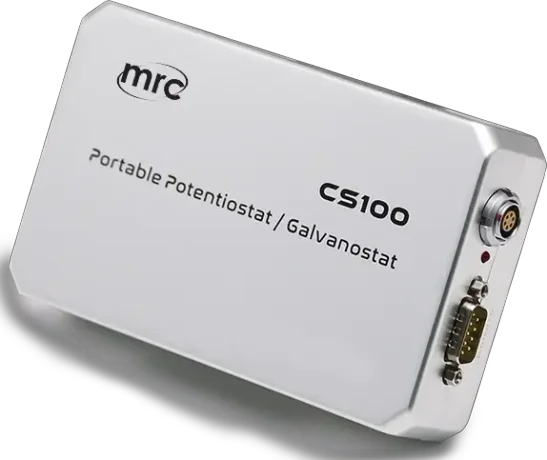
Portable potentiostat/galvanostat systems are compact electrochemical analyzers designed to perform advanced electrochemical measurements directly in laboratories, industrial facilities, outdoor environments, and field applications. These instruments allow researchers to study the electrochemical properties of materials by controlling either voltage or current while monitoring the electrical response of the tested system.
In the past, electrochemical testing was usually limited to large laboratory instruments that required dedicated workstations and controlled environments. Today, portable devices have dramatically changed the industry by providing highly accurate electrochemical analysis in a lightweight and mobile format. Engineers can now perform corrosion testing on pipelines, evaluate coatings on bridges, analyze batteries in electric vehicles, or measure electrochemical behavior in remote environmental sites without transporting samples back to the laboratory.
Portable electrochemical instruments are especially valuable because real-world conditions often influence electrochemical behavior. Temperature fluctuations, humidity, electrolyte composition, and mechanical stress can all affect corrosion rates and material performance. Performing measurements directly in the operating environment provides more realistic and useful results compared to laboratory simulations alone.
What Is a Potentiostat?
A potentiostat is an electronic instrument designed to control the electrical potential between electrodes inside an electrochemical cell. The instrument carefully adjusts voltage while measuring the resulting current generated by electrochemical reactions occurring at the material surface.
The primary purpose of a potentiostat is to investigate electrochemical reactions with high precision. These reactions may involve corrosion processes, oxidation and reduction behavior, battery charging cycles, sensor activity, or chemical interactions between materials and electrolytes.
A potentiostat typically operates using a three-electrode configuration that includes:
| Electrode Type | Purpose |
|---|
| Working Electrode | Material or sample being tested |
| Reference Electrode | Provides stable reference potential |
| Counter Electrode | Completes the electrical circuit |
This setup allows the instrument to accurately control voltage while measuring electrochemical activity at the sample surface. Even very small current changes can reveal important information about corrosion resistance, coating quality, reaction kinetics, and material stability.
Portable potentiostats are now capable of performing advanced electrochemical methods that were previously limited to large laboratory systems. Modern devices can support cyclic voltammetry, chronoamperometry, impedance spectroscopy, Tafel analysis, and polarization resistance measurements while remaining small enough to carry easily between test locations.
What Is a Galvanostat?
A galvanostat is closely related to a potentiostat, but instead of controlling voltage, it controls current flowing through the electrochemical cell. The instrument maintains a constant current while measuring the voltage response generated by the electrochemical system.
Galvanostatic operation is commonly used in battery testing, electroplating studies, corrosion experiments, and energy storage research. Many modern electrochemical analyzers combine both potentiostat and galvanostat functionality into a single instrument, which is why the term “potentiostat/galvanostat” is widely used.
The ability to switch between potentiostatic and galvanostatic control gives researchers greater flexibility during experiments. For example, battery researchers may use galvanostatic charge-discharge testing to evaluate battery capacity and cycling performance, while corrosion engineers may use potentiostatic polarization methods to study passive film stability.
Portable galvanostat systems have become increasingly important in renewable energy industries. The rapid growth of lithium-ion batteries, supercapacitors, and hydrogen fuel cells has created strong demand for compact electrochemical instruments capable of field testing and mobile research applications.
Importance of Polarization Measurements
Polarization measurements are among the most valuable electrochemical techniques used in material science and corrosion engineering. These measurements evaluate how materials respond when electrical potential or current is applied to the surface.
A polarization curve provides detailed information about electrochemical reactions occurring at the electrode interface. By analyzing the relationship between voltage and current, researchers can determine corrosion rates, passive behavior, pitting susceptibility, reaction kinetics, and protective coating performance.
One way to understand polarization measurements is to compare them to a stress test performed on a material. Just as a medical stress test reveals how the human body reacts under pressure, polarization measurements reveal how materials behave under electrochemical stress.
Portable potentiostat/galvanostat systems are especially useful for polarization measurements because they allow testing directly in real operating environments. Corrosion processes in marine structures, underground pipelines, industrial reactors, and reinforced concrete can vary significantly depending on environmental conditions. Portable testing provides more realistic data and faster diagnostic results.
Industries that rely heavily on polarization measurements include:
- Oil and gas
- Marine engineering
- Aerospace
- Automotive manufacturing
- Renewable energy
- Water treatment
- Infrastructure inspection
- Academic research
How Portable Potentiostat/Galvanostat Instruments Work
Portable potentiostat/galvanostat systems contain highly advanced electronics designed for precision electrochemical measurements. Despite their compact size, these devices are capable of controlling voltage and current with remarkable accuracy.
The instrument generates electrical signals that interact with the electrochemical cell. During testing, the potentiostat continuously monitors voltage and current while adjusting electrical conditions based on the selected experimental method.
Modern portable systems typically include:
| Component | Function |
|---|
| Signal Generator | Produces voltage or current signals |
| Control Amplifier | Maintains stable electrochemical conditions |
| Analog-to-Digital Converter | Converts signals into digital data |
| Data Processing Unit | Analyzes electrochemical response |
| Communication Interface | Connects to software or mobile devices |
Advanced software plays a major role in modern electrochemical analysis. Portable instruments are usually connected to laptops, tablets, or smartphones that control experiments and display real-time data.
The software allows researchers to:
- Configure electrochemical experiments
- Visualize polarization curves
- Analyze corrosion rates
- Export measurement results
- Automate testing sequences
- Generate professional reports
Wireless communication has also become increasingly common. Some portable systems now support Bluetooth and Wi-Fi connectivity for remote operation and cloud-based data management.
Linear Polarization Resistance (LPR)
Linear Polarization Resistance, commonly called LPR, is one of the fastest and most widely used electrochemical methods for estimating corrosion rates. The technique involves applying a very small voltage disturbance around the corrosion potential and measuring the resulting current response.
The relationship between voltage and current allows researchers to calculate polarization resistance, which can then be used to estimate corrosion rate.
LPR is highly popular because it offers several advantages:
- Rapid measurements
- Minimal damage to the sample
- Simple experimental setup
- Reliable corrosion estimation
- Suitable for field testing
Portable potentiostat systems have significantly improved the practicality of LPR testing in industrial environments. Corrosion engineers can now perform immediate inspections on pipelines, storage tanks, offshore structures, and processing equipment without requiring laboratory analysis.
The ability to detect corrosion problems early is extremely valuable because corrosion failures can lead to safety hazards, environmental damage, and major financial losses.
Cyclic Polarization Measurements
Cyclic polarization is another important electrochemical technique used to study corrosion behavior and material stability. During cyclic polarization, the instrument sweeps electrical potential forward and backward while monitoring current response.
This method is particularly useful for identifying localized corrosion tendencies such as pitting corrosion. Stainless steels and protective coatings are often evaluated using cyclic polarization techniques because the results provide insight into passive film breakdown and repassivation behavior.
The resulting polarization curves contain valuable information about:
- Corrosion susceptibility
- Passive layer stability
- Pitting potential
- Hysteresis behavior
- Electrochemical reaction mechanisms
Portable potentiostat/galvanostat systems make cyclic polarization testing much more practical in field environments where environmental conditions strongly influence corrosion behavior.
Tafel Analysis in Corrosion Studies
Tafel analysis is one of the classic electrochemical methods used for corrosion rate determination. The technique analyzes the logarithmic relationship between current density and electrode potential.
By studying the anodic and cathodic regions of the polarization curve, researchers can estimate corrosion current density and calculate material degradation rates.
Tafel analysis is widely used because it converts electrochemical behavior into quantitative engineering data. Corrosion engineers can use this information to predict equipment lifespan, optimize material selection, and evaluate protective coatings.
Portable potentiostat systems often include automated Tafel analysis software that simplifies interpretation and accelerates field diagnostics.
Electrochemical Impedance Spectroscopy (EIS)
Electrochemical Impedance Spectroscopy, commonly known as EIS, is one of the most advanced electrochemical techniques available today. EIS measures system response over a wide range of frequencies to evaluate electrochemical processes occurring inside the material or electrolyte.
EIS provides extremely detailed information about:
- Charge transfer resistance
- Coating integrity
- Diffusion processes
- Double-layer capacitance
- Battery internal resistance
- Fuel cell performance
Portable EIS-capable systems have become increasingly popular because they combine advanced analytical capability with field mobility.
In battery research, EIS is widely used to evaluate lithium-ion cell performance and aging behavior. In corrosion engineering, EIS helps assess coating quality and protective layer effectiveness.
Although EIS measurements require highly stable electronics and sophisticated signal processing, modern portable instruments are now capable of delivering impressive impedance analysis performance in compact form factors.
Applications of Portable Potentiostat/Galvanostat Systems
Corrosion Monitoring
Corrosion monitoring remains one of the largest application areas for portable electrochemical instruments. Industrial infrastructure constantly faces degradation caused by moisture, chemicals, salts, and environmental exposure.
Portable potentiostat systems allow engineers to evaluate corrosion directly on-site. Applications include:
- Pipeline inspection
- Marine corrosion analysis
- Reinforced concrete evaluation
- Coating assessment
- Cathodic protection monitoring
Real-time field analysis helps organizations reduce downtime and improve predictive maintenance strategies.
Battery Research and Energy Storage
The global expansion of electric vehicles and renewable energy systems has created enormous demand for electrochemical testing equipment.
Portable potentiostat/galvanostat systems are widely used for:
- Lithium-ion battery characterization
- Supercapacitor analysis
- Charge-discharge testing
- Electrode material development
- Fuel cell research
Field-capable electrochemical instruments are especially valuable when testing large battery systems installed in vehicles or renewable energy facilities.
Environmental Analysis
Electrochemical techniques are increasingly used for environmental monitoring and water quality testing.
Portable systems can analyze:
- Heavy metals
- Dissolved oxygen
- Chemical contaminants
- Electrochemical sensors
- Pollutants in water systems
Field portability is essential because sample transport can alter chemical composition before laboratory analysis.
Academic and Research Laboratories
Universities and research institutions rely heavily on electrochemical instruments for scientific investigations.
Portable systems are especially attractive for academic environments because they provide:
- Lower cost compared to large laboratory analyzers
- Flexible mobility between laboratories
- Multi-purpose electrochemical capabilities
- Easy integration with educational experiments
Advantages of Portable Potentiostat/Galvanostat Devices
Portable electrochemical systems offer several major advantages over traditional laboratory instruments.
Mobility and Flexibility
The ability to perform measurements directly in the field is one of the greatest benefits. Engineers can analyze electrochemical behavior under real operating conditions rather than relying solely on laboratory simulations.
Compact Design
Modern portable instruments are lightweight and easy to transport. Some handheld systems can operate entirely from rechargeable batteries, making them ideal for remote testing locations.
Faster Decision-Making
Immediate access to electrochemical data allows faster maintenance decisions and reduces delays associated with laboratory testing.
Lower Equipment Costs
Portable systems are often more affordable than large benchtop analyzers, making electrochemical testing accessible to smaller laboratories and industrial organizations.
Real-Time Diagnostics
Field measurements provide immediate insight into corrosion behavior, coating performance, and material degradation.
Choosing the Right Portable Potentiostat/Galvanostat
Selecting the right instrument depends heavily on the intended application. Different electrochemical studies require different voltage ranges, current capabilities, and analytical techniques.
Important factors to consider include:
| Specification | Importance |
|---|
| Voltage Range | Determines experiment flexibility |
| Current Sensitivity | Important for low-current measurements |
| EIS Capability | Required for impedance analysis |
| Battery Operation | Useful for remote field testing |
| Software Features | Affects usability and data analysis |
| Connectivity Options | Supports wireless operation |
| Number of Channels | Important for simultaneous experiments |
Researchers should carefully evaluate both hardware performance and software usability before purchasing an electrochemical analyzer.
Portable vs Benchtop Potentiostat Systems
| Feature | Portable Systems | Benchtop Systems |
|---|
| Mobility | Excellent | Limited |
| Size | Compact | Large |
| Field Use | Ideal | Difficult |
| Power Capability | Moderate | High |
| Cost | Lower | Higher |
| Laboratory Integration | Flexible | Extensive |
| Ease of Transport | Very Easy | Difficult |
Portable systems continue improving rapidly and now provide performance levels that were previously available only in laboratory analyzers.