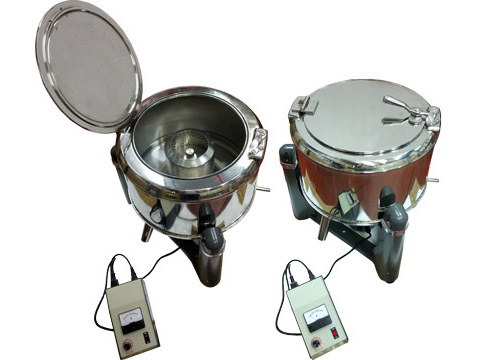
Centrifuges for solid-liquid separation are machines designed to separate suspended solid particles from liquid by using high-speed rotation. Instead of relying only on gravity, these centrifuges generate strong centrifugal force, which accelerates the separation process and makes it faster, cleaner, and more efficient.
They are widely used in laboratories, industrial production, wastewater treatment, chemical processing, biotechnology, food production, mining, pharmaceuticals, environmental testing, and many other fields where solids must be removed, collected, washed, dewatered, clarified, or analyzed.
Solid-liquid separation is one of the most common and important processes in science and industry. Whenever a mixture contains liquid and undissolved particles, there is often a need to separate the two phases. This can be done by filtration, sedimentation, decantation, pressing, evaporation, or centrifugation. Among these methods, centrifugation is especially useful when the particles are small, the liquid is valuable, the process must be fast, or the separation needs to be highly controlled.
A centrifuge for solid-liquid separation does not simply spin a sample. It creates a controlled separation environment where density, particle size, viscosity, rotational speed, residence time, and equipment design all influence the final result. The goal may be to recover dry solids, clarify a liquid, concentrate particles, remove impurities, prepare a sample for analysis, or improve the efficiency of a production process.
How Solid-Liquid Separation Works
A solid-liquid mixture contains at least two phases: a liquid phase and a solid phase. The solid particles may be coarse, fine, crystalline, biological, fibrous, mineral-based, chemical, organic, or inorganic. In many mixtures, these particles remain suspended in the liquid for a long time because they are too small or too light to settle quickly under normal gravity.
A centrifuge solves this problem by rotating the mixture at high speed. As the chamber, rotor, bowl, or basket spins, centrifugal force pushes denser particles outward. Since solids are usually denser than the liquid, they move toward the outer wall of the rotating container. The lighter liquid remains closer to the center or flows through a discharge path, depending on the centrifuge design.
This process can produce several possible results:
The solid phase may collect as a pellet at the bottom or outer wall of a tube, bowl, or basket. The liquid phase, often called the supernatant or clarified liquid, can then be removed separately.
In some industrial centrifuges, the liquid continuously exits the machine while the solids are retained, discharged, scraped, peeled, pushed, or conveyed away.
In filtration centrifuges, the liquid passes through a filter medium while the solids remain on the filter surface as a cake.
In sedimentation centrifuges, the solids settle against the bowl wall without needing a filter medium.
The basic principle is simple, but the engineering behind a reliable centrifuge can be highly advanced. The machine must manage high rotational forces, vibration, sample balance, material compatibility, temperature, safety, feeding rate, discharge rate, and maintenance requirements.
Why Centrifugation Is Used Instead of Gravity Settling
Gravity settling is the oldest form of solid-liquid separation. A mixture is placed in a tank or container and left undisturbed until heavier particles settle naturally. This method is simple and low cost, but it can be slow, inconsistent, and unsuitable for fine particles.
Centrifugation dramatically increases the effective force acting on the particles. Instead of waiting hours or days for sedimentation, the same separation may happen in minutes or seconds, depending on the application.
Centrifuges are preferred when:
The particles are too small to settle quickly.
The liquid is viscous.
The required separation must be fast.
The process needs repeatable results.
The liquid must be highly clarified.
The solids must be concentrated or dewatered.
Space is limited and large settling tanks are not practical.
The material has high value and recovery losses must be minimized.
Laboratory samples need precise preparation before analysis.
In industrial environments, a centrifuge can also reduce processing time, improve product quality, lower waste volume, and support continuous production.
Main Types of Centrifuges for Solid-Liquid Separation
There are several types of centrifuges used for solid-liquid separation. The correct choice depends on the material being processed, the particle size, the required dryness of the solids, the clarity of the liquid, the production volume, and whether the process is batch or continuous.
Laboratory Centrifuges
Laboratory centrifuges are commonly used for small-volume solid-liquid separation in research, quality control, clinical testing, environmental analysis, microbiology, chemistry, and material testing.
They typically use tubes, bottles, microplates, or special containers. When the centrifuge spins, solid particles collect as a pellet, while the liquid remains above the pellet. The user can then remove the liquid, collect the solid, wash the pellet, or continue with further analysis.
Laboratory centrifuges are used for applications such as:
Separating precipitates from solutions.
Concentrating cells or microorganisms.
Removing suspended particles from water samples.
Clarifying chemical mixtures.
Preparing biological samples.
Separating crystals from mother liquor.
Collecting nanoparticles or fine powders.
Testing wastewater samples.
Preparing suspensions for analytical instruments.
Laboratory models may include benchtop centrifuges, refrigerated centrifuges, high-speed centrifuges, microcentrifuges, and floor-standing centrifuges.
Basket Centrifuges
Basket centrifuges are widely used for separating solids from liquids when the solid material forms a cake. The mixture is fed into a rotating perforated basket lined with a filter cloth or screen. The liquid passes through the filter medium, while the solids remain inside the basket.
Basket centrifuges are often used in chemical, pharmaceutical, food, and mineral processing applications. They are useful when the solid product needs to be washed or dewatered.
There are manual, semi-automatic, and fully automatic basket centrifuges. In some systems, the solid cake is removed manually. In others, a scraper or peeler automatically removes the solid material after separation.
Basket centrifuges are suitable for crystalline solids, granular solids, and materials that can form a stable filter cake.
Decanter Centrifuges
Decanter centrifuges are continuous machines designed for high-volume solid-liquid separation. They use a horizontal rotating bowl and an internal screw conveyor. As the mixture enters the machine, centrifugal force pushes the solids to the bowl wall. The screw conveyor moves the solids toward the discharge end, while the clarified liquid exits from another outlet.
Decanter centrifuges are heavily used in wastewater treatment, sludge dewatering, food processing, mining, chemical production, oil processing, and environmental applications.
They are especially useful when the process requires continuous operation and automatic solids discharge.
Common uses include:
Dewatering sludge.
Clarifying process liquids.
Separating minerals from slurry.
Recovering solids from industrial wastewater.
Processing starch, protein, or plant-based materials.
Separating solids from drilling fluids.
Handling large volumes of suspension.
Decanter centrifuges are valued because they can handle high solids content, operate continuously, and reduce the need for manual intervention.
Disc Stack Centrifuges
Disc stack centrifuges are high-speed machines designed for fine solid-liquid separation and liquid clarification. Inside the rotating bowl, a stack of conical discs increases the effective settling area. This allows very small particles to separate efficiently from liquid.
Disc stack centrifuges are commonly used in food and beverage, biotechnology, pharmaceuticals, marine fuel treatment, oils, dairy processing, fermentation, and industrial liquid clarification.
They are ideal for applications where the solids concentration is relatively low but the liquid must be very clean.
Examples include:
Clarifying beverages.
Removing fine particles from oils.
Separating biomass from fermentation broth.
Clarifying cell culture media.
Removing impurities from process liquids.
Purifying industrial fluids.
Disc stack centrifuges can be very efficient, but they require careful operation and maintenance because of their high rotational speeds and precise internal design.
Tubular Bowl Centrifuges
Tubular bowl centrifuges are high-speed centrifuges used for separating very fine particles or small amounts of solids from liquids. They have a long, narrow rotating bowl that creates strong centrifugal force.
These centrifuges are often used in biotechnology, pharmaceuticals, chemical processing, essential oil production, and laboratory-scale production.
They are suitable for fine suspensions, emulsions, and applications where a high separation force is needed.
Tubular bowl centrifuges are effective for clarification, cell harvesting, fine particle recovery, and separation of small solid quantities from valuable liquids.
Peeler Centrifuges
Peeler centrifuges are filtration centrifuges designed for batch operation. After the liquid passes through the filter medium and the solid cake forms, a mechanical knife or peeler removes the cake from the basket.
They are commonly used when the solid product is valuable and must be recovered efficiently. Peeler centrifuges are often found in chemical and pharmaceutical production.
They can support washing, dewatering, and controlled discharge of solids.
Pusher Centrifuges
Pusher centrifuges are continuous filtration centrifuges. They are designed for crystalline, granular, or free-draining solids. The solid cake forms on a screen, and a pushing mechanism moves the cake toward the discharge area.
Pusher centrifuges are often used in salt production, chemical processing, fertilizer manufacturing, and mineral applications.
They are suitable for high-throughput processes where solids must be separated continuously from liquid.
Inverting Filter Centrifuges
Inverting filter centrifuges are used where gentle product handling, complete cake discharge, and high product recovery are important. The filter cloth is inverted to discharge the cake, reducing the amount of residual material left inside the machine.
These centrifuges are used in industries where contamination control, product purity, and cleaning efficiency are critical.
Sedimentation vs Filtration Centrifuges
Centrifuges for solid-liquid separation are often divided into two main categories: sedimentation centrifuges and filtration centrifuges.
Sedimentation Centrifuges
Sedimentation centrifuges separate solids from liquids based on density differences. No filter medium is required. The solids move outward and settle against the bowl wall, while the liquid moves to a separate discharge path.
Examples include decanter centrifuges, disc stack centrifuges, tubular bowl centrifuges, and many laboratory centrifuges.
Sedimentation centrifuges are suitable when:
Particles are fine.
The liquid needs clarification.
A filter cake is not required.
The solids can settle under centrifugal force.
The mixture may clog a filter medium.
The process requires continuous clarification.
Filtration Centrifuges
Filtration centrifuges use a filter screen, cloth, or perforated basket. The liquid passes through the filter medium, and the solids are retained as a cake.
Examples include basket centrifuges, peeler centrifuges, pusher centrifuges, and inverting filter centrifuges.
Filtration centrifuges are suitable when:
The solids are larger or crystalline.
A solid cake must be collected.
The liquid can pass through the cake and filter medium.
The solids need washing.
The final solid dryness is important.
The product is the solid rather than the liquid.
Choosing between sedimentation and filtration depends mainly on particle size, solids concentration, filterability, product value, and process goals.
Key Components of a Solid-Liquid Separation Centrifuge
Although centrifuge designs vary, many machines include several common components.
Rotor, Bowl, or Basket
This is the rotating part of the centrifuge. It holds the sample or process material and generates the centrifugal force needed for separation.
In laboratory centrifuges, this component may be a rotor designed for tubes or bottles.
In industrial centrifuges, it may be a bowl, basket, drum, or chamber.
Motor and Drive System
The motor provides the rotational power. Industrial centrifuges often require robust drive systems capable of handling heavy loads, continuous operation, and variable speeds.
Control System
Modern centrifuges include control panels or digital interfaces for setting speed, time, acceleration, deceleration, temperature, feed rate, and safety parameters.
Laboratory models may allow precise programming for repeatable protocols.
Industrial systems may connect to automated production lines.
Discharge System
The discharge system removes separated liquid, solids, or both. The design depends on whether the centrifuge is batch or continuous.
Discharge may be manual, gravity-based, mechanical, hydraulic, pneumatic, scraped, peeled, conveyed, or automatically controlled.
Safety Housing
Centrifuges operate at high speed, so strong protective housing is essential. Safety systems may include lid locks, imbalance detection, overspeed protection, vibration monitoring, emergency stop functions, and reinforced covers.
Filter Medium
Filtration centrifuges use filter cloth, mesh, screens, or perforated baskets. The filter medium must match the particle size, chemical compatibility, temperature, and cleaning requirements of the process.
Factors That Affect Separation Performance
The efficiency of a centrifuge depends on both the machine and the material being processed. Understanding these factors helps users select the right centrifuge and optimize results.
Particle Size
Larger particles separate more easily than very fine particles. Fine particles may require higher centrifugal force, longer residence time, chemical conditioning, flocculation, or specialized centrifuge designs.
Particle Density
Particles that are much denser than the liquid separate faster. If the density difference between the solid and liquid is small, separation becomes more difficult.
Liquid Viscosity
Thicker liquids resist particle movement. High-viscosity liquids may require longer processing time, higher force, heating, dilution, or a different centrifuge configuration.
Solids Concentration
A low solids concentration is often easier to clarify, while a high solids concentration may require a machine designed for heavy solids loading. Decanter centrifuges are commonly used for mixtures with higher solid content.
Centrifugal Force
Higher rotational speed generally increases separation force. However, higher speed is not always better. Excessive force can compact solids too strongly, damage delicate particles, increase energy use, or create operational problems.
Residence Time
Residence time is the amount of time the material remains under centrifugal force. Longer residence time can improve separation, but it may reduce throughput in continuous systems.
Feed Rate
In continuous centrifuges, feed rate has a major effect on performance. If the feed rate is too high, the material may not remain inside the machine long enough for proper separation.
Temperature
Temperature can affect viscosity, product stability, biological activity, and chemical behavior. Refrigerated laboratory centrifuges are used when samples are temperature-sensitive.
Chemical Compatibility
The centrifuge materials must resist corrosion, solvents, acids, bases, salts, and other process chemicals. Common materials include stainless steel, coated metals, polymers, and specialized alloys.
Common Applications of Solid-Liquid Separation Centrifuges
Solid-liquid separation centrifuges are used in many fields because suspended solids are found in countless processes.
Laboratory Research
In laboratories, centrifuges are used to prepare, clarify, concentrate, and purify samples. They are essential in biology, chemistry, environmental science, materials research, nanotechnology, and analytical testing.
Typical laboratory uses include separating precipitates, collecting cells, removing suspended impurities, concentrating particles, and preparing liquid samples before instrumental analysis.
Wastewater Treatment
Wastewater treatment plants use centrifuges to dewater sludge and reduce the volume of waste material. By removing water from sludge, centrifuges reduce transportation costs, disposal volume, and handling difficulty.
Decanter centrifuges are especially common in municipal and industrial wastewater treatment.
Chemical Processing
Chemical industries use centrifuges to separate crystals, catalysts, pigments, polymers, salts, resins, and reaction products from liquid phases.
Centrifuges can also help wash solids, recover valuable liquids, and improve product purity.
Pharmaceutical Manufacturing
Pharmaceutical production often requires controlled separation of active ingredients, intermediates, crystals, and biological materials. Centrifuges used in this field must meet high standards for cleanliness, containment, validation, and product protection.
Applications include crystal separation, biomass harvesting, API processing, and purification steps.
Biotechnology
In biotechnology, centrifuges are used for cell harvesting, protein processing, fermentation clarification, separation of biomass, and preparation of biological fluids.
Some applications require gentle handling to prevent damage to cells or biological molecules.
Food and Beverage Industry
Food and beverage manufacturers use centrifuges to clarify liquids, separate starch, recover proteins, process oils, separate yeast, remove suspended solids, and improve product consistency.
Examples include juice clarification, dairy processing, plant protein production, edible oil purification, and fermentation processing.
Mining and Mineral Processing
In mining, centrifuges separate mineral solids from process water, dewater fine particles, recover valuable materials, and treat tailings. They can help reduce water consumption and improve process efficiency.
Environmental Testing
Environmental laboratories use centrifuges to process soil suspensions, water samples, sludge samples, sediments, and particulate matter. Centrifugation helps prepare samples for chemical or biological analysis.
Oil, Fuel, and Lubricant Processing
Centrifuges are used to remove solids, water, sludge, and contaminants from oils and fuels. This improves product quality, equipment protection, and process reliability.
Agriculture and Plant Science
In agricultural research, centrifuges can separate plant extracts, soil particles, biological samples, and suspensions. They are used in seed research, plant physiology, soil science, and food analysis.
Advantages of Centrifuges for Solid-Liquid Separation
Centrifuges offer several major advantages over traditional separation methods.
Faster Separation
Centrifugation can greatly reduce separation time compared with gravity settling. This is valuable in both laboratories and industrial plants.
Better Clarification
Centrifuges can remove fine suspended solids that may be difficult to separate by simple settling.
Compact Equipment Footprint
A centrifuge can often replace large settling tanks or multiple filtration stages, saving floor space.
Controlled Process Conditions
Speed, time, temperature, feed rate, and discharge can be controlled to achieve repeatable results.
High Throughput
Industrial centrifuges can process large volumes continuously, making them suitable for production environments.
Solids Recovery
When the solid phase is valuable, centrifuges can improve recovery and reduce product loss.
Liquid Recovery
When the liquid phase is valuable, centrifuges can clarify it and reduce contamination.
Reduced Waste Volume
Dewatering centrifuges reduce the moisture content of sludge or solid waste, lowering disposal and transportation costs.
Disadvantages and Limitations
Although centrifuges are highly useful, they are not always the best solution for every separation problem.
Higher Equipment Cost
Centrifuges are usually more expensive than simple settling tanks or basic filters.
Energy Consumption
High-speed rotation requires energy, especially in large industrial machines.
Maintenance Requirements
Bearings, seals, motors, bowls, screens, filter cloths, and discharge mechanisms may require regular maintenance.
Noise and Vibration
Improper balancing, worn parts, or unsuitable feed conditions can cause vibration and noise.
Not Ideal for Every Particle Type
Some particles are too fine, too light, too gelatinous, or too compressible for efficient centrifugation without pre-treatment.
Safety Considerations
Because centrifuges rotate at high speed, safe operation is critical. Damaged rotors, imbalance, overloading, and incorrect operation can create hazards.
How to Choose the Right Centrifuge for Solid-Liquid Separation
Selecting the right centrifuge requires understanding both the material and the process objective.
Define the Main Goal
The first question is whether the goal is to recover the solid, clarify the liquid, dewater sludge, wash crystals, concentrate particles, or prepare a sample.
If the main product is the liquid, clarification performance is the priority.
If the main product is the solid, cake dryness, recovery rate, and discharge method become more important.
Understand the Material
Important material properties include:
Particle size distribution.
Particle density.
Liquid density.
Liquid viscosity.
Solids concentration.
Abrasiveness.
Corrosiveness.
Temperature sensitivity.
Biological sensitivity.
Foaming tendency.
Filterability.
Choose Batch or Continuous Operation
Batch centrifuges are suitable for smaller volumes, flexible production, laboratory work, and processes requiring individual cycle control.
Continuous centrifuges are better for high-volume industrial processes where material flows steadily through the machine.
Consider Cleaning and Hygiene
In food, pharmaceutical, and biotechnology applications, cleanability is essential. Equipment may require clean-in-place capability, sanitary design, smooth surfaces, sealed systems, or corrosion-resistant materials.
Check Safety Features
Important safety features include automatic lid locking, imbalance detection, overspeed protection, vibration monitoring, emergency stop, reinforced housing, and secure rotor identification.
Match Capacity to Process Volume
A centrifuge must be large enough to handle the required volume but not so oversized that it becomes inefficient, expensive, or difficult to operate.
Evaluate Maintenance Access
Good centrifuge design should allow practical access for cleaning, inspection, filter replacement, lubrication, and routine maintenance.
Laboratory vs Industrial Solid-Liquid Separation Centrifuges
Laboratory and industrial centrifuges use the same basic principle but differ in scale, design, automation, and application.
Laboratory centrifuges are used for small samples, research protocols, testing, and quality control. They are often compact, programmable, and designed for tubes, bottles, or plates.
Industrial centrifuges are built for larger volumes, continuous operation, harsh materials, and production environments. They often include automatic feeding, discharge, washing, cleaning, and process control systems.
The choice between laboratory and industrial equipment depends on whether the user needs sample preparation or process-scale separation.
Centrifuge Speed, RPM, and RCF
Centrifuge performance is often described by RPM and RCF.
RPM means revolutions per minute. It tells how fast the rotor spins.
RCF means relative centrifugal force. It expresses the force applied to the sample compared with normal gravity.
RCF is often more useful than RPM because the same RPM can produce different separation forces depending on rotor radius. A larger rotor spinning at the same RPM can generate a higher centrifugal force than a smaller rotor.
For accurate process comparison, RCF is usually more meaningful than RPM.
Solid Cake Formation and Dewatering
In filtration centrifuges, solids collect on the filter medium and form a cake. The structure of this cake affects how easily liquid can pass through it.
A porous cake drains more easily.
A compressible cake may become compacted and block liquid flow.
Fine particles can clog filter media.
Crystalline solids usually dewater more easily than gelatinous or sticky solids.
Cake washing may be used to remove impurities, salts, solvents, or remaining mother liquor.
The final dryness of the solid depends on centrifuge speed, cycle time, cake thickness, particle properties, liquid viscosity, and filter medium selection.
Clarification of Liquids
In many applications, the main goal is to produce a clear liquid. This is called clarification. A clarification centrifuge removes suspended solids, fine particles, or biological material from a liquid stream.
Clarification is common in beverages, fermentation, oils, chemical solutions, wastewater, and laboratory sample preparation.
The desired clarity level determines the type of centrifuge needed. A simple laboratory centrifuge may be enough for small samples, while a disc stack centrifuge may be required for high-speed industrial clarification of fine particles.
Solid-Liquid Separation in Sample Preparation
Centrifuges are essential in sample preparation because many analytical instruments require clean, particle-free liquids. Suspended solids can interfere with measurement accuracy, damage instrument components, clog tubing, or contaminate results.
Before analysis, a sample may be centrifuged to remove sediment, precipitates, cells, or debris. The clarified liquid can then be used for chemical analysis, spectroscopy, chromatography, microscopy, or biological testing.
In this context, centrifugation improves both accuracy and repeatability.
Maintenance of Solid-Liquid Separation Centrifuges
Proper maintenance protects performance, safety, and equipment lifespan.
Common maintenance tasks include:
Inspecting rotors, bowls, baskets, and tubes.
Checking for corrosion, cracks, wear, or deformation.
Cleaning after use.
Replacing filter cloths or screens.
Lubricating bearings when required.
Checking seals and gaskets.
Monitoring vibration.
Verifying speed control.
Balancing loads correctly.
Inspecting discharge mechanisms.
Following the manufacturer’s service intervals.
In laboratory settings, users should never operate a centrifuge with damaged tubes, unbalanced loads, or unknown rotor condition.
In industrial settings, preventive maintenance is especially important because machine failure can stop production and create safety risks.
Safety Tips for Centrifuge Operation
Centrifuge safety should never be treated as a minor detail. High rotational energy can be dangerous if the machine is misused.
Important safety practices include:
Always balance samples before operation.
Use the correct tubes, bottles, buckets, screens, or baskets.
Do not exceed the rated speed.
Do not use damaged rotors or containers.
Close and lock the lid before operation.
Allow the centrifuge to stop completely before opening.
Use compatible materials for chemicals and solvents.
Clean spills immediately.
Follow maintenance schedules.
Train operators properly.
For hazardous, biological, flammable, or corrosive materials, additional safety procedures may be required.
The Role of Centrifuges in Modern Industry
Centrifuges play a critical role in modern production because many industries depend on efficient separation. Without reliable solid-liquid separation, processes may become slower, less clean, more expensive, or less consistent.
In wastewater treatment, centrifuges reduce sludge volume.
In pharmaceuticals, they help recover valuable products.
In food production, they improve liquid clarity and product consistency.
In chemical processing, they separate solids from reaction mixtures.
In laboratories, they prepare samples for accurate testing.
In biotechnology, they separate cells and biological materials.
Their value comes from speed, control, flexibility, and the ability to handle separations that gravity alone cannot achieve efficiently.
Difference Between Centrifugation and Filtration
Filtration uses a physical barrier to retain solids while liquid passes through. Centrifugation uses rotational force to separate materials based on density. Some centrifuges combine both principles by using centrifugal force to push liquid through a filter medium.
Standard filtration may be enough for coarse particles and simple processes. Centrifugation is often better when the particles are fine, the process must be faster, or more liquid must be removed from solids.
Centrifugal filtration can also produce a drier solid cake than gravity filtration because the liquid is forced out more aggressively.
Difference Between Centrifugation and Sedimentation
Sedimentation relies on gravity. Centrifugation uses centrifugal force, which is much stronger than gravity. This makes centrifugation faster and more practical for fine particles, viscous liquids, and high-throughput processes.
Sedimentation tanks are still useful in many large-scale applications, especially where time and space are available. However, centrifuges are preferred when faster, more compact, and more controlled separation is needed.
Important Buying Considerations
Before purchasing a centrifuge for solid-liquid separation, it is important to define the technical requirements clearly.
Key questions include:
What material will be separated?
What is the particle size range?
What is the solids concentration?
Is the valuable product the solid, the liquid, or both?
Is the process batch or continuous?
What volume must be processed per hour or per day?
How dry must the solid cake be?
How clear must the liquid be?
Is washing required?
Is the material corrosive, abrasive, toxic, biological, or flammable?
What level of automation is needed?
What cleaning standard is required?
What space is available?
What maintenance resources are available?
What safety standards must be met?
A centrifuge should not be selected only by price or speed. The best machine is the one that matches the actual separation challenge.