MUNRO provides a wide range of Sound Meters /Decibel meters for laboratories and industry
Acoustic Data These definitions are intended simply as an aid to understanding and for this reason, some are not strictly scientifically accurate. For correct formal definitions, consult IEC standards 60651, 60804, 60942, 61252 and IEC 61672: 2003 part 1.
Types of Sound Meters
There are 2 main types of Sound Meters: Class 1, Class 2:
Sound Meter Class 1
Used for precision-grade assessments. Their use is mainly for laboratory testing.
Sound Meter Class2
Class 2 is used for noise level assessments in industrial, commercial,educational, or residential scenarios.
Proper use
-Place the meter in place without interruption.
-Position 1,3 - 1,5 m above the ground.
-The microphone should be near the sound source.
When measuring, note the following:
-To type whether it is class 1 or 2
-Where does the sound source come from
-Today's time
-Weather
-Duration of the measurement
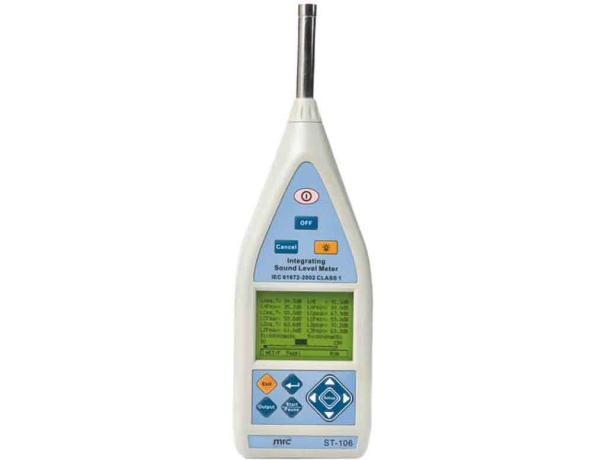
Guide of Sound Level Meters
Acoustic measurements are made with the aid of a sound level meter. Also called Decibel meters.
A sound level meter requires a microphone in order to detect air pressure changes caused by a sound source. Class 1 and Class 2 measurement microphones are available. The class system is used by noise meters and sound level meters to show the accuracy of the meter's results while measuring noise levels.
For many purposes, a Class 2 is more than adequate. It is somewhat less precise and less expensive than a of Class 1. Sound meter Class 1 are often required only when the law requires them. Whichever microphone you select, it is critical for accuracy that it is tuned properly.
Classification of sound meters has altered over time as rules have evolved. However, it is vital to differentiate the efficacy of sound meter. Certain tasks do not necessitate the same level of performance, which allows you to save money on an audiometer.
The Classification System – 'Class' or 'Type'
The name of the standard and its classification must be put on the meter if you own a Sound Level Meter that complies with the standards. The lower the number, the more precise the product.
You may come across terminology such as 'Type 1' or 'Class 1,' but these are two very different concepts. A 'Type' instrument complies with the older IEC651 standard, whereas a 'Class' instrument complies with the maximum integration allowed.
IEC 61672:2002 - New Standard
Either a Class 1 or a Category 2
IEC 651:1979 — The most current version of an obsolete standard
Type 3 - The survey meter.
Type 2 - Extra-Heavy-Duty (Industrial)
Type 1 - Extremely precise grade
Type 0 - Meters used in laboratories.
Where to use Class 1 and Class 2?
Classification is crucial in a few applications but not in others. Like these:
- Noise Examination of Fire Alarms:
The specification of a fire alarm requires a Type 2 noise meter as a minimum. Just a sound indication can be used too.
- Acoustics in the Construction Industry:
Due to the requirement to analyze structural performance over a broad range of wavelengths, a Class 1 meter should be utilized to test structural performance at such a broad range of wavelengths.
- Court Readings:
If you anticipate having to produce readings in court, you should invest in Class 1, but the minimum required is 'Class' 2 or 'Type' 2.
- Consultancy:
If you are providing a service to a client and you use less than Type 1 or Grade 1 meter, regardless of the sort of job, it would be unprofessional.
- Environmental Noise Monitoring
Since Category or Type 2 microphones are incapable of detecting sound at low enough levels or reliably at higher frequencies, the majority of UK regulations require you to use at least a Type 1 meter in addition to a Class 1 meter.
Noise level test:
When the noise level reaches harmful levels, it can affect the function of the inner ear and cause temporary hearing loss. With repeated exposure to dangerous noise, the ear will have impaired recovery ability. May cause permanent hearing loss or permanent loss. A great deal of the UK workforce is employed in environments with loud noise. Monitoring these levels is an essential task!
Noise in the work environment from machines.
Noise in living environment-from music, from hair dryer, vacuum cleaner
Noise from transportation-train, airport and car.
Noise from construction sites - drilling, air hammers, soil tightening and more.
Noise in industrial and commercial and recreational areas
Introduction Of Decibel Meters
In today's market, sound measurement equipment is becoming well-known in various fields, such as quality control, machine vibration analysis, and environmental noise monitoring. This article will briefly discuss Sound Level Meter and its working principle.
A decibel meter is used to measure sound pressure levels in decibels. Decibel meters typically range from 30 to 130 dB, with an accuracy of +/- 2 dB. The decibel meter is called a sound pressure level (SPL). The most popular names for these devices are noise meter and sound level meter. Sound level meters are generally portable and operate on batteries. Sound level meters used to record noise levels in a specific location regularly may be permanently installed in certain situations.
A microphone is used in a decibel meter to record sound. The mic picks up sound pressure variances, which are then transformed into an electrical signal by the preamplifier. Based on international standards, the decibel meter then applies frequency and time weightings to the signal.
Sound level meters are used in various settings, including manufacturing plants, construction sites, schools, hospitals, and office buildings. Environmental agencies also use them to monitor noise pollution levels. A decibel meter functions similarly to a human ear in that it measures noise levels in a given environment using an objective measurement technique.
The measuring noise levels are reported in decibels (dB) and shown on the instrument's screen. Many decibel meters and other acoustic parameters like equivalent continuous sound level (Leq) are shown.
Types of Decibel Meters
Meters that measure sound level are divided into two categories. Each sort sets the accuracy of a decibel meter according to American National Standards Institute (ANSI) standards. The International Electrotechnical Commission (IEC) defines the accuracy of each class.
Type 1 or Class 1
Type 1 or Class 1 sound level meters are employed for precision-grade evaluations. Their use is mainly for laboratory testing. The ANSI and IEC have set strict guidelines that these meters must follow.
Type 2 or Class 2
Type 2 or Class 2 sound level meters are sufficient for general noise measurements. These meters are commonly used in industrial, educational, commercial, residential, and environmental settings.
Why is it important to work with a Decibel Meter?
decibel meters are useful for measuring, monitoring, and controlling noise levels in various environments. Sound level meters are often used to ensure that noise levels remain within regulatory limits. They are used in various applications in factories and other industrial plants, and on construction sites. They're also utilized to monitor noise levels from automobile, train, and air traffic in cities, as well as public gatherings and other sound sources.
Regulatory authorities and businesses use sound level meters to verify that workers are not exposed to excessive noise. Sound level meters are sometimes used to monitor environmental noise pollution. To indicate how loud your noise is, you may use a sound level meter in your house or place of business.
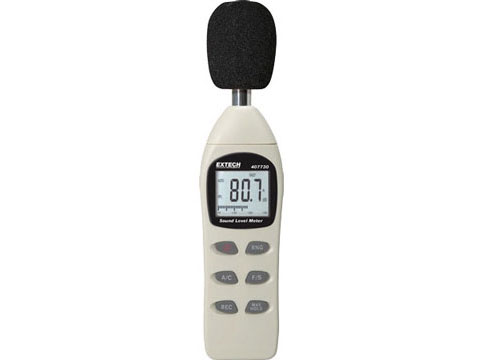
Applications of Decibel Meter
There are several applications where noise measurements and monitoring are required with the sound level meter. They have a broad usage for measuring noise, although their main function is determined by the environment they are employed in. Here are some of the main functions of sound level meters.
Building Acoustics
Sound level meters are used to measure sound insulation in buildings. The measurements are used to ensure that the building meets the required standards for soundproofing. The results of the measurements can be used to improve the acoustic design of the building.
The measurement of noise in buildings is important for assessing building code compliance. They analyze how sound spreads throughout a facility or room to room. This data will help designers who wish to utilize and test sound insulation materials and solutions.
Industrial Noise Control
Sound level meters are most often used in industrial settings. In these settings, they monitor noise levels and ensure compliance with occupational safety and health regulations. In the workplace, decibel meters are used for exact noise measurements. The measurements are used to assess the level of exposure of workers to noise. This information is used to develop strategies for reducing noise exposure and improving working conditions.
Specialists like health physicists and industrial hygienists use sound level meters to monitor noise in factories and other industrial plants. This helps them identify noise sources and assess the risks to workers' health. The measurements are also used to evaluate the effectiveness of noise control measures.
Community Noise Analysis
Sound level meters are used to perform community noise analysis. The measurements are used to evaluate noise exposure levels in a given area and identify problem areas. This helps authorities to develop strategies for reducing noise pollution. Community noise is more difficult to define and measure because it consists of various sounds from different sources.
Usually, public authorities have set standards for industrial, construction, and residential settings. These rules also differ depending on the time of day. To determine the average and loudest peak of noise, they should be taken over a longer period during the day and at night.
Machinery Noise Analysis
Sound level meters can be used to analyze the noise emitted by machinery. The measurements are used to assess the level of exposure of workers to noise and to develop strategies for reducing noise exposure. Noise measuring equipment is used in the industries such as Automotive, HVAC, Power production, Construction, Mining, and Manufacturing.
movie theaters
It is also used in movie theaters to understand if the noise meets the correct standards
Music studios
A decibel meter is used to meet noise standards in a recording studio