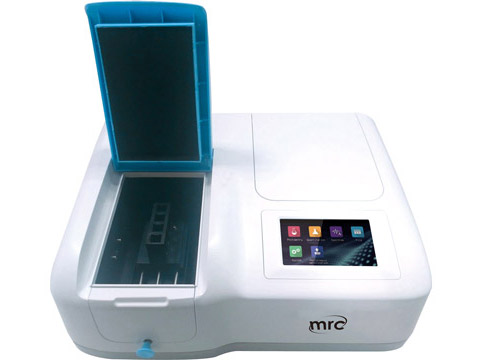
Spectrophotometry is a widely used analytical technique for measuring the intensity of light absorbed by a sample at a specific wavelength.
By analyzing the beam's passage through the sample, we can learn about the sample properties.
Spectrophotometers are essential tools in chemistry, biology, environmental monitoring, pharmaceuticals, and many other fields.
There are different types of spectrophotometers, including UV and visible spectrophotometers, each suited to specific applications.
Principle of Spectrophotometry
The principle behind spectrophotometry is based on Beer-Lambert’s Law , which relates the absorbance of light to the concentration of a solution and the path length the light travels through.
The spectrophotometer works by passing a beam of light through a sample, measuring the intensity of light before and after it passes through. The difference in intensity corresponds to the amount of light absorbed by the sample, which can be used to determine the concentration of substances within the solution.
Types of Spectrophotometers
1. UV Spectrophotometers :
- Measure absorbance in the ultraviolet (UV) range of 190–1100 nm.
- Require quartz cuvettes, as glass absorbs UV light.
- Light source: Xenon and Deuterium lamps for UV light.
- Main applications: DNA, RNA, and protein analysis; chemical concentration measurements; pharmaceutical research
2. Visible Spectrophotometers :
- Operate in the visible spectrum of 320–1100 nm.
- Use glass or plastic cuvettes .
- Light source: Tungsten or halogen lamps .
- Main applications: Food and beverage quality control, dye concentration, environmental monitoring
3. Infrared (IR) Spectrophotometers
- Operates in the infrared range (700 nm to 1 mm), useful for identifying functional groups through molecular vibrations.
- Main applications: Organic compound identification, material testing, and pharmaceutical analysis.
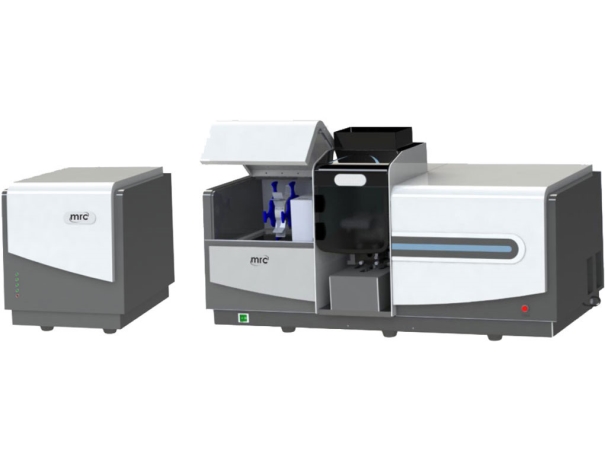
4. Atomic Absorption (AA) Spectrophotometers
- Measures the concentration of elements by detecting the absorption of light by metal atoms in vapor form.
- Main applications: Trace metal analysis in environmental, food, and clinical labs.
5. Fluorescence Spectrophotometers
- Uses fluorescence to measure light emitted by a sample after it absorbs light.
- Main applications: Molecular biology research, protein and enzyme studies, and clinical diagnostics.

6. Near-Infrared (NIR) Spectrophotometers
- Covers wavelengths just beyond the visible range (700–2500 nm).
- Main applications: Analyzing agricultural products, pharmaceuticals, and food components like moisture and fat.
7. Dual-Beam Spectrophotometers
- Compares the intensity of light between two beams: one passes through the sample, and the other serves as a reference.
- Main applications: Research environments requiring high precision and stability.

8. Portable or Handheld Spectrophotometers
- Compact, lightweight devices used for quick field measurements.
- Main applications: Industrial color matching, environmental monitoring, and on-site quality control.
9. Nano Spectrophotometers
Nano spectrophotometers are a compact, specialized type of UV-Vis spectrophotometer designed for micro-volume measurements.
These instruments can quantify very small sample volumes, typically between 0.5 to 2 µL, with high precision and rapid results.
Nano spectrophotometers eliminate the need for cuvettes, using a small pedestal to hold the sample instead.
No Cuvettes Required: Uses a pedestal technology to minimize sample usage.
Wide Wavelength Range: Typically covers 190–850 nm, accommodating both UV and visible spectrum needs.
Main applications of Nano Spectrophotometers:
Life Sciences Research: Quantification of DNA, RNA, and proteins for molecular biology workflows.
Clinical Diagnostics: Assessing the concentration and purity of biological samples (e.g., nucleic acids, enzymes).
Pharmaceutical Industry: Used in R&D to monitor drug formulations and impurities.
Environmental Science: Detecting contaminants in small water or soil samples.
Food and Beverage Industry: Measuring vitamins, polyphenols, and other components from minimal sample volumes.
More Applications of MUNRO Visible Spectrophotometers
Visible spectrophotometers are used to measure the intensity of light absorbed by **colored solutions** within the visible spectrum (400–700 nm). Below are their key applications across various fields:
1. Chemical and Analytical Laboratories
- Concentration Analysis : Measuring concentrations of chemicals through colorimetric assays (e.g., iron with phenanthroline complexes).
- pH Measurement : Using pH indicators like phenolphthalein, which change color based on pH.
2. Food and Beverage Industry
- Color Quality Control : Ensuring consistency in products like wines, juices, and soft drinks.
- Additive Detection : Measuring artificial dyes and natural pigments in food for regulatory compliance.
- Antioxidant and Vitamin Analysis : Quantifying antioxidants or vitamins such as vitamin C.
3. Environmental Monitoring
- Water Quality : Detecting pollutants like nitrates, phosphates, or ammonia through colorimetric methods.
- Algal Bloom Monitoring : Measuring chlorophyll content to assess eutrophication in water bodies.
4. Clinical Diagnostics
- Blood and Urine Tests : Measuring glucose, hemoglobin, and cholesterol levels through colorimetric assays.
- Enzyme Assays : Monitoring enzyme activities by detecting colored products in biological samples.
5. Pharmaceutical Industry
- Quality Control : Ensuring the concentration of active pharmaceutical ingredients (APIs) in formulations.
- Stability Testing : Detecting degradation by measuring changes in color over time.
6. Research in Life Sciences and Biochemistry
- Protein Quantification : Using assays like Bradford or Lowry to determine protein concentrations.
- Enzyme Kinetics : Monitoring the rate of enzyme-catalyzed reactions by tracking color changes.
- Microbial Growth Monitoring : Measuring turbidity to assess microbial population growth.
7. Industrial Applications
- Textile and Dye Industry : Evaluating dye concentrations and ensuring color consistency in fabrics.
- Paint and Coatings : Measuring the color stability of paints and coatings for quality assurance.
8. Agriculture and Plant Research
- Soil Analysis : Assessing nutrient levels through colorimetric methods.
- Plant Pigment Measurement : Monitoring chlorophyll or carotenoid levels to study plant health.
9. Cosmetics Industry
- Color Matching : Ensuring the consistency of colors in makeup and skincare products.
- Product Stability : Monitoring color changes to assess product shelf life.
10. Education and Teaching Laboratories
- Demonstrating Chemical Concepts : Teaching basic chemical principles through hands-on spectrophotometry experiments.
- Practical Lab Work : Students learn concentration analysis, enzyme kinetics, and pH measurement.
More Applications of MUNRO UV Spectrophotometers
UV spectrophotometers excel in applications that require high sensitivity for transparent or colorless samples:
MUNRO UV spectrophotometers, such as the Spectro UV series, offer broad applications across various industries due to their high precision and versatility.
1. Life Sciences and Biotechnology
- Nucleic Acid Analysis: Quantification of DNA, RNA, and proteins by measuring absorbance at 260 nm and 280 nm.
- Cell Culture Monitoring: Tracking microbial growth and enzymatic activity through UV absorbance, facilitating experiments in biotechnology research.
- Sample Purity Assessment: Ensuring the integrity of biomaterials by detecting impurities during extraction processes.
- Protein Concentration Measurement : Using absorbance at 280 nm to estimate protein levels.
2. Pharmaceutical Industry
- Pharmaceutical Analysis : Quantifying APIs in drugs and analyzing degradation products.
- Drug Development: Used extensively in research and development to monitor active pharmaceutical ingredients (APIs) and impurities in formulations.
- Quality Control: Supports regulatory compliance with standards like USP, EP, and JP, ensuring product consistency and safety during production.
- Dissolution Testing: A key tool for analyzing the dissolution rates of tablets and capsules, ensuring drug efficacy.
3. Environmental Monitoring
- Environmental Science : Detecting pollutants like nitrates and monitoring water quality.
- Water Quality Analysis: Detects pollutants such as nitrates, phosphates, and organic contaminants in water bodies, aiding environmental assessments and compliance with safety regulations.
- Air Pollution Measurement: Monitors airborne contaminants that absorb UV light, enhancing environmental safety initiatives.
4. Food and Beverage Industry
- Color and Composition Analysis: Evaluates color consistency and nutritional components in beverages, oils, and processed foods.
- Beer and Wine Analysis: The instruments, combined with specialized software, analyze parameters like alcohol content, bitterness, and color stability to maintain product quality.
5. Materials Science and Quality Control
- Coating and Polymer Analysis: Measures the thickness and composition of films and coatings by analyzing their UV-absorbing properties.
- Educational Applications: UV-Vis spectrophotometers are also used for teaching and research in academic settings, covering topics like organic chemistry and environmental science.
6. - Clinical Diagnostics : Performing biochemical tests, such as liver enzyme assays.
Features of MUNRO spectrophotometers
1. Broad Wavelength Range
- MUNRO UV spectrophotometers typically cover both UV (190–1100 nm) and visible (400–1100 nm.
This versatility allows for a wide range of applications, from biological to chemical analysis.
2. High Precision and Accuracy
- They offer dual-beam optical systems for enhanced accuracy, comparing sample and reference beams simultaneously to eliminate drift.
- Wavelength accuracy is as tight as ±0.5 nm, ensuring reliable measurement for pharmaceutical and chemical applications.
3. Xenon Flash Lamp Technology
- Many MUNRO models use xenon flash lamps with long lifespans and high-intensity output.
This reduces the need for frequent lamp replacements and ensures stability in performance over time.
4. Advanced Software Integration
- The software also enables validation according to standards, ensuring compatibility with regulatory frameworks.
5. Versatile Accessories and Customization
- MUNRO spectrophotometers can be equipped with specialized accessories like Peltier temperature controllers , autosamplers , fiber optic probes , and integrating spheres for reflectance and transmittance measurements. This makes them suitable for complex workflows in materials science and QC.
6. Pre-Programmed Methods for Ease of Use
- The instruments come with pre-installed measurement methods , including color analysis, enzyme kinetics, and quantitative assays, making them user-friendly for routine lab use by both experts and non-experts .
7. High Throughput Capabilities
- Multi-cell changers and autosamplers improve sample throughput , streamlining processes in busy research or production laboratories .
8. Robust Design and Durability
- MUNRO spectrophotometers are built for long-term use, with rugged designs that withstand continuous operation.
What are spectrophotometers
A spectrophotometer is a scientific instrument used to measure the absorption of light by a sample. The instrument consists of a light source, a spectrometer, and a detector. The light source emits a beam of light that passes through the sample and is then incident on the spectrometer. The spectrometer disperses the light into its component wavelengths, and the detector measures light intensity at each wavelength. The absorbance of the sample is then calculated from the measured intensities.
For example, a UV-visible-NIR spectrophotometer, also known as an ultraviolet-visible spectrophotometer, measures light in the ultraviolet and visible regions of the electromagnetic spectrum. The UV-visible region extends from 200 nm to 800 nm and includes the visible region, which extends from 400 nm to 700 nm. The UV-visible-NIR spectrophotometer is used to measure the absorbance of light by a sample to determine its chemical composition.
Working Process of Spectrophotometer
The spectrophotometer is an optical device for determining light intensity concerning wavelength. It collects electromagnetic energy from a light source, such as a lamp and passes it through a sample. The spectrophotometer disperses light into its component wavelengths by holographic grating or prism. The detector measures the intensity of light at each wavelength.
The amount of energy that is absorbed by the sample is then measured. The absorbance of the sample is then calculated from the measured intensities.
Then place grating divides each color from white light. The light is then sent to a CCD detector, where each color is measured by a pixel in the array. The CCD is then read off to a computer, which calculates the absorbance of each wavelength and creates a spectrum. The software also allows the user to select certain wavelengths or colors of light to analyze in more detail.
Spectral measurement of the visible spectrum, for example, which we perceive as color. The monochromator would split white light into a rainbow of each color.
The CCD would be focused on the rainbow's blue end, which is illuminated with blue light, and the red side, which is illuminated with red light. The intensity of each color would be measured by each pixel in the CCD. Pixels in the blue, green, and red colors produce bright light.
Using a spectrophotometer, scientists can measure both absorbance and fluorescence. A type of light emission that occurs when a molecule absorbs light and then re-emits it at a lower energy level is known as fluorescence. The fluorescence spectrophotometer is used to measure the intensity of fluorescence emitted by a sample to determine its chemical composition. Photoluminescence, which is emitted when a molecule absorbs light and then re-emits it at the same energy level, can also be measured with a spectrophotometer. Thin film thickness measurements and microcolorimetry are other applications for spectrophotometers.
Uses of Spectrophotometer?
A spectrophotometer is essential for any chemist or physicist working with light and electromagnetic radiation. The spectrophotometer allows scientists to measure the absorbance of light by a sample, which you can use to determine the sample's chemical composition. A spectrophotometer, or spectrum analyzer, is a device that produces spectra of samples by illuminating them and measuring the intensity of light returned from the sample at each wavelength.
The UV-visible-NIR spectrum is particularly significant since it includes not only colorless but also transparent items. In the visible and infrared spectrums, they are more translucent than in the ultraviolet. This non-destructive technique employs light transmitted through the sample, reflected from it, or even when the sample is exposed to sample-specific sources.
As a result, this spectrophotometer is extremely useful for analyzing many samples.