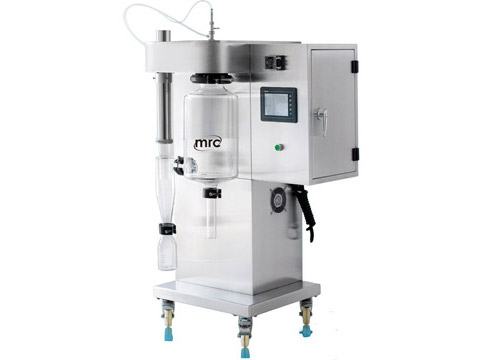
Laboratory spray dryers are essential tools in pharmaceutical, food science, biotechnology, chemical engineering, and materials research laboratories. They allow researchers to convert liquid formulations into stable, free flowing powders in a single continuous step. Through precise control of temperature, droplet size, residence time, and drying gas conditions, spray drying enables the development of advanced formulations with tailored particle morphology, moisture content, and performance characteristics.
Modern laboratory spray drying technology has diversified into several specialized system designs, each engineered for specific safety, thermal, and scale up requirements. This article provides an in depth technical overview of the following laboratory spray dryer types:
- Laboratory Scale Spray Dryer
- Inert Loop Spray Dryer
- Low Temperature Spray Dryer
- Vacuum Spray Dryer
- Pilot Scale Spray Dryer
Fundamentals of Laboratory Spray Drying
A laboratory spray dryer operates by atomizing a liquid feed into fine droplets inside a drying chamber where heated gas rapidly removes the solvent. The dried particles are separated from the gas stream using cyclones or filtration systems and collected as powder.
The process typically involves:
- Metered liquid feeding into the atomizer.
- Formation of micron sized droplets.
- Rapid solvent evaporation.
- Particle formation and solidification.
- Powder recovery and exhaust gas treatment.
Laboratory systems emphasize minimal sample consumption, fast changeover, high process control, and flexible configuration for R&D environments.
Laboratory Scale Spray Dryer
General Description
Laboratory scale spray dryers are compact units designed for early stage formulation development and feasibility studies. They typically process feed rates from a few milliliters per minute up to several liters per hour.
Key Features
- Small drying chambers made from glass or stainless steel.
- Adjustable inlet and outlet air temperatures.
- Peristaltic or piston feed pumps.
- Two fluid nozzles or rotary atomizers.
- Cyclone based powder collection systems.
Typical Applications
- Pharmaceutical excipient screening.
- Microencapsulation of flavors and vitamins.
- Nutraceutical powders.
- Polymer and ceramic precursor research.
Advantages
- Requires only small sample volumes.
- Rapid experimental turnaround.
- Lower capital cost compared with larger systems.
- Simple installation and cleaning.
Limitations
- Limited production capacity.
- Not suitable for direct commercial manufacturing.
Inert Loop Spray Dryer
Operating Principle
Inert loop spray dryers function within a closed circuit using nitrogen or another inert gas instead of air. The gas is continuously recirculated through condensers and filters before being reheated and returned to the drying chamber.
Why Use an Inert Atmosphere
- Prevent oxidation of oxygen sensitive compounds.
- Enable safe processing of flammable organic solvents.
- Reduce explosion risk.
- Maintain chemical stability.
System Characteristics
- Airtight chamber and ducting.
- Solvent recovery condensers.
- Oxygen monitoring sensors.
- Heat exchangers for gas recycling.
- Explosion proof design.
Typical Uses
- Active pharmaceutical ingredients dissolved in ethanol or acetone.
- Energetic or reactive materials.
- Specialty polymers.
- Advanced nanomaterials.
Advantages
- Exceptional safety for solvent based formulations.
- Preserves sensitive chemistries.
- Enables regulatory compliant development.
Challenges
- Higher system complexity and cost.
- Increased maintenance requirements.
- Larger footprint compared with open loop dryers.
Low Temperature Spray Dryer
Purpose and Design
Low temperature spray dryers are optimized for thermally sensitive products such as proteins, enzymes, probiotics, and volatile compounds. They minimize thermal exposure while still achieving rapid moisture removal.
Engineering Strategies
- Reduced inlet air temperatures.
- Optimized droplet formation for faster evaporation.
- Short residence time chambers.
- Controlled humidity drying gas.
- Protective formulation additives.
Core Features
- Multi zone temperature control.
- Enhanced atomization systems.
- Precise exhaust temperature monitoring.
- Gentle drying profiles.
Applications
- Biopharmaceutical powders.
- Live microbial cultures.
- Vaccines and biologics.
- Botanical extracts.
Advantages
- Maintains biological activity.
- Minimizes protein denaturation.
- Improves product stability.
Limitations
- Lower throughput.
- More complex formulation development.
- Potentially higher operating costs.
Vacuum Spray Dryer
Drying Under Reduced Pressure
Vacuum spray dryers combine atomization with sub atmospheric pressure inside the drying chamber. Reduced pressure lowers solvent boiling points, enabling evaporation at significantly lower temperatures.
Technical Configuration
- Fully sealed vacuum rated chambers.
- Industrial vacuum pumps.
- Condensers for solvent vapor capture.
- Pressure control valves.
- Integrated process monitoring.
Typical Applications
- Heat labile pharmaceutical actives.
- Aromatic compounds.
- Specialty chemicals.
- High value biologics.
Advantages
- Ultra gentle drying conditions.
- Reduced oxidation risk.
- High retention of volatile components.
Drawbacks
- Lower productivity.
- High equipment cost.
- Complex process control.
Pilot Scale Spray Dryer
Bridging R&D and Manufacturing
Pilot scale spray dryers are designed to simulate industrial conditions while still operating within research or pilot plant environments. They enable reliable process scale up before committing to full production facilities.
Design Features
- Larger drying chambers and air handling units.
- Higher feed flow rates.
- Multiple atomization options.
- Dual stage powder recovery systems.
- Continuous operation capability.
Typical Roles
- Process development and optimization.
- Regulatory batch production.
- Clinical trial material manufacturing.
- Scale up validation studies.
Advantages
- Predictive performance for industrial plants.
- Reduced commercial risk.
- Improved regulatory documentation.
Disadvantages
- Requires significant laboratory space.
- Higher investment cost.
- Installation complexity.
Comparative Overview of Laboratory Spray Dryer Types
| System Type | Operating Temperature | Solvent Safety | Typical Scale | Primary Purpose |
| Laboratory Scale | Moderate to High | Standard | Small | Formulation screening |
| Inert Loop | Variable | Very High | Small to Medium | Flammable solvents |
| Low Temperature | Low | Standard | Small | Heat sensitive products |
| Vacuum | Very Low | High | Small | Extreme thermal sensitivity |
| Pilot Scale | Variable | Standard to High | Medium | Scale up development |
How to Select the Right Laboratory Spray Dryer
Selection should be based on:
- Thermal stability of the product.
- Type of solvent system.
- Safety and regulatory constraints.
- Sample availability.
- Future scale up plans.
- Facility infrastructure and budget.
In pharmaceutical R&D environments, teams often begin with laboratory scale systems and transition to pilot units for late stage development and clinical manufacturing.