Water activity meters are essential tools in laboratories for measuring the water activity (aw) of various substances.Water activity (aw) measures the free water in a substance available for microbial growth and chemical reactions. Unlike moisture content, which refers to the total water in a product, water activity directly influences the shelf life and safety of food, pharmaceuticals, and cosmetics.
Why is Water Activity Important?
Food Industry Applications
- Ensures food safety by preventing microbial growth.
- Determines the stability of dry and semi-dry products.
- Helps in optimizing packaging and storage conditions.
Pharmaceuticals and Cosmetics
- Maintains the efficacy of drugs and skincare products.
- Prevents degradation of active ingredients.
- Ensures compliance with industry regulations.
How Does a Laboratory Water Activity Meter Work?
A laboratory water activity meter functions by measuring the equilibrium relative humidity (ERH) of a sample. The device contains sensors that detect water vapor pressure, which is then converted into a water activity value.
Key Features to Look for in a Water Activity Meter
- Accuracy and Precision – Choose a device with minimal measurement deviation.
- Measurement Speed – Faster readings save time in high-throughput labs.
- Calibration and Maintenance – Regular calibration ensures accuracy over time.
How to Use a Water Activity Meter in the Laboratory
Step-by-Step Guide
- Prepare the sample in a clean, dry container.
- Insert the sample into the meter's chamber.
- Allow the device to reach equilibrium.
- Record the aw value and interpret the results.
Common Applications of Water Activity Measurement
Water Activity in Food Industry
Shelf Life and Spoilage Control
- Water activity influences the growth of bacteria, yeast, and mold.
- Lower water activity extends the shelf life of food products.
Microbial Growth Prevention
- Most bacteria require aw >0.91 to grow.
- Mold and yeast can grow in lower aw conditions, around 0.7.
Quality and Texture Maintenance
- Ensures crispiness in snacks and cereals.
- Prevents moisture migration between ingredients in multi-component foods.
Pharmaceutical Applications
Drug Stability
- High water activity can lead to degradation of active ingredients.
- Essential for powdered and capsule-based medications.
Storage and Packaging Requirements
- Medications require controlled aw to avoid caking or degradation.
- Ensures longer shelf life of pharmaceutical products.
Production and Formulation
- Helps in maintaining consistency in drug formulations.
Role of Water Activity in Cosmetics
Product Preservation
- Prevents microbial contamination in lotions, creams, and gels.
- Reduces the need for excessive preservatives.
Moisture Control in Skincare Products
- Ensures consistency and stability in formulations.
Agricultural Applications
Seed Storage and Viability
- Seeds stored with controlled aw remain viable for longer periods.
- Prevents fungal growth in stored grains.
Grain and Feed Storage
- Maintains quality and prevents spoilage in animal feed.
Water Activity in Pet Food Industry
Preservation of Dry and Wet Pet Food
- Ensures that dry pet food remains crunchy while wet food stays safe from bacteria.
Ensuring Safety Against Mold and Bacteria
- Reduces health risks associated with contaminated pet food.
Textile Industry and Water Activity
Moisture Content in Fabrics
- Ensures the right level of moisture to prevent fabric degradation.
Storage and Packaging of Textiles
- Prevents mold and mildew in stored textiles.
Water Activity in Laboratory Research
Water activity measurement is also crucial in research facilities, particularly in microbiology and material sciences, where environmental conditions impact sample stability.
Factors Affecting Water Activity Measurements
- Temperature Variations – Affect sensor accuracy and sample stability.
- Sample Contamination – Improper handling can skew results.
- Instrument Calibration – Regular calibration ensures reliable readings.
Water Activity and Its Importance
Water Activity (aw) and Its Importance in Food and Agriculture
Water activity (aw) is a critical parameter that indicates the amount of free, unbound water available in a material. Unlike total moisture content, water activity measures only the water that can support microbial growth, chemical reactions, and physical changes in food or agricultural products.
Maintaining proper water activity is essential for ensuring food stability, safety, and shelf life. Too much available water allows bacteria, yeast, and mold to multiply, while too little can cause undesirable texture changes or nutrient loss.
Applications and Uses
Food Safety and Preservation – Water activity meters help determine whether food is microbiologically stable. Controlling aw prevents spoilage and contamination by limiting the growth of pathogens and mold.
Product Development – Food technologists use water activity data to formulate recipes that balance texture, taste, and stability. It helps identify how moisture migration between ingredients might affect product quality.
Packaging and Storage Optimization – By knowing the water activity, manufacturers can choose suitable packaging materials and storage conditions that prevent moisture gain or loss. This minimizes the need for chemical preservatives.
Quality Control in Production – Continuous aw monitoring ensures consistent product quality across batches, especially for dried foods, powders, cereals, confectionery, and meat products.
Pharmaceutical and Agricultural Research – In addition to food, water activity testing is also used to evaluate seed viability, feed stability, and powdered pharmaceuticals.
Water Activity Meters
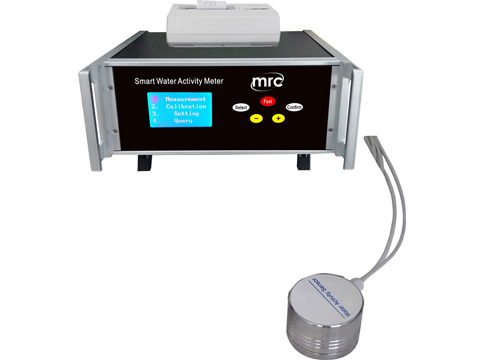
A Water Activity Meter measures the equilibrium relative humidity of a sample to determine its aw value.
It directly indicates how much free water is available for microbial proliferation.
By using this instrument, food formulators can predict how moisture migration will affect their products and make informed decisions about formulation, packaging, and storage — ultimately reducing the reliance on artificial preservatives and ensuring long-term product stability.