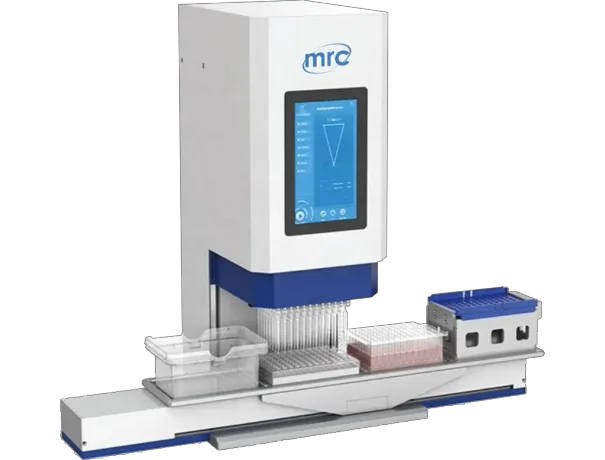
Modern laboratories are evolving faster than ever before. Scientific research, pharmaceutical development, biotechnology innovation, and clinical diagnostics all depend heavily on accurate liquid transfer processes. In many laboratories, researchers still spend countless hours manually pipetting liquids between tubes, plates, and containers. While this traditional method may appear simple, it often creates major challenges involving accuracy, consistency, contamination risks, and time management. This is exactly why liquid handling workstations have become one of the most valuable technologies in laboratory automation.
A liquid handling workstation is far more than just an advanced pipette. It is a complete automated platform designed to transfer liquids with extraordinary precision while minimizing human involvement. These systems help laboratories process larger sample volumes, improve reproducibility, and accelerate workflows that would otherwise consume enormous amounts of manual labor. In scientific environments where precision can determine the success or failure of an entire experiment, automation provides a level of consistency that manual techniques simply cannot maintain over long periods.
The demand for automation continues to rise because laboratories face increasing pressure to deliver faster results while maintaining strict quality standards. Pharmaceutical companies race to develop new therapies, diagnostic laboratories manage growing testing demands, and research institutions handle increasingly complex experiments. Manual workflows often become bottlenecks under these conditions. Automated liquid handling removes these limitations by creating highly repeatable and scalable laboratory processes.
Another important factor is laboratory staffing. Skilled scientists should focus on analysis, innovation, and interpretation rather than repetitive pipetting tasks that consume valuable time and energy. Automated systems reduce repetitive strain, improve workplace productivity, and allow researchers to concentrate on scientific discovery instead of routine liquid transfers. In many ways, liquid handling workstations act like industrial production lines for science, transforming repetitive laboratory tasks into fast, accurate, and highly controlled automated workflows.
The Growing Need for Laboratory Automation
Laboratory automation has shifted from being a luxury to becoming a necessity in many scientific environments. Research organizations now process enormous amounts of data and samples daily. In molecular biology laboratories, researchers may need to prepare hundreds of PCR reactions within a single day. Clinical laboratories often process thousands of patient samples every week. Drug discovery facilities may screen millions of compounds during a single research program. Performing these tasks manually is not only slow but also highly vulnerable to human error.
Automation solves these challenges by standardizing repetitive tasks. A liquid handling workstation can execute the same protocol repeatedly without fatigue or inconsistency. Unlike humans, robotic systems do not lose concentration after hours of repetitive work. This dramatically improves experimental reliability and helps laboratories maintain higher quality standards across large sample batches.
Speed is another major advantage driving automation adoption. Laboratories that rely on manual pipetting often struggle to keep pace with growing workloads. Automated workstations can complete tasks in minutes that might otherwise require several hours of manual labor. This increased throughput allows laboratories to process more samples while reducing turnaround times.
Regulatory compliance also plays a critical role. Industries such as pharmaceuticals, biotechnology, and clinical diagnostics operate under strict quality requirements. Automated systems generate digital records of every liquid transfer and workflow step, improving traceability and documentation. This level of process control is increasingly important in regulated environments where data integrity is essential.
What Is a Liquid Handling Workstation?
Definition and Core Functionality
A liquid handling workstation is an automated laboratory system designed to transfer, dispense, mix, dilute, or distribute liquids with extremely high precision. These systems use robotic technology combined with intelligent software to automate tasks traditionally performed by laboratory personnel using manual pipettes.
At its core, the system works by controlling the movement of liquids between containers. The workstation can aspirate specific liquid volumes, transfer them to designated locations, mix reagents, perform serial dilutions, and prepare entire assay plates automatically. Some systems are capable of handling tiny nanoliter volumes with exceptional precision, making them ideal for advanced scientific applications.
Modern liquid handling systems often include robotic arms, pipetting heads, integrated sensors, barcode scanners, incubators, shakers, and software platforms that coordinate every movement. The combination of hardware and software creates a highly flexible automation environment capable of supporting numerous laboratory workflows.
One of the most impressive aspects of these systems is their adaptability. Laboratories can configure workstations for applications ranging from DNA extraction and ELISA preparation to drug screening and microbiology testing. Instead of building an entirely new process for each experiment, scientists can simply program new workflows into the software interface.
The technology behind these systems continues to evolve rapidly. Advanced workstations now incorporate smart sensing technologies that monitor liquid levels, detect clogs, verify tip placement, and identify workflow errors before they impact experimental results. These features significantly improve reliability and reduce failed experiments caused by human mistakes.
Main Components of Modern Systems
Every liquid handling workstation contains several essential components that work together as a coordinated automation platform. The most recognizable component is the pipetting system, which performs the actual liquid transfers. Depending on the workstation type, the system may use single-channel or multi-channel pipetting heads capable of handling multiple samples simultaneously.
The robotic deck serves as the workspace where samples, plates, reservoirs, and consumables are positioned. Modern workstation decks are highly modular and may include temperature control units, magnetic separators, heaters, shakers, cooling systems, and centrifuge integrations. This flexibility allows laboratories to customize the platform according to specific workflow requirements.
Robotic motion systems control the movement of pipetting heads and laboratory consumables throughout the workstation. These robotic systems are engineered for extremely precise positioning, ensuring accurate liquid transfers even in high-density microplates.
Sensors play an increasingly important role in modern systems. Pressure sensors, liquid-level detection systems, and optical verification technologies help maintain accuracy and reduce operational errors. Some workstations can automatically detect missing tips, insufficient liquid volumes, or dispensing failures in real time.
Software acts as the brain of the workstation. Through graphical interfaces, scientists can design workflows, define transfer volumes, create protocols, and monitor operations. Many systems now integrate directly with laboratory databases and information management systems, improving data organization and workflow tracking.
Types of Liquid Handling Workstations
Manual Liquid Handling Systems
Manual liquid handling remains common in smaller laboratories and educational environments. Scientists use handheld pipettes to transfer liquids between containers manually. While manual systems provide flexibility and low initial costs, they become inefficient for repetitive high-volume workflows.
Human operators naturally introduce variability into liquid handling processes. Fatigue, distraction, inconsistent pipetting technique, and repetitive strain can all impact accuracy. These limitations become especially problematic in applications requiring ultra-high precision or large sample throughput.
Manual workflows also consume substantial amounts of time. Laboratory personnel may spend hours performing repetitive pipetting tasks that could otherwise be automated. In fast-paced research environments, this significantly limits productivity.
Despite these limitations, manual systems still play an important role in low-throughput laboratories and specialized applications requiring hands-on flexibility. Small laboratories often begin with manual workflows before gradually transitioning toward automation as workloads increase.
Semi-Automated Liquid Handling Platforms
Semi-automated liquid handling systems provide a practical middle ground between manual pipetting and fully automated robotics. These platforms automate specific liquid handling tasks while still requiring some level of human interaction.
For example, a semi-automated system may handle repetitive dispensing steps while operators manually load plates or prepare reagents. This reduces labor requirements without requiring the large investment associated with fully automated robotic platforms.
Semi-automated systems are especially popular among medium-sized laboratories seeking improved productivity while maintaining operational flexibility. They are often easier to install, program, and maintain than larger fully automated systems.
Another major advantage is affordability. Many laboratories view semi-automated platforms as an entry point into laboratory automation. As laboratory demands increase, organizations can later expand toward more advanced automation solutions.
Fully Automated Robotic Workstations
Fully automated liquid handling workstations represent the highest level of laboratory automation. These systems perform complete workflows with minimal human involvement, often operating continuously for extended periods.
Large pharmaceutical companies, biotechnology firms, and genomics facilities frequently rely on fully automated systems for high-throughput applications. These platforms can process massive sample volumes while maintaining exceptional precision and consistency.
Fully automated systems often integrate multiple laboratory instruments into unified workflows. Robotic arms transport plates between incubators, pipetting stations, plate readers, and storage systems automatically. The result is a highly efficient laboratory ecosystem capable of running complex experiments with minimal supervision.
While these systems require larger investments, they deliver enormous productivity gains in high-throughput environments. Laboratories processing thousands of samples daily often achieve substantial long-term cost savings through reduced labor requirements and improved efficiency.
Key Technologies Used in Liquid Handling Systems
Pipetting Technology
Pipetting technology forms the foundation of every liquid handling workstation. Modern systems use highly engineered dispensing mechanisms capable of transferring precise liquid volumes repeatedly with extraordinary accuracy.
Some workstations use air displacement pipetting similar to manual pipettes, while others rely on positive displacement systems for handling viscous or volatile liquids. Advanced non-contact dispensing technologies can transfer liquids without physically touching the destination surface, reducing contamination risks and improving speed.
High-density multi-channel pipetting heads allow workstations to process entire microplates simultaneously. These systems dramatically increase throughput compared to manual pipetting techniques.
Robotic Integration and Motion Control
Robotic motion systems allow workstations to coordinate highly complex workflows. Precision motors and motion controllers ensure accurate positioning during every transfer operation.
Modern robotic systems move with remarkable speed while maintaining extremely high positional accuracy. This precision becomes especially important when working with high-density microplates containing hundreds or thousands of wells.
Collaborative robotics and intelligent motion planning technologies are also becoming more common in advanced laboratory automation systems.
Software and Data Management
Software transforms a liquid handling workstation from a simple robotic device into an intelligent laboratory automation platform. Workflow design software allows researchers to create customized protocols for numerous scientific applications.
Modern systems often include real-time monitoring, error detection, digital traceability, and integration with laboratory databases. Some software platforms also support cloud connectivity and remote monitoring.
Artificial intelligence is beginning to influence automation software as well. Emerging systems can optimize workflows dynamically and adjust dispensing parameters automatically based on liquid behavior.
Applications in Modern Laboratories
Pharmaceutical Research
Pharmaceutical laboratories rely heavily on automated liquid handling for drug discovery and assay preparation. High-throughput screening workflows require rapid and precise compound handling across thousands or millions of experimental reactions.
Automation accelerates research timelines while improving consistency and reducing operational costs. Pharmaceutical companies use these systems extensively for compound dilution, reagent preparation, and assay setup.
Molecular Biology and Genomics
Genomics workflows require exceptional precision because even small volume variations can impact DNA amplification and sequencing results. Automated liquid handling systems provide the reproducibility needed for PCR setup, DNA extraction, and sequencing preparation.
The rise of personalized medicine and advanced genomic research continues to drive demand for automation technologies in molecular biology laboratories.
Clinical Diagnostics
Clinical laboratories face constant pressure to deliver rapid and accurate diagnostic results. Automated systems help laboratories process large sample volumes while maintaining strict quality standards.
Automation also improves traceability and reduces contamination risks, both of which are critical in medical testing environments.
Food, Environmental, and Chemical Testing
Liquid handling automation extends far beyond medical and pharmaceutical applications. Environmental laboratories use automated systems for water analysis, contamination testing, and chemical monitoring.
Food testing laboratories also benefit from automated sample preparation workflows that improve throughput and consistency.
Advantages of Automated Liquid Handling
Precision and Reproducibility
One of the greatest advantages of automation is consistency. Robots can repeat the same liquid transfer thousands of times without variability. This dramatically improves reproducibility across experiments and laboratories.
Accurate liquid handling is essential in applications involving expensive reagents, sensitive biological materials, or strict quality requirements.
Time and Cost Savings
Automation allows laboratories to process more samples in less time. Tasks that previously required hours of manual labor can often be completed automatically within minutes.
Although automation systems require upfront investments, they often reduce long-term operational costs through increased efficiency and reduced labor demands.
Reduction of Human Error
Human errors such as skipped samples, incorrect volumes, or contamination events can compromise entire experiments. Automated systems reduce these risks significantly through precise robotic control and integrated verification technologies.
How to Choose the Right Liquid Handling Workstation
Workflow Analysis
Selecting the right system begins with understanding laboratory workflows and application requirements. Laboratories should evaluate sample volume, workflow complexity, and required throughput carefully.
Laboratory Space and Throughput
Available laboratory space plays a major role in system selection. Compact benchtop systems may suit smaller facilities, while large-scale automation platforms require dedicated laboratory areas.
Budget and Future Scalability
Laboratories should consider both current and future needs. Scalable systems provide flexibility for workflow expansion and future automation growth.
Future Trends in Liquid Handling Automation
Artificial Intelligence and Smart Labs
Artificial intelligence is reshaping laboratory automation rapidly. Smart systems can optimize workflows, predict maintenance needs, and improve operational efficiency automatically.
Miniaturization and High-Throughput Systems
The trend toward smaller sample volumes and faster processing continues to drive innovation in liquid handling technology. Future systems will likely become faster, more compact, and increasingly autonomous.