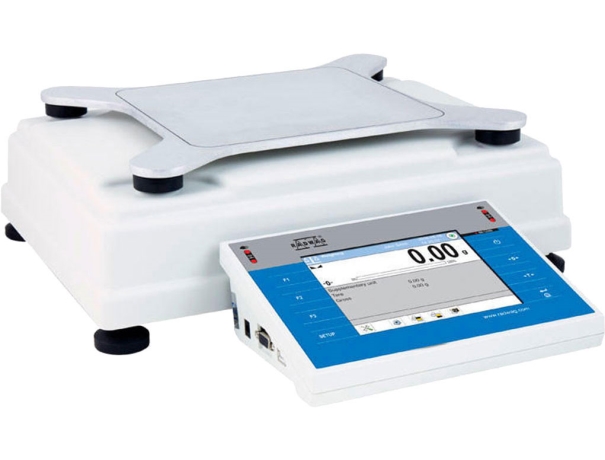
Precision balances, often referred to as analytical balances, are advanced weighing instruments designed to provide highly accurate measurements of mass. These instruments are widely used in research laboratories, pharmaceutical companies, and quality control processes. Precision balances offer high sensitivity and are capable of measuring small variations in mass, making them suitable for tasks that demand utmost accuracy.
What Are Moisture Balances?
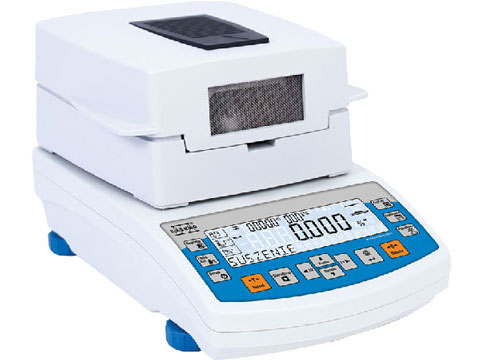
Moisture balances, on the other hand, are specialized devices used to determine the moisture content within a sample. These balances are particularly useful in industries where moisture levels significantly impact product quality, such as the food and agriculture sectors. By employing a combination of heating and weighing, moisture balances help analyze the moisture content of substances, aiding in quality control and research.
Functional Differences
Precision Balances: Weighing Accuracy and Sensitivity
Precision balances excel at providing accurate measurements of mass, often with precision up to several decimal places. These balances use electromagnetic force restoration technology, allowing them to maintain their calibration even in challenging environments. They are ideal for weighing small quantities of substances for experiments, formulations, and other precise applications.
Moisture Balances: Analyzing Moisture Content
Moisture balances operate on the principle of heating a sample to evaporate its moisture, and the weight loss is used to calculate the moisture content. These instruments are crucial for industries that require knowledge of moisture levels to ensure product stability and quality. Moisture balances are valuable tools for assessing the efficacy of drying processes and determining appropriate storage conditions.
Applications in Various Industries
Precision Balances Applications
Precision balances find applications in a wide range of industries, including pharmaceuticals, chemistry, and material science. They are indispensable for preparing standard solutions, compounding medications, and conducting precise measurements during chemical reactions. Researchers and scientists rely on precision balances to ensure the accuracy of their experiments and analyses.
Moisture Balances Applications
Moisture balances play a pivotal role in industries like agriculture, food processing, and cosmetics manufacturing. They help maintain the quality of food products by ensuring proper moisture levels that prevent spoilage and microbial growth. In the cosmetics industry, moisture content affects product texture and stability, making moisture balances essential for quality control.
Factors to Consider When Choosing
Nature of the Substance
Consider the type of material you will be working with. Precision balances are suitable for solid materials, while moisture balances are designed for substances with varying moisture content.
Required Accuracy
If your work demands minute measurements, a precision balance is preferable due to its higher sensitivity. Moisture balances are more suitable when moisture content needs assessment.
Sample Size and Throughput
For small samples, precision balances are apt. However, if you need to process multiple samples quickly, moisture balances can handle larger quantities.
Precision Balance vs. Moisture Balance: Pros and Cons
Precision Balance Pros and Cons
Pros:
- Exceptional accuracy
- Suitable for various materials
- Ideal for research and formulation
Moisture Balance Pros and Cons
Pros:
- Determines moisture content directly
- Essential for quality control
- Widely used in food and agriculture