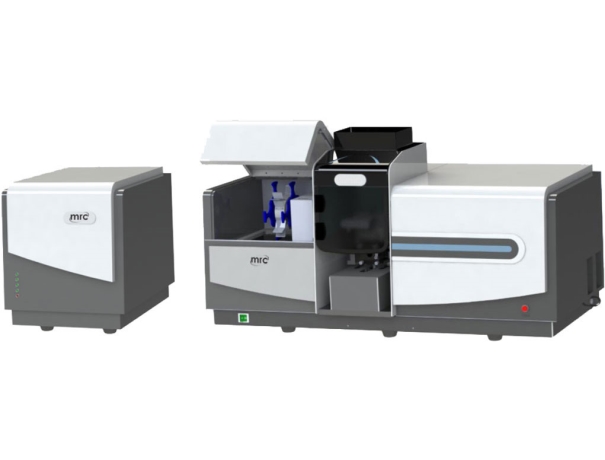
MUNRO markets a wide range of Atomic Absorption Spectrophotometer (AAS) in the UK and internationally. Below are some questions and answers.
What is an Atomic Absorption Spectrophotometer?
An Atomic Absorption Spectrophotometer (AAS) is an analytical instrument used to measure the concentration of specific metal elements in liquid samples. It works by detecting how much light is absorbed by free atoms in a gaseous state. Each element absorbs light at a unique wavelength, allowing precise identification and quantification.
How does an AAS work?
The instrument operates in three main stages:
- Atomization: The sample is introduced into a flame or graphite furnace, converting it into free atoms.
- Light Source: A hollow cathode lamp emits light specific to the element being analyzed.
- Detection: The detector measures the reduction in light intensity after passing through the atomized sample, which correlates with the element concentration.
What elements can be analyzed using AAS?
AAS is primarily used for detecting metals such as:
- Lead (Pb)
- Cadmium (Cd)
- Zinc (Zn)
- Copper (Cu)
- Iron (Fe)
- Nickel (Ni)
- Calcium (Ca)
- Magnesium (Mg)
What are the main types of AAS systems?
- Flame AAS (FAAS): Suitable for routine analysis with moderate sensitivity.
- Graphite Furnace AAS (GFAAS): Offers higher sensitivity and lower detection limits.
- Hydride Generation AAS (HGAAS): Specialized for elements like arsenic and selenium.
Where is AAS commonly used?
Atomic Absorption Spectrophotometers are widely used in:
- Environmental testing (water, soil, air contamination)
- Food and beverage quality control
- Pharmaceutical analysis
- Clinical laboratories
- Mining and metallurgy
What are the advantages of AAS?
- High selectivity for metal analysis
- Reliable and reproducible results
- Relatively low operational cost compared to ICP techniques
- Simple operation and maintenance
What are the limitations of AAS?
- Typically analyzes one element at a time
- Requires sample preparation
- Limited to metal and metalloid analysis
- Lower throughput compared to advanced multi-element techniques
How does AAS compare to ICP-OES or ICP-MS?
- AAS: Cost-effective, ideal for targeted metal analysis
- ICP-OES: Multi-element analysis with higher throughput
- ICP-MS: Ultra-trace detection with extremely high sensitivity
Why is AAS important in modern laboratories?
AAS remains a critical tool for laboratories requiring accurate, cost-efficient metal analysis. It provides dependable results for regulatory compliance, research, and industrial quality assurance.