Biological microscopes are instruments that use lenses and light to magnify small objects, such as cells, tissues, and microorganisms. They are an essential tool in biology, allowing researchers to study the structure and function of living organisms at the cellular and subcellular level. Biological microscopes typically have a range of magnification powers and may be equipped with specialized lenses, filters, and light sources to enhance contrast and resolution. They are used in a variety of applications, including medicine, research, and education.
Types of microscopes used in biology?
There are several types of microscopes that are commonly used in biology:
- Light microscopes: These microscopes use visible light and lenses to magnify objects. They can be further divided into several subtypes:
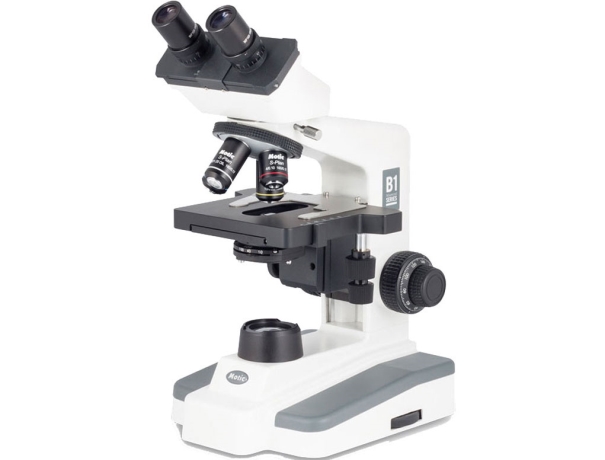
- Compound microscopes: These are the most common type of light microscopes and use multiple lenses to magnify the image. They have a binocular or trinocular eyepiece and a specimen stage with a light source underneath.
- Stereo microscopes: These microscopes have two separate optical paths and are used to view small, three-dimensional objects. They are commonly used for dissection and inspection.
- Phase contrast microscopes: These microscopes use special lenses and filters to enhance the contrast of unstained, living cells.
- Fluorescence microscopes: These microscopes use fluorescent dyes and special filters to visualize specific structures or molecules in cells.
- Electron microscopes: These microscopes use a beam of electrons to produce high-resolution images of cells and subcellular structures. They can be divided into two main types:
- Transmission electron microscopes: These microscopes use a beam of electrons to create a detailed image of a thin slice of the specimen.
- Scanning electron microscopes: These microscopes produce a three-dimensional image of the surface of a specimen by scanning it with a focused beam of electrons.
What are the uses of biological microscopes?
Biological microscopes are used for a wide range of applications in biology and related fields. Some examples include:
- Studying the structure and function of cells and tissues: Biological microscopes are essential for understanding the fundamental properties of living organisms at the cellular level. They allow researchers to visualize and analyze the structure and function of cells, tissues, and organs, which is critical for understanding how living systems work.
- Diagnosing and treating diseases: Microscopes are widely used in medicine to diagnose and monitor various diseases. For example, microscopes are used to examine blood smears, tissue samples, and microorganisms to identify infections and other health problems.
- Researching the structure and function of microorganisms: Microscopes are crucial for studying microorganisms, such as bacteria, viruses, and fungi. They allow researchers to visualize and analyze the structure and function of these tiny organisms, which is important for understanding how they interact with their environment and how they can be controlled.
- Teaching biology: Microscopes are also widely used in education to teach students about the structure and function of cells and other biological systems.
- Quality control: Microscopes are used in various industries to ensure that products meet specific quality standards. For example, they may be used to inspect food products, pharmaceuticals, and other consumer goods.
What is the importance of biological method?
Biological methods are techniques and approaches that are used to study living organisms and their interactions with each other and their environment. These methods are important because they allow scientists to understand the complex processes that underlie life and to develop new ways to improve human health and the environment.
Some specific examples of the importance of biological methods include:
- Understanding the fundamental processes of life: Biological methods are used to study the structure and function of cells, tissues, and organs, as well as the mechanisms by which they interact with each other and the environment. This helps scientists to understand the basic principles of life and how living systems work.
- Developing new treatments and therapies: Biological methods are used to identify and study the molecules and pathways that are involved in disease, which can lead to the development of new treatments and therapies.
- Improving food production and crop yields: Biological methods are used to study plant growth and development, which can lead to the development of new crop varieties that are more resistant to diseases and pests and have improved yields.
- Protecting the environment: Biological methods are used to study the impacts of human activities on the environment and to develop strategies for protecting natural resources and biodiversity.
- Providing fundamental knowledge for other fields: The study of biology provides a foundation for understanding many other scientific fields, such as chemistry, physics, and medicine.
Working Principle of Biological Microscopes
The working principle of a biological microscope is based on the use of lenses to magnify small objects. Light microscopes use visible light and lenses to produce a magnified image of the specimen, while electron microscopes use a beam of electrons to produce an image of the specimen.
In a light microscope, light from a light source, such as a bulb or LED, is passed through the specimen and is focused by a series of lenses onto the eyepiece, which the user looks through to view the magnified image. The main lens system of a light microscope is called the objective lens, which is located below the stage on which the specimen is mounted. The objective lens is responsible for collecting light from the specimen and focusing it onto the eyepiece. The eyepiece lens, which is located at the top of the microscope, magnifies the image further.
In an electron microscope, a beam of electrons is used instead of light to produce an image of the specimen. The electrons are generated by an electron gun and are focused onto the specimen by a series of lenses. The electrons interact with the atoms in the specimen and create a pattern of scattered electrons that is detected by an electron detector. This pattern is used to create an image of the specimen, which is displayed on a screen or captured digitally.
In both light and electron microscopes, the magnifying power of the microscope is determined by the ratio of the focal lengths of the objective lens and the eyepiece lens. The higher the magnification, the more detailed the image of the specimen will be. However, at very high magnifications, the image may become distorted or blurry due to the limitations of the lenses and the properties of light or electrons.