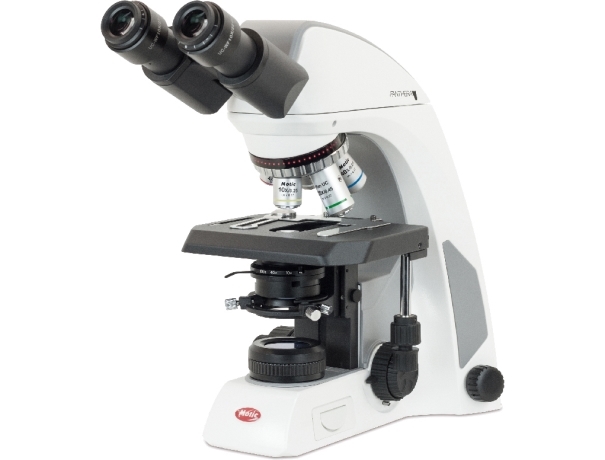
MUNRO presents professional microscopes and microscope accessories for laboratories and industry.
Microscopes are professional devices that visually magnify small objects to be visible to the eye. The main differences between the different microscopes are mainly in the magnification level of the microscope and the quality of the image obtained
Types of Microscopes:
Stereo Microscopes: Also known as dissecting microscopes, stereo microscopes are designed for low-magnification observations of three-dimensional objects. They provide a three-dimensional image by using two separate eyepieces to observe the specimen from slightly different angles. Stereo microscopes are commonly used in entomology, geology and paleontology to examine rock and fossil specimens, as well as to prepare samples for further analysis, botany, Jewelry and Crafts, education, Graphologists use stereo microscopes to examine handwriting,
and quality control to inspect and evaluate parts and components. They are particularly useful for examining small parts, such as electronic components and mechanical parts, where a three-dimensional view is needed. Stereo microscopes are used to study and restore works of art, such as paintings, sculptures, and textiles, Museums use stereo microscopes to study and preserve a wide range of specimens, including historical artifacts, fossils, and natural specimens, Archaeologists use stereo microscopes to study artifacts, such as pottery, tools, and bones, and are also used in conservation and restoration, where they are used to study and restore works of art, manuscripts, and historical documents.
Biological Microscopes: They are designed specifically for the study of biological specimens. They use high magnification and a bright field illumination to observe the details of the specimen. They are commonly used in medical and veterinary research, as well as in the classroom.
Inverted Microscopes: Inverted microscopes are designed to observe living cells and tissues in a culture dish or petri dish. They are called inverted because the stage is located above the objectives, making it easy to access the specimen from below. They are commonly used in cell biology, microbiology, and pathology.
Fluorescence Microscopes: These use special dyes or fluorescent proteins to label cells, tissues or subcellular structures, and then use ultraviolet light to excite the fluorescent molecules, causing them to emit light at a different wavelength. This allows researchers to study the details of cellular structures and functions.
Metallurgical Microscopes: They are designed to observe the microstructures of metals, alloys, and other materials. They use a polarized light source to produce an optical contrast, allowing researchers to identify the various structures within the specimen. They are commonly used in material science, metallurgy, and engineering.
Polarization Microscopes: Polarization microscopes use polarized light to produce an optical contrast, making it easier to observe the details of transparent specimens. They are commonly used in geology, mineralogy, and materials science.
Video Microscopes: Use digital cameras and display screens to capture and display the images of the specimen. They are commonly used in industrial inspection, scientific research, and medical diagnosis.
Digital Microscopes: Digital microscopes are similar to video microscopes, but they use digital imaging technology to capture and store images, instead of displaying them on a screen. They are commonly used in education, research, and quality control.
Scanning Electron Microscopes (SEM): SEMs use a beam of electrons to scan the surface of a specimen and produce a high-resolution image. They provide detailed images of the surface features and composition of materials and are commonly used in material science, engineering, and biology.
Dental Microscope: A dental microscope is a specialized type of microscope used in dentistry. It provides magnified images of the mouth, teeth, and gums, allowing dentists to perform procedures with greater precision and accuracy. The microscope is mounted on a stand and can be adjusted to provide a clear view of the target area. Some dental microscopes also have built-in lighting systems to provide additional illumination during procedures.
Gemological Microscope: A gemological microscope is a type of microscope used to examine and evaluate gems and other precious stones. It provides high-magnification views of the surface and internal structure of stones, allowing gemologists to identify the type of gem, its clarity, and other important characteristics. often have a long working distance, allowing the user to examine the stone from a safe distance, and can also have special filters to help identify color and other features of the stone.
Teaching Microscope for Two Persons: A teaching microscope for two persons is a type of microscope designed for educational use. It has two eyepieces and two focusing knobs, allowing two people to view the specimen at the same time. This type of microscope is commonly used in classrooms and laboratories to promote hands-on learning and collaboration among students.