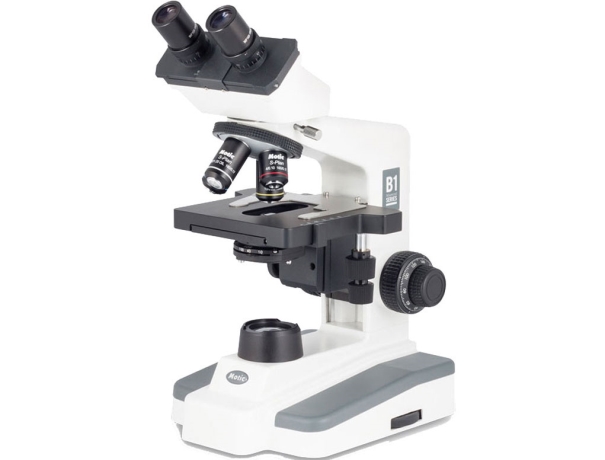
Forensic science is often described as the place where science meets justice. Tiny fragments of evidence that appear completely meaningless to the human eye can suddenly become critical pieces of a criminal investigation once they are viewed under the right microscope. In laboratories across the United Kingdom, forensic microscopes are used daily to analyze hair strands, textile fibers, fingerprints, bullets, paint chips, and countless other microscopic traces connected to criminal cases.
The importance of forensic microscopy continues to grow as police departments and forensic laboratories demand faster, more accurate, and legally reliable evidence analysis. Modern investigations no longer depend solely on witness statements or traditional detective work. Scientific evidence now plays a major role in criminal prosecutions, and microscopes sit at the heart of that process.
Today’s forensic microscopes are far more advanced than the simple optical systems many people imagine. Modern instruments combine precision optics with digital imaging, software analysis, automated measurements, and artificial intelligence. Some systems can compare two bullets side by side, while others can identify microscopic fibers with incredible detail. In many investigations, the microscope becomes the silent witness that reveals the truth hidden within physical evidence.
Understanding the Importance of Forensic Microscopes
Forensic microscopes are specialized instruments designed specifically for criminal investigations and laboratory analysis. Unlike ordinary laboratory microscopes used in schools or biology labs, forensic microscopes focus heavily on evidence comparison, trace analysis, imaging documentation, and legal reliability.
The Science Behind Forensic Microscopy
At its core, forensic microscopy is about uncovering details invisible to the naked eye. A single microscopic scratch on a bullet casing may connect a firearm to a crime scene. A tiny fiber trapped on clothing may place a suspect inside a room. A nearly invisible alteration in ink may expose document fraud. These details are often impossible to detect without magnification and specialized lighting systems.
The process works much like using a magnifying glass to inspect a fingerprint on glass, except forensic microscopes operate at a far more advanced level. High-quality forensic systems provide exceptional resolution, color accuracy, contrast, and depth perception. Analysts can examine evidence under different illumination methods to reveal hidden structures and microscopic surface details.
One of the defining features of forensic microscopy is comparison capability. Investigators frequently need to compare two samples directly. For example, a forensic firearms examiner may compare a bullet recovered from a crime scene with a test bullet fired from a suspect weapon. The microscope allows both samples to appear side by side so the examiner can identify matching microscopic patterns.
Why Forensic Labs in the UK Rely on Microscopes
Forensic laboratories throughout the UK rely on microscopy because it provides objective scientific analysis that can stand up in court. Criminal investigations often depend on tiny pieces of physical evidence, and microscopy allows investigators to analyze that evidence without destroying it.
UK forensic laboratories commonly use microscopes for:
- Firearms examinations
- Hair and fiber analysis
- Drug identification
- Glass fragment analysis
- Fingerprint enhancement
- Counterfeit document detection
- Paint and coating analysis
- Toolmark comparison
As technology evolves, forensic laboratories also require faster workflows and better digital integration. Modern forensic microscopes now include high-definition cameras, evidence management software, automated imaging systems, and remote collaboration tools. This shift toward digital forensic analysis helps improve efficiency while maintaining evidential accuracy.
Main Types of Forensic Microscopes
Not all forensic microscopes are the same. Different investigations require different optical capabilities, and forensic laboratories often use multiple microscope types together.
Comparison Microscopes
Comparison microscopes are among the most recognizable tools in forensic science. These systems are specifically designed to compare two separate samples simultaneously under identical optical conditions.
Imagine comparing two handwritten signatures side by side. Differences become easier to notice immediately. The same principle applies to forensic evidence. Comparison microscopes help analysts identify matching microscopic patterns between bullets, cartridge cases, fibers, or toolmarks.
These microscopes are especially important in ballistics investigations. Every firearm leaves microscopic marks on ammunition when fired. Investigators use comparison microscopes to determine whether evidence recovered at a crime scene matches a suspect weapon.
Modern comparison microscopes often include:
| Feature | Purpose |
|---|
| Dual optical viewing | Simultaneous evidence comparison |
| Digital cameras | Evidence recording |
| LED illumination | Improved visibility |
| Measurement software | Precise analysis |
| Motorized controls | Faster workflow |
The ability to visually compare evidence with precision makes comparison microscopes essential in many criminal investigations.
Stereo Microscopes
Stereo microscopes provide three-dimensional viewing at relatively low magnification. They are commonly used for examining larger evidence samples and performing initial inspections.
One major advantage of stereo microscopes is their working distance. Analysts can manipulate evidence while observing it under magnification without damaging the sample. This makes stereo microscopes extremely useful for examining fragile materials or irregular objects.
Applications include:
- Fiber inspection
- Paint chip analysis
- Biological sample examination
- Surface damage inspection
- Toolmark analysis
Stereo microscopes are often the first instruments investigators use when evidence arrives at the laboratory. They allow forensic scientists to quickly assess sample condition before moving to more advanced analytical systems.
Polarized Light Microscopes
Polarized light microscopes are used to examine materials that interact uniquely with polarized light. This method is especially valuable for identifying trace evidence such as fibers, minerals, crystals, and powders.
Forensic scientists frequently use polarized light microscopy in textile and drug analysis because different materials display unique optical characteristics under polarized illumination. This allows analysts to identify evidence based on optical behavior rather than appearance alone.
The technique is particularly useful because it is non-destructive. Evidence remains intact during examination, which is extremely important in forensic investigations where preserving evidence integrity is critical.
Common uses include:
- Fiber identification
- Soil analysis
- Glass fragment comparison
- Drug particle examination
- Pigment analysis
The ability to reveal hidden optical properties makes polarized light microscopy one of the most powerful tools in trace evidence analysis.
Digital Forensic Microscopes
Digital microscopy represents one of the biggest technological shifts in forensic science. These systems combine advanced optics with high-resolution cameras and specialized software capable of capturing, measuring, enhancing, and sharing evidence digitally.
Digital microscopes allow forensic scientists to:
- Capture high-resolution images
- Annotate evidence
- Archive findings electronically
- Share evidence remotely
- Generate courtroom presentations
Some advanced systems also integrate artificial intelligence to assist with pattern recognition and automated analysis. AI-driven software can help identify repeating structures, detect anomalies, and speed up evidence comparison tasks.
Digital systems are becoming increasingly popular in UK forensic laboratories because they improve efficiency while supporting modern evidence management workflows.
Applications of Forensic Microscopy
Forensic microscopes are used across nearly every branch of criminal investigation. Their ability to reveal microscopic evidence makes them essential tools in both routine and complex cases.
Firearms and Ballistics
Ballistics analysis is one of the most important applications of forensic microscopy. When a firearm is discharged, microscopic markings are transferred onto bullets and cartridge casings. These markings are unique to the firearm due to manufacturing variations and wear patterns.
Comparison microscopes allow forensic analysts to compare evidence from crime scenes with test-fired samples from suspect weapons. Matching microscopic striations may help investigators link a firearm directly to a criminal event.
This process requires exceptional precision because even tiny inconsistencies can affect the final conclusion. High-quality optics and stable imaging conditions are therefore essential in firearms investigations.
Ballistics microscopy has become increasingly important as law enforcement agencies place greater emphasis on scientifically verifiable evidence.
Hair and Fiber Examination
Hair and fiber evidence often plays a major role in violent crime investigations. A single fiber transferred during physical contact may connect a suspect to a victim or crime scene.
Microscopy helps forensic scientists analyze:
- Fiber color
- Surface texture
- Diameter
- Internal structure
- Damage patterns
Different textile materials display unique microscopic characteristics. Synthetic fibers, natural fibers, and blended fabrics all behave differently under magnification and polarized light.
Hair examination also involves analyzing cuticle patterns, pigmentation, and structural characteristics. While hair analysis alone may not always identify an individual conclusively, it can provide valuable investigative leads.
Document Authentication
Document fraud investigations rely heavily on forensic microscopy. Altered contracts, forged signatures, counterfeit currency, and manipulated records often contain microscopic clues invisible to the naked eye.
Microscopes allow analysts to examine:
- Ink consistency
- Paper fibers
- Printer defects
- Erasure marks
- Indentation patterns
Digital forensic microscopes are particularly useful in document analysis because they allow high-resolution imaging and detailed annotation. Investigators can zoom into microscopic regions and document inconsistencies clearly for courtroom presentation.
As financial crime and identity fraud continue to increase, forensic document examination has become an increasingly important field within UK forensic science.
Trace Evidence Analysis
Trace evidence refers to tiny materials transferred during contact between people, objects, or environments. These traces may include dust, soil, paint, pollen, glass fragments, or microscopic debris.
Forensic microscopes help investigators identify and compare these materials to establish connections between suspects, victims, and locations.
For example, glass fragments found on clothing may match a broken window at a crime scene. Paint particles may link a suspect vehicle to a collision. Soil particles may connect footwear to a specific location.
Microscopy allows forensic scientists to analyze these tiny traces with remarkable detail while preserving the original evidence.
Features That Matter in a Forensic Microscope
Choosing the right forensic microscope requires careful evaluation of optical quality, digital capabilities, ergonomics, and long-term reliability.
Optical Precision
Optical quality is the foundation of any forensic microscope. Poor image clarity can compromise evidence interpretation and reduce analytical accuracy.
Important optical factors include:
- Resolution
- Contrast
- Depth of field
- Color accuracy
- Illumination consistency
Forensic analysis often depends on detecting extremely subtle surface details. Even minor distortions or poor lighting conditions can affect results.
Premium forensic microscopes are designed to provide stable, reproducible imaging conditions that support reliable evidence analysis.
Digital Imaging and Software
Modern forensic workflows depend heavily on digital documentation. High-resolution cameras and specialized software allow investigators to capture, measure, and archive evidence efficiently.
Useful software capabilities include:
| Capability | Benefit |
|---|
| Image measurement | Accurate dimensions |
| Annotation tools | Evidence labeling |
| Focus stacking | Enhanced depth |
| Image enhancement | Better visibility |
| Evidence archiving | Secure documentation |
Digital integration also improves collaboration between laboratories and investigators. Evidence images can be shared quickly for peer review or expert consultation.
Ergonomic Design
Forensic analysts often spend long hours examining evidence under magnification. Comfortable microscope design therefore plays a significant role in productivity and operator wellbeing.
Important ergonomic features include:
- Adjustable viewing angles
- Smooth focus controls
- Comfortable eyepieces
- Motorized movement systems
- Efficient sample handling
A well-designed microscope reduces fatigue and improves analytical consistency during prolonged examinations.
The Growing Forensic Microscopy Market in the UK
The forensic microscopy market in the UK continues to expand as forensic laboratories modernize and adopt digital technologies.
Industry Growth
Several factors are driving market growth:
- Increased forensic workloads
- Expansion of digital evidence analysis
- Rising demand for scientific evidence
- Advances in imaging technology
- Greater investment in forensic infrastructure
Police departments and private laboratories increasingly recognize the value of high-quality microscopy systems in improving investigative outcomes.
The growing use of forensic science in court proceedings also increases demand for reliable analytical tools capable of producing clear, defensible evidence.
AI and Automation in Modern Forensics
Artificial intelligence is transforming forensic microscopy. AI-assisted systems can automate repetitive analytical tasks and help identify patterns more quickly.
Emerging capabilities include:
- Automated evidence recognition
- Pattern matching
- Image enhancement
- Measurement automation
- Data classification
AI does not replace forensic experts. Instead, it helps analysts work more efficiently while reducing the likelihood of human error.
As these technologies continue evolving, forensic laboratories across the UK are expected to adopt increasingly automated workflows.
Choosing a Forensic Microscope Supplier in the UK
Selecting the right supplier is just as important as choosing the microscope itself.
Technical Support and Calibration
Forensic evidence must meet strict legal standards. Reliable calibration and technical support are therefore essential.
A professional supplier should provide:
- Calibration services
- Validation documentation
- Preventive maintenance
- Technical troubleshooting
- Compliance support
Without proper maintenance and calibration, even the best microscope may fail to deliver reliable results.
Training and Long-Term Service
Advanced forensic microscopes often include sophisticated optical systems and software platforms. Proper training ensures laboratories can fully utilize their equipment.
Strong suppliers typically offer:
- Installation support
- Operator training
- Workflow optimization
- Software updates
- Long-term service agreements
Ongoing support helps laboratories maintain efficiency while adapting to new forensic technologies.
Future Trends in Forensic Microscopy
The future of forensic microscopy will likely focus on portability, automation, and intelligent analysis.
Portable Forensic Systems
Portable forensic microscopes are becoming increasingly valuable for on-site investigations. These compact systems allow investigators to examine evidence directly at crime scenes.
Benefits include:
- Faster preliminary analysis
- Reduced evidence transport risks
- Immediate imaging capability
- Real-time consultation
Portable systems are expected to become more common as imaging technology continues improving.
AI-Driven Evidence Examination
Artificial intelligence will likely play an even larger role in future forensic workflows. Advanced systems may eventually assist with evidence categorization, anomaly detection, and automated reporting.
Human expertise will remain critical, but AI tools will continue improving analytical speed and consistency.
The combination of intelligent software and high-resolution imaging could significantly reshape forensic science over the coming decade.