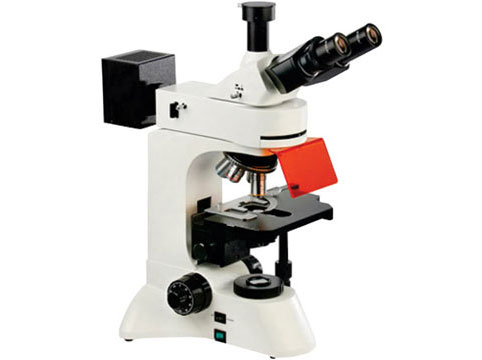
mercury-vapor lamp, is directed through a sample and then through one or more filters before reaching the eyepiece or camera. The filters only allow light of a certain wavelength to pass through, which excites specific fluorophores (molecules that emit fluorescence) in the sample. The excited fluorophores then emit light at a longer, lower-energy wavelength, which can be seen through the eyepiece or captured by the camera. Fluorescent microscopes are often used in biology and medicine to study cells and tissues, as well as in materials science to analyze the composition and structure of materials.
What are fluorescent microscopes used for?
Fluorescent microscopes are widely used in a variety of fields, including biology, medicine, and materials science. In biology and medicine, they are used to study cells and tissues at the cellular and molecular level, and to visualize specific biomolecules such as proteins and nucleic acids. Fluorescent microscopes can be used to study the structure and function of cells and tissues, as well as to analyze changes in cells and tissues in response to various stimuli, such as drugs or disease.
In materials science, fluorescent microscopes are used to study the structure and composition of materials at the microscale. They can be used to analyze the distribution and arrangement of different components within a material, as well as to study the properties and behavior of materials under different conditions.
Overall, fluorescent microscopes are useful tools for studying a wide range of phenomena at the microscale, and are widely used in research and industrial settings.
Which lens is used in fluorescent microscope?
In a fluorescent microscope, the objective lens is the lens that is closest to the sample and is responsible for collecting and focusing light from the sample. The objective lens is usually a high-quality, high-magnification lens that is designed to produce a highly detailed image of the sample. In a light fluorescent microscope, the objective lens is typically a fluorescence objective lens, which is designed to collect and focus both the excitation light and the emitted fluorescence from the sample.
In addition to the objective lens, a fluorescent microscope also typically has an ocular lens (also known as the eyepiece lens), which is the lens that is closest to the viewer's eye and is used to magnify the image produced by the objective lens. The ocular lens is usually a lower magnification lens than the objective lens, and is used to fine-tune the magnification of the image.
Both the objective lens and the ocular lens are typically made of high-quality optical glass and are coated with multiple layers of coatings to reduce reflections and increase transmission of light.
How does fluorescence work?
Fluorescence is a phenomenon in which a substance absorbs light at one wavelength and then re-emits the absorbed light at a longer, lower-energy wavelength. This process occurs when a substance, known as a fluorophore, absorbs light at a specific wavelength, called the excitation wavelength, and then re-emits the absorbed light at a longer, lower-energy wavelength, called the emission wavelength.
The process of fluorescence can be described by the following steps:
- Excitation: When a fluorophore is exposed to light at its excitation wavelength, the absorbed energy raises the molecule from its ground state to an excited state.
- Relaxation: After being excited, the molecule relaxes back to its ground state, emitting a photon of light in the process. This emitted light has a longer, lower-energy wavelength than the absorbed light, and is called fluorescence.
- Emission: The emitted light, or fluorescence, can be detected by a detector, such as a camera or a spectrophotometer, and is used to study the sample.
Fluorescence is a widely used technique in a variety of fields, including biology, medicine, and materials science, and is often used to visualize specific biomolecules or processes in samples.
What to consider before purchasing Fluorescent Microscopes?
There are several factors to consider before purchasing a fluorescent microscope, including:
- Magnification: Consider the magnification range that you need for your samples, as well as the type and quality of the objective lenses available.
- Resolution: Look for a microscope with high spatial resolution, which refers to the ability of the microscope to distinguish between two closely spaced objects.
- Fluorescent filters: Consider the types of fluorescent filters that are available and whether they are suitable for your samples and applications.
- Sample preparation: Consider the type of sample preparation that is required for your samples and whether the microscope is capable of handling it.
- Compatibility with other techniques: If you plan to use the microscope in combination with other techniques, such as immunofluorescence, make sure the microscope is compatible with these techniques.
- Price and budget: Determine your budget and look for a microscope that offers the features and capabilities you need at a price that fits your budget.
- Service and support: Consider the service and support options available from the manufacturer, including maintenance and repair, as well as training and technical support.