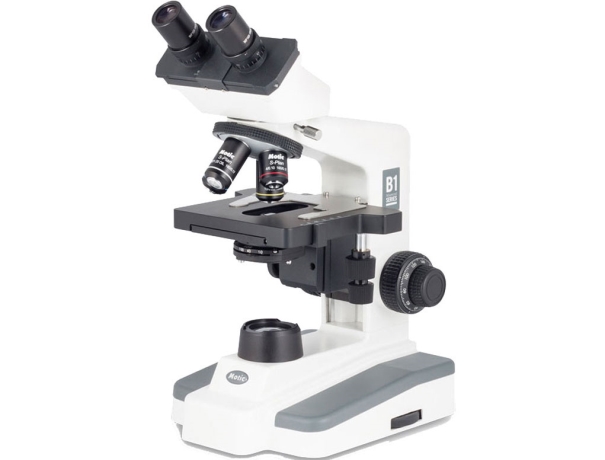
Microscopes are fundamental tools across the chemistry and pharmaceutical sectors in the United Kingdom. They support everything from early-stage research to quality control and regulatory validation. In a highly structured and compliance-driven environment, the ability to analyze materials at microscopic levels is essential for ensuring accuracy, consistency, and safety.
In UK laboratories, microscopes are used to examine structures that cannot be seen with the naked eye, enabling scientists to understand chemical interactions, biological processes, and material properties. Advanced imaging technologies such as optical, digital, fluorescence, and electron microscopy are widely applied depending on the level of detail required.
Microscopes for Biochemistry
Biochemistry focuses on the chemical processes that occur within living organisms. This includes the study of proteins, enzymes, and cellular structures. Microscopes are critical in this field because they allow researchers to directly observe how these components behave and interact.
In the UK, biochemistry laboratories rely on microscopy to:
- Examine cell structures and organelles in detail
- Monitor biochemical reactions within cells
- Track protein activity and localization
- Study the effects of chemical compounds on living cells
Microscopy enables scientists to visualize processes that are otherwise abstract. For example, observing how a drug interacts with a cell at a microscopic level can reveal important insights into its effectiveness or toxicity. This level of analysis is essential for both academic research and pharmaceutical development.
Microscopes for Biotechnology
Biotechnology combines biological science with technological applications to develop products for healthcare, agriculture, and industry. In the UK, this sector is highly advanced and depends heavily on precise laboratory analysis.
Microscopes are essential in biotechnology because they allow for:
- Observation of genetically modified cells and microorganisms
- Monitoring of cell cultures used in production processes
- Detection of contamination in controlled environments
- Analysis of cellular responses to genetic or chemical changes
Maintaining sterile conditions is a major priority in biotechnology laboratories. Microscopy provides a fast and reliable method for identifying unwanted contaminants before they impact production. It also plays a key role in confirming successful genetic modifications and ensuring that biological systems behave as expected.
Microscopes for Pharmaceuticals
The pharmaceutical industry in the UK requires extremely high levels of precision and quality control. Microscopes are used throughout the drug development process, from initial research to final product inspection.
Key uses include:
- Analyzing the structure of active ingredients
- Measuring particle size and distribution in formulations
- Identifying impurities or contaminants
- Inspecting the physical integrity of tablets and capsules
Microscopic analysis is crucial because many drug properties depend on fine structural details. Variations at the microscopic level can affect how a drug dissolves, how it is absorbed, and how effective it is in treatment. By using microscopes, pharmaceutical laboratories can ensure that products meet strict quality standards and perform consistently.
Microscopes for Cannabis Research and Testing
Cannabis research in the UK is expanding, particularly in medical and scientific applications. Microscopes are widely used in this field to evaluate plant quality, composition, and safety.
Applications include:
- Examining trichomes, which are responsible for producing cannabinoids
- Detecting mold, pests, and other contaminants
- Assessing plant health and growth conditions
- Supporting analysis of extraction and processing methods
Microscopy is important in cannabis research because many of the plant’s key characteristics are only visible at a microscopic level. The structure and density of trichomes, for example, directly influence the potency and quality of the final product. Accurate visual analysis ensures consistency and helps maintain high standards in regulated environments.
The Role of Microscopy in the UK Chemistry and Pharma Sectors
Across biochemistry, biotechnology, pharmaceuticals, and cannabis research, microscopy is a core analytical tool. It supports innovation, improves product quality, and helps laboratories meet strict regulatory requirements.
In the UK, where scientific standards are particularly rigorous, microscopes are not only used for research but also for validation and documentation. They provide clear, visual evidence that processes and products meet defined specifications.
As laboratory technologies continue to evolve, microscopy remains at the center of scientific advancement, enabling deeper understanding, greater precision, and more reliable outcomes across the chemistry and pharmaceutical industries.