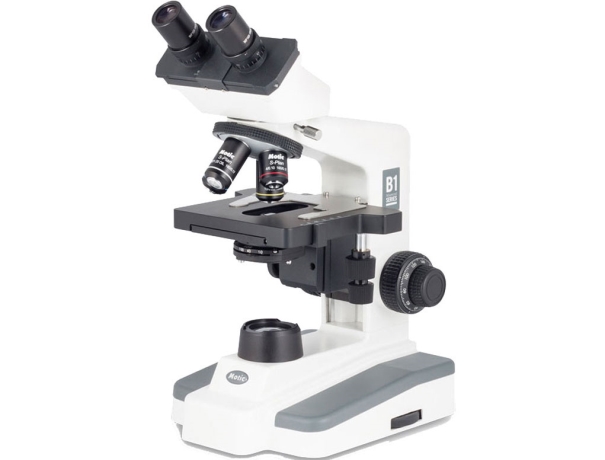
Scientific education in the United Kingdom is built on observation, experimentation, and visual understanding. Microscopes play a central role in transforming abstract scientific concepts into tangible learning experiences. From primary schools to universities, the use of microscopes enhances comprehension, strengthens analytical thinking, and encourages curiosity across disciplines such as biology, chemistry, environmental science, and medical training.
Educational microscopes are designed to balance performance, durability, and ease of use. They must support both introductory learning and more advanced academic requirements, while remaining robust enough for frequent classroom use. Selecting the correct microscope type for each educational level is critical to achieving meaningful learning outcomes.
Compound Microscopes (High Magnification)
Compound microscopes are the foundation of scientific education in the UK, particularly in secondary schools, colleges, and universities. These microscopes provide high magnification, typically ranging from ×40 up to ×1000 or more, enabling detailed observation of microscopic structures.
They are widely used for:
- Studying cells and cell structures
- Observing bacteria and microorganisms
- Examining tissue samples and histology slides
- Conducting biological and medical experiments
The reason compound microscopes are essential in education is their ability to reveal structures that cannot be seen with the naked eye. Students can directly observe cell division, organelles, and microbial activity, bridging the gap between theory and practice. This hands-on experience significantly improves retention and scientific understanding, especially in subjects aligned with UK curricula such as GCSE and A-Level biology.
In higher education, compound microscopes are critical for laboratory training in life sciences, medicine, and biotechnology, where precision and clarity are required for accurate analysis.
Stereo Microscopes (Low Magnification)
Stereo microscopes, also known as dissecting microscopes, operate at lower magnifications, typically between ×10 and ×50. They provide a three-dimensional view of specimens, making them ideal for observing larger objects.
They are commonly used in:
- Dissection and anatomical studies
- Botany and plant structure analysis
- Entomology (study of insects)
- Material science and surface inspection
The key advantage of stereo microscopes in education is their ability to present specimens in a natural, three-dimensional perspective. This makes them particularly valuable in early and intermediate education, where spatial understanding and hands-on interaction are essential.
Students benefit from being able to manipulate samples while observing them, which enhances engagement and develops practical laboratory skills. In UK classrooms, stereo microscopes are frequently used in biology labs and environmental science courses, where direct interaction with specimens supports experiential learning.
Multi-Head Systems
Multi-head microscope systems are advanced educational tools designed for group learning. These systems allow multiple users, typically between two and ten, to observe the same specimen simultaneously through individual viewing ports.
They are especially useful in:
- University teaching laboratories
- Medical and clinical training environments
- Instructor-led demonstrations
- Collaborative research and training sessions
The primary benefit of multi-head systems is synchronized learning. All students observe the same field of view in real time, ensuring consistent instruction and eliminating discrepancies between individual observations. This is particularly important in disciplines such as pathology, microbiology, and histology, where precise interpretation is required.
In the UK education system, these microscopes are widely used in higher education institutions and teaching hospitals to facilitate efficient, guided learning. They improve communication between instructors and students, allowing immediate feedback and discussion.
Microscopes for Children and Basic Teaching
For primary education and early-stage learning, microscopes must be simple, safe, and engaging. These microscopes are designed with ease of use in mind, often featuring lower magnification ranges, durable construction, and intuitive controls.
They are used for:
- Introducing basic scientific concepts
- Exploring everyday objects at a microscopic level
- Encouraging curiosity and early interest in science
- Supporting STEM education initiatives in schools
The importance of microscopes at this level lies in their ability to inspire. Children who can visually explore the hidden details of leaves, fabrics, or small organisms develop a stronger connection to science. This early exposure fosters curiosity, critical thinking, and a desire to learn more.
In the UK, where STEM education is strongly promoted, these microscopes are a valuable tool in classrooms and science clubs. They help build foundational skills that students will carry into more advanced scientific studies.
Choosing the Right Educational Microscope
Selecting the appropriate microscope for educational use in the UK depends on several factors:
- Level of education (primary, secondary, or higher education)
- Subject focus (biology, chemistry, materials science, etc.)
- Required magnification and resolution
- Number of users and teaching format
- Durability for classroom environments
A well-chosen microscope not only supports curriculum requirements but also enhances the overall learning experience. It enables students to actively participate in scientific discovery rather than passively consuming information.
The Role of Microscopes in Modern UK Education
Microscopes remain one of the most powerful tools in science education. They provide direct visual access to the microscopic world, making complex concepts accessible and engaging. In the UK, where academic standards emphasize practical skills and scientific literacy, microscopes are indispensable across all levels of education.
From introducing young students to the basics of observation to training future scientists and medical professionals, microscopes continue to play a vital role in shaping the next generation of researchers, educators, and innovators.